Delta Air Lines flight DL81 from Paris Charles de Gaulle Airport to Seattle-Tacoma International Airport turned into an exhausting transatlantic ordeal after an onboard sewage leak forced an unexpected diversion to London, followed by a second stop in New York for a crew change. The Airbus A330-900 eventually reached Seattle more than 10 hours behind schedule, leaving passengers facing a long overnight journey, limited food, and two unplanned landings.
DL81 normally links Paris and Seattle on a direct transatlantic service. Current schedule data shows the route operated by an Airbus A330-900neo, with a scheduled block time of roughly 10.5 hours and a distance of about 8,092 kilometers. The flight’s normal operation is relatively straightforward: depart CDG in the afternoon and arrive at SEA later the same day after crossing the Atlantic. On this occasion, however, almost every stage of that routine was disrupted.
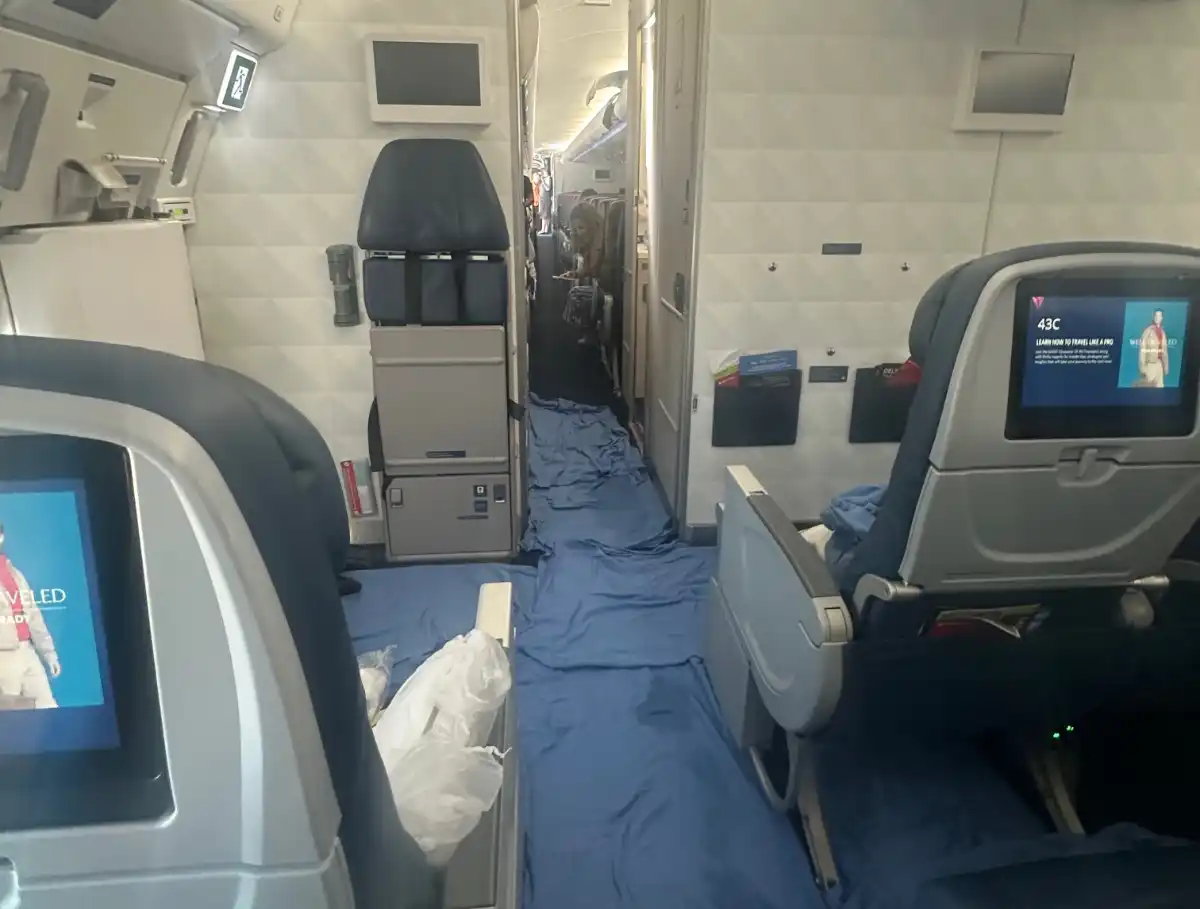
The trouble reportedly began shortly after departure from Paris, when the aircraft was flying over the English Midlands. A sewage leak in one of the aircraft’s lavatories became serious enough to require the crew to abandon the planned route and head for London Heathrow Airport. The problem was particularly frustrating because the affected toilet had reportedly already received attention in Paris before departure, raising obvious questions about whether the aircraft should have left CDG in the first place.
Delta A330-900 Diverts to London After Sewage Leak
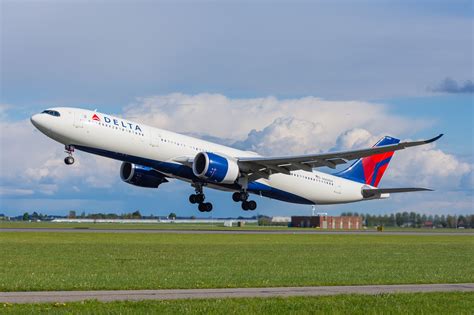
The aircraft involved was N410DZ, an Airbus A330-900. Flight-tracking data identifies the registration and aircraft type, confirming that the widebody is part of Delta’s A330-900 fleet. After departing Paris at approximately 4:30 p.m. local time, the aircraft landed at London Heathrow at around 5:08 p.m., turning what should have been the opening portion of a nonstop flight into an unexpected ground stop.
The situation was more than a simple maintenance inconvenience. The leak reportedly allowed contaminated liquid to spread into the aircraft’s carpet, requiring cleaning and attention on the ground. Passengers could not simply continue their journey while the affected area was being dealt with. Delta said the situation was not the experience it wanted customers to have and that it was focused on getting passengers to their destinations as quickly and safely as possible.
The aircraft remained at Heathrow for almost three hours before departing again at about 7:55 p.m. local time. Yet another problem emerged from the first diversion: the original inflight meals had reportedly been discarded after being affected by the sewage incident. Replacement catering was not loaded during the Heathrow stop, leaving passengers with a dramatically reduced food service for the remainder of the journey.
Why Delta DL81 Needed a Second Diversion to New York
Getting the aircraft airborne again did not mean the operational problems were over. By this stage, the enormous delay had created a second challenge involving crew duty-time limits. The pilots and flight attendants who had started the journey in Paris no longer had enough available hours to operate the aircraft all the way to Seattle.
That meant Delta had to modify the flight plan to include another stop, this time at John F. Kennedy International Airport in New York. The A330-900 reached JFK at approximately 10:08 p.m. local time, where another crew could take over. The aircraft then remained on the ground for roughly three and a half hours before departing at around 1:38 a.m. the following morning.
The second diversion illustrates how one operational problem can quickly create another. The sewage leak itself was the original trigger, but the resulting delay consumed the crew’s available duty time. Once that happened, Delta could not simply keep the same team onboard and continue to Seattle. A crew change became necessary, turning an already unusual Paris-Seattle journey into a two-diversion transatlantic operation.
Passengers Faced More Than 10 Hours of Additional Travel Time
From JFK, the final sector to Seattle took just under five and a half hours. DL81 eventually arrived at Seattle-Tacoma International Airport at about 4:06 a.m., compared with its scheduled arrival around 5:34 p.m. the previous day. That produced an overall arrival delay of approximately 10 hours and 28 minutes.
For passengers, the significance of that number went far beyond an inconvenient timetable adjustment. The journey included an unexpected diversion to London, a lengthy period on the ground while the aircraft was cleaned, another diversion across the Atlantic to New York, an overnight crew change, and severely limited catering. What should have been a single long-haul flight became a sequence of stops that extended deep into the following morning.
The lack of proper meals was particularly difficult because the original catering had reportedly been discarded and replacement meals were not provided at Heathrow. Passengers therefore faced much of the remaining journey with snacks rather than the normal meal service expected on a long-haul flight.
EU Passenger Compensation Could Reach €600 Per Traveler
Because the flight originated in France, European passenger-rights rules could become an important part of the aftermath. Reporting cited by the reference material indicates that passengers may be eligible to seek €600 in compensation per person, given the distance of the route and the eventual arrival delay exceeding four hours.
With 209 passengers reportedly onboard, a successful claim from every traveler could theoretically put Delta’s compensation exposure at roughly $145,000, depending on the applicable exchange rate. That figure does not include other costs associated with handling the disruption, such as aircraft servicing, crew logistics, airport charges, and the operational consequences for subsequent flights.
The incident also highlights the fragile chain of logistics behind a modern long-haul service. A single malfunction in Paris triggered a diversion to London. The diversion disrupted catering and consumed valuable crew time. The resulting duty-time problem then forced another stop in New York. Only after a replacement crew was available could the aircraft finally complete the journey to Seattle.
For Delta, the aircraft itself was not finished with its schedule after reaching the Pacific Northwest. N410DZ was scheduled to continue operating international service, underscoring how quickly an airline must reintegrate an aircraft after a major disruption. For passengers aboard DL81, however, the flight will be remembered for something very different: a routine Paris-to-Seattle journey transformed into a 10-hour delayed odyssey involving two diversions, an onboard sewage leak, a crew change, and no proper meals.