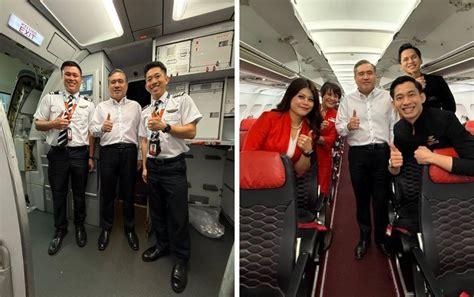
A severe storm on the night of June 7 disrupted domestic flight AK6047 from Johor Baru to Kuala Lumpur, leading to a dramatic diversion and a nearly four-hour delay. Despite the turbulence and uncertainty, the crew’s professionalism, leadership, and clear communication turned a potentially tense situation into a moment of composed resilience. Among the passengers on board was Transport Minister Anthony Loke, whose praise for the airline’s staff has since drawn public attention.
Storm Forces Mid-Air Diversion: Flight AK6047’s Unexpected Journey
The AirAsia flight, originally scheduled to depart from Johor Baru at 10:45 PM and land at Kuala Lumpur International Airport (KLIA), encountered severe weather disturbances as it neared its destination. Strong crosswinds and an aggressive storm front disrupted the approach, forcing the aircraft to circle above KLIA’s airspace in a holding pattern. The weather remained unrelenting, prompting the captain to make the critical decision to divert the aircraft to Penang International Airport for refueling and safety.
According to Minister Loke, who shared his personal experience on Facebook, the incident illustrated the real-world unpredictability of aviation logistics. “Unexpected weather condition is one of the biggest challenges in airline operations,” he stated. His comments were not only insightful but also deeply humanizing, shedding light on the behind-the-scenes challenges faced by flight crews and support teams.
Calm Amid the Storm: Captain Teng Huah Jer’s Composed Leadership
What stood out most during the flight was Captain Teng Huah Jer’s calm and transparent communication. Throughout the delay, Captain Jer provided regular updates, explaining each decision made, from the aborted landing to the diversion and final landing plan. This openness, Loke noted, played a pivotal role in keeping passengers calm.
“Clear communication and information from the Captain played an important role to keep everyone calm in such situations,” he wrote. This observation is particularly poignant given the rising number of flight delays and disruptions globally, where lack of communication often exacerbates passenger frustration.
The importance of strong cockpit leadership becomes evident in these moments. Decisions made in real-time, under pressure, and with limited visibility, demand not only technical skill but emotional intelligence. Captain Jer’s decisions were complemented by the seamless coordination of his first officer, Bryan Alexander Yin Kian Yam, whose role was equally essential in navigating the storm both literally and figuratively.
Extraordinary Cabin Crew: Professionalism Beyond the Call of Duty
As the aircraft diverted and later returned to KLIA, it wasn’t just the cockpit crew demonstrating excellence. The cabin crew’s conduct stood as a testament to AirAsia’s training and ethos. Minister Loke made a point to name and thank each crew member personally in his statement: Senior Cabin Crew Muhammad Asyraf Muhammad Nasrullah, along with Cabin Crew Mandasari Nikita Florensia, Bagus Setyadi Nugroho, and Norjuniza Muhammad.
“Even though they have to put in extra hours, the crew kept their smiles and professionalism intact, and apologized to each and every passenger for the inconveniences,” Loke remarked.
This dedication is not just commendable but essential in maintaining customer trust and safety. The emotional climate in a delayed flight can quickly deteriorate, but the AirAsia crew turned the incident into an example of resilience and grace. From patiently answering queries to ensuring passenger comfort during the delay, their effort was tireless.
Behind the Scenes: Ground Crew and Air Traffic Control Coordination
While the in-flight team managed the situation directly with passengers, the unsung heroes on the ground worked just as tirelessly. Loke acknowledged the behind-the-scenes collaboration of ground handlers, air traffic controllers, and support staff at Senai Airport, Penang International Airport, and KLIA.
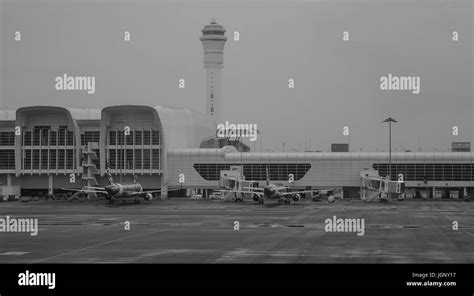
This intricate web of coordination is what makes such a diversion and eventual safe landing possible. Air traffic control had to manage congested skies, keep safe distances, and ensure slot availability for a surprise arrival in Penang. Simultaneously, airport staff in Penang needed to prepare logistics for an unscheduled landing, provide refueling support, and ensure rapid turnaround for the return to Kuala Lumpur.
Such multi-layered operations often go unnoticed, but in crisis, they become vital. It is a ballet of technical precision, human intuition, and swift collaboration across departments. The fact that the aircraft successfully landed at KLIA at 2:40 AM is evidence of this operational synergy.
Loke’s Gesture of Solidarity: Leading by Example
One of the most resonant details in the aftermath of this incident was Minister Anthony Loke’s personal decision to wait until all passengers disembarked before leaving the plane himself. In an era where public officials are often accused of detachment, this small but significant act reinforced Loke’s sincerity and commitment.
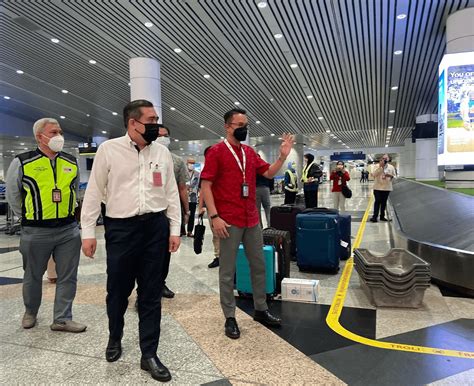
“As a sign of moral support and appreciation to the crew, I waited for all passengers to disembark before leaving the aircraft,” he wrote. This act didn’t just resonate with the passengers on board—it sent a broader message of unity, patience, and leadership.
A Testament to Resilience and Training in Malaysian Aviation
The episode involving flight AK6047 is more than a delayed arrival. It serves as a case study in crisis management, leadership under pressure, and customer service excellence. It reminds both travelers and aviation professionals of the complex, human-centric nature of air travel.
In praising the crew and support staff, Minister Loke has drawn national attention to the everyday heroes of Malaysia’s aviation sector—people whose roles are often invisible but whose impact becomes clear in times of crisis. It’s a nod to the training systems, operational protocols, and corporate culture that airlines like AirAsia have built to prepare for the unexpected.
It also underscores the importance of empathy in leadership. The collaborative tone in Loke’s statements, his acknowledgment of every person involved by name, and his own behavior throughout the incident provide a roadmap for both governmental transparency and passenger trust-building.
Flying Forward: Lessons for the Future
While the night was long and the delay frustrating, the outcome was a reaffirmation of what matters in aviation: safety, communication, professionalism, and empathy. These are the pillars that kept the passengers of AK6047 safe, calm, and ultimately grateful.
The incident also serves as a reminder to travelers: not every disruption is within an airline’s control. But the way those disruptions are handled can define an airline’s reputation for years. In this instance, AirAsia has proven its ability to navigate storms—both literal and figurative—with grace.
This story, quietly unfolding on a stormy June night, has since become a powerful narrative of Malaysian resilience, operational excellence, and public service leadership. And it is exactly these narratives that define the best of what modern air travel can represent.