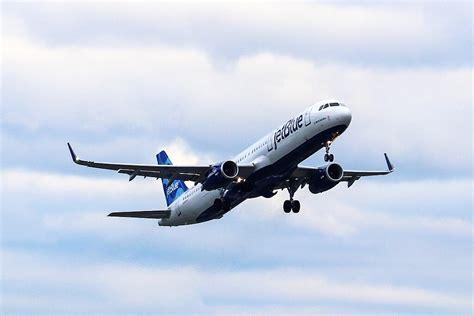
An unexpected hydraulic malfunction aboard a JetBlue Airbus A321 forced Flight B6 1177, traveling from Boston Logan International Airport (BOS) to Las Vegas Harry Reid International Airport (LAS), to divert to Denver on June 27, 2025, sparking operational disruptions across the airline’s network.
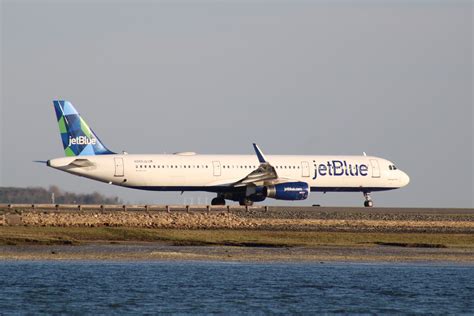
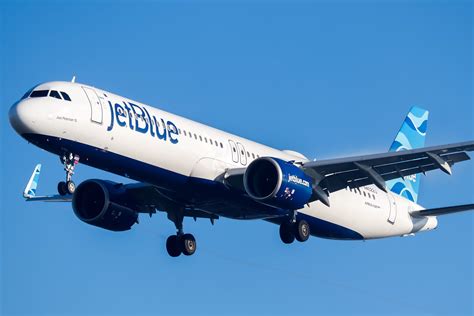
The incident unfolded aboard Airbus A321-231, registration N991JT, a 7.5-year-old aircraft nicknamed Catch Mint If You Can, which has been in service with JetBlue since December 2017. Configured with 16 Mint business class seats and 143 economy class seats, the jet is powered by two IAE V2533-A5 engines, widely used across the A321ceo fleet.
Flight Details: From Routine Departure to Mid-Flight Emergency
The aircraft departed Boston Logan at 07:24 EDT, well ahead of its scheduled 07:45 departure, climbing swiftly over Massachusetts Bay after taking off from runway 09/27. As the jet cruised at 34,000 feet, passing over upstate New York, its trajectory seemed unremarkable.
The flight continued westward, flying over major cities including Cleveland (Ohio), Fort Wayne (Indiana), Peoria (Illinois), and Lincoln (Nebraska). It was at this stage, after approximately four hours and 15 minutes in the air, that the flight crew reportedly encountered a hydraulic system anomaly, prompting the decision to divert to Denver International Airport (DEN).
Data from Flightradar24 reveals a controlled but expedited descent, with the A321 touching down safely in Denver at 09:44 MDT. JetBlue confirmed the diversion, emphasizing its unwavering commitment to passenger safety in a statement to Boston25News:
“Safety is JetBlue’s first priority. We apologize to our customers for the delay in their travel.“
No injuries were reported among the passengers or crew.
Grounding in Denver and Passenger Re-Accommodation
Following the safe landing, JetBlue’s ground teams quickly offloaded passengers at Denver, with the A321 grounded for immediate inspection. The aircraft remains under technical evaluation, pending confirmation on the root cause of the hydraulic malfunction.
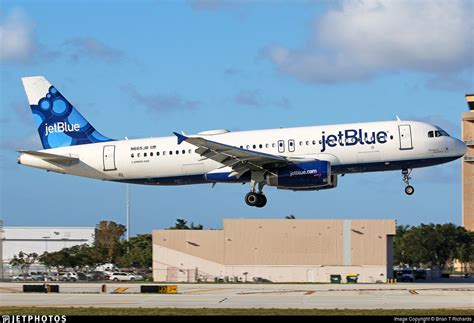
Passengers bound for Las Vegas were subsequently transferred to a replacement aircraft, JetBlue Airbus A320ceo, registration N665JB, which had arrived from New York as Flight B6 1497. The original return leg to New York, B6 1498, was canceled to prioritize transporting stranded passengers.
The replacement flight departed Denver at 14:26 MDT, arriving in Las Vegas at 14:51 PDT, concluding the interrupted journey after nearly seven hours of delays.
Aircraft Histories: A321 N991JT and A320 N665JB
The A321 involved in the incident, N991JT, first took to the skies on December 18, 2017, under French Airbus registration F-WZMA, before delivery to JetBlue. Despite being relatively young at 7.5 years old, the aircraft is now grounded, pending the outcome of maintenance checks. Preliminary scheduling on Flightradar24 suggests potential repositioning to Los Angeles International Airport (LAX) and then onwards to Fort Lauderdale-Hollywood International Airport (FLL), but these plans remain fluid.
The A320 replacement, N665JB, holds a longer operational history, having entered service with JetBlue in December 2007, originally registered as F-WWBV during testing. Nicknamed Something About Blue, the 17-year-old jet is configured in an all-economy 162-seat layout, expanded from its original 150 seats in 2019.
N665JB has cycled through several signature JetBlue liveries over the years, transitioning from Windowplane (retired 2013), to Blueberries (retired 2022), with the current Spotlight theme applied since late 2022.
Operational Ripple Effects Across JetBlue’s Network
The diversion and subsequent aircraft grounding triggered a cascade of disruptions within JetBlue’s tightly coordinated operations. The intended return leg B6 1178, scheduled to fly from Las Vegas to Boston at 11:45 PDT, experienced significant delays.
The service eventually departed at 17:46 PDT, over six hours behind schedule, with an Airbus A320 substituting for the grounded A321. Precise registration details for this replacement aircraft remain unconfirmed at the time of reporting.
Such aircraft swaps and flight cancellations are standard contingency measures airlines employ to mitigate disruptions, but they often have downstream impacts on flight schedules, crew availability, and maintenance rotations.
JetBlue’s Expanding and Aging Fleet Dynamics
JetBlue, headquartered in New York, operates a diverse fleet comprising 278 aircraft, as per ch-aviation data. The current active fleet includes:
- 127 Airbus A320ceo
- 62 Airbus A321ceo
- 31 Airbus A321neo
- 46 Airbus A220-300
- 9 Embraer E190
With a growing emphasis on fleet modernization, JetBlue is gradually transitioning towards more fuel-efficient models like the A321neo and A220-300, particularly for transatlantic and high-demand domestic routes.
The affected A321ceo, N991JT, belongs to the carrier’s older cohort, though still considered relatively young by industry standards. Notably, this incident underscores the ongoing operational challenges faced by airlines managing aging aircraft amid growing network demands.
Hydraulic Failures in Commercial Aviation: Technical Insights
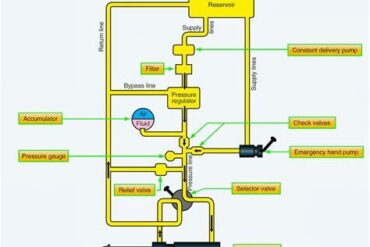
Hydraulic systems play a critical role in modern aircraft, powering essential components such as landing gear, flight control surfaces, brakes, and thrust reversers. Anomalies in these systems, though statistically infrequent, are taken extremely seriously by flight crews.
In-flight hydraulic issues often necessitate immediate diversions, as redundancy protocols may not guarantee full system functionality throughout the intended journey, especially over mountainous or remote regions.
Industry experts point out that early detection and diversion protocols, like those executed by JetBlue’s crew, exemplify standard safety practices, ensuring risks are minimized long before the situation escalates.
Looking Ahead: Maintenance, Inspections, and Service Resumptions
JetBlue’s technical teams are expected to conduct thorough diagnostics on the grounded A321 N991JT, examining potential failures across hydraulic circuits, pumps, fluid reservoirs, and associated control units. Such inspections are vital not only for addressing the specific aircraft but for assessing broader fleet-wide safety measures.
Pending satisfactory maintenance clearance, N991JT could re-enter service within days, though precautionary grounding durations may vary depending on inspection findings.
Meanwhile, JetBlue continues to balance network stability, re-routing aircraft where necessary to maintain schedule integrity, particularly across high-volume routes such as Boston-Las Vegas and Las Vegas-New York.
Conclusion: Safety First Amid Operational Disruptions
This incident highlights the aviation sector’s unwavering focus on safety, even when it results in significant delays and logistical challenges for passengers. JetBlue’s prompt diversion and passenger re-accommodation efforts, combined with proactive maintenance measures, reflect industry best practices.
As the airline awaits inspection results and adjusts its fleet rotations, the episode serves as a reminder of the intricate systems underpinning every commercial flight—and the human expertise ensuring passengers reach their destinations safely, even when unexpected technical hurdles arise.