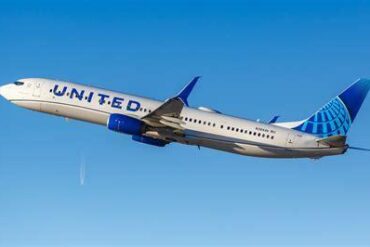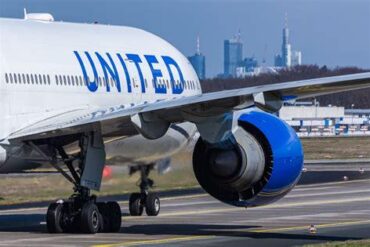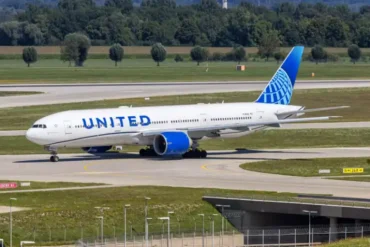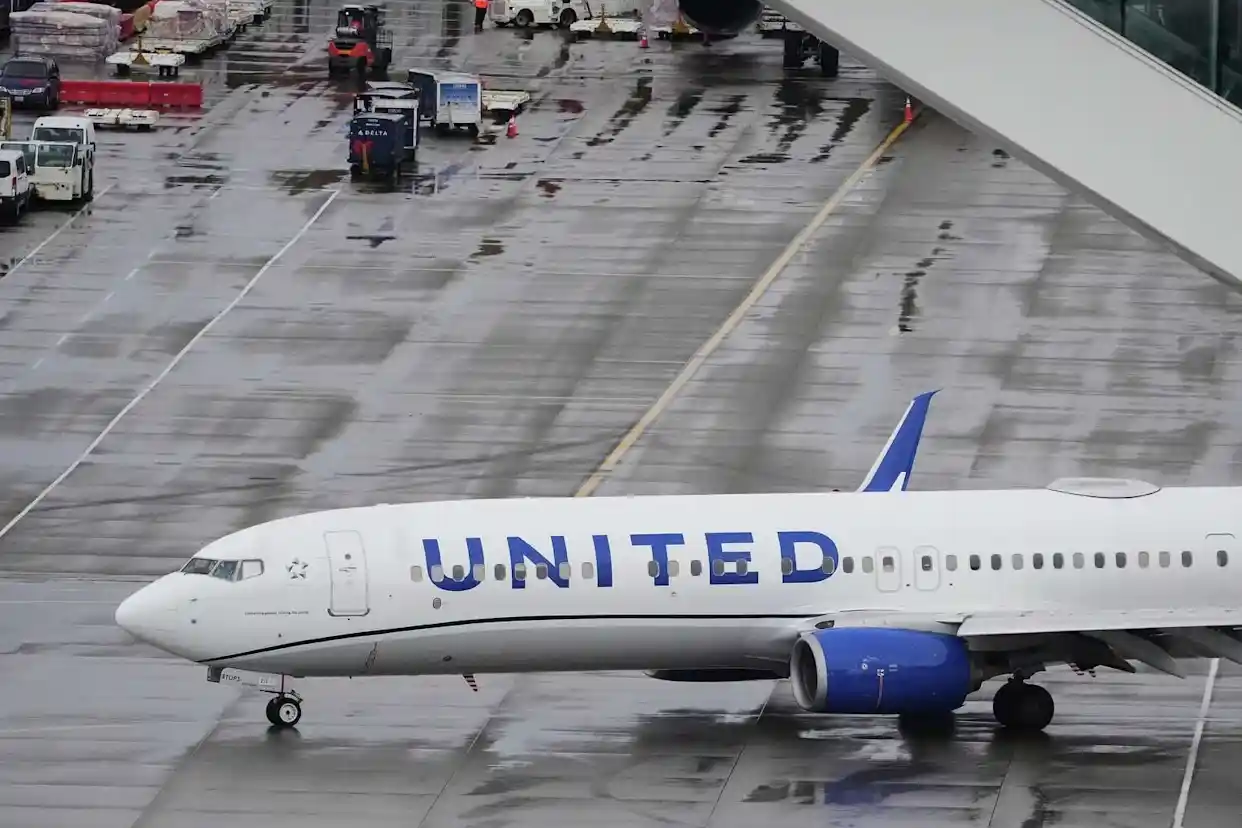
United Airlines has removed one of its Boeing 777-200ER aircraft from service after an unexpected burning smell inside the cabin forced flight UA 949 to divert to Edinburgh Airport (EDI) on December 4, 2025. The aircraft, operating a long-haul route from London Heathrow (LHR) to San Francisco (SFO), landed without further incident, yet the event has raised new concerns surrounding the aging backbone of United’s widebody fleet.
Emergency Diversion Over the North Atlantic
The widebody jet, registered N74007, departed Heathrow at 2:05 PM carrying 162 passengers and 12 crew members. Roughly 90 minutes into the journey, while cruising at 34,000 feet between Scotland and Iceland, the crew detected the intrusive burning odor. As a precaution, they transmitted the 7700 emergency squawk code, signaling a general in-flight emergency.
The jet made a controlled descent into Edinburgh and touched down safely. In a statement provided to the San Francisco Chronicle, the airline confirmed the diversion was strictly precautionary, adding that all passengers received hotel accommodations and rebooking assistance for onward travel.
The crew also reported a fault in a brake temperature sensor, though investigators have not yet confirmed whether this malfunction is linked to the burning smell.
Examining the Aircraft at the Center of the Incident
The aircraft involved is a 26.8-year-old Boeing 777-200ER, powered by two General Electric GE90 engines. According to ch-aviation, by March 31, 2025, the jet had accumulated 118,307 flight hours and 12,151 flight cycles, placing it among the more seasoned long-haul workhorses in United’s operations.
Configured with 276 seats across three cabins—50 in business, 24 in premium economy, and 202 in economy—the aircraft has routinely operated transatlantic and transpacific missions. Since the diversion, Flightradar24 data shows the jet has not performed any further commercial flights. Its next scheduled rotation, SFO to Tokyo Narita (NRT) on December 7, remains pending based on the outcome of maintenance inspections.
A Fleet Approaching Its Sunset Years
United operates one of the world’s largest widebody fleets, with 228 long-haul aircraft spanning the Boeing 767, 777, and 787 families. The 777-200ER is one of the airline’s most old-guard types, with 55 units averaging 25.8 years in age. Only the 767-300ER and the non-ER 777-200 are older on average.
The youngest 777-200ER in the fleet is already more than 15 years old, while the oldest has reached 29 years. Retirement planning is well underway: most of the subfleet is projected to exit service by December 2027, leaving only the four youngest units without confirmed retirement dates. The type’s long legacy stems from its ideal blend of range and efficiency, offering an effective midpoint between the 767 and the 747 for global carriers. With 55 active units, United remains the largest operator of the 777-200ER worldwide.
What Comes Next
Maintenance teams are currently dissecting the systems that may have contributed to the burning smell and brake sensor warning. Until the cause is fully determined and safety is assured, the aircraft will stay withdrawn from commercial duty. Events like this underscore the challenges of operating older widebody fleets—even those with historically strong safety and reliability records such as the Boeing 777-200ER.
As United continues its long-term fleet modernization—built around the Boeing 787 Dreamliner and upcoming 777X—incidents involving legacy aircraft will inevitably influence the pace of replacement. The grounded 777 serves as both a reminder of the type’s longevity and a signal that its era at United is entering its final chapters.