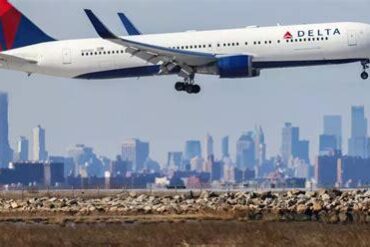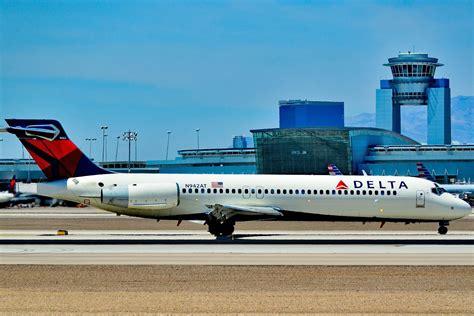
On December 2, 2025, a 25-year-old Delta Air Lines Boeing 717-200, registered as N935AT, was forced to return to St. Louis Lambert International Airport (STL) shortly after takeoff due to an acidic odor detected in the cabin. Operating under flight number DL9962, a special repositioning route rather than a routine passenger service, the jet had just departed for Detroit Wayne County Airport (DTW) when the incident occurred.
The twinjet, carrying only two pilots and no passengers, took off at 10:59 AM local time, aiming to complete the 90-minute journey to Detroit. However, just 13 minutes into the flight, at an altitude of 5,000 feet, the flight crew halted the climb and made the decision to return to the departure airport. The aircraft landed safely on Runway 29, the same runway it had used for takeoff, after a five-minute hold post-landing on the tarmac.
According to Delta Air Lines, the decision to return was made “out of an abundance of caution” as the crew adhered strictly to safety protocols. No injuries were reported, and the aircraft was grounded for further inspection. The return of the jet to St. Louis followed the cancellation of a previously scheduled flight (DL1626) the day before, highlighting broader logistical issues with the aircraft’s deployment.
After spending over two days grounded, the aircraft was scheduled to reposition to Atlanta Hartsfield–Jackson International Airport (ATL) on the night of December 3. However, delays pushed the departure to 2:40 PM on December 4, with the aircraft finally touching down in Atlanta at 4:50 PM. A test flight followed on December 5, and the aircraft re-entered service shortly thereafter.
Yet the troubles of N935AT didn’t end there. On December 6, the aircraft departed late for Huntsville, Alabama (HSV) as flight DL1708, more than three hours behind schedule. Not long into the flight, the aircraft once again diverted — this time returning to Atlanta, where it landed just 32 minutes after takeoff. While Delta has not released additional statements, the pattern of events suggests that recurring technical or environmental issues may be afflicting the airframe.
Built in the late 1990s, the N935AT aircraft is part of Delta’s aging Boeing 717-200 fleet, which currently comprises 80 units with an average age of over 23 years. This particular aircraft, aged 25.72 years, features a two-class configuration — 12 seats in First Class and 98 in Economy — per aeroLOPA specifications. Despite its age, the 717 remains a mainstay on Delta’s short-haul network, thanks to its efficiency on shorter domestic routes.
The event is just one in a series of odor-related diversions reported across major U.S. carriers in recent months. In November, a United Airlines Boeing 777-200ER flying from London Heathrow to San Francisco had to divert to Edinburgh due to a mysterious cabin odor. Similarly, in March, a Southwest Airlines 737 diverted back to Atlanta while en route to Louisville, citing a burning smell.
These incidents raise critical questions about cabin air quality and the aging infrastructure of legacy aircraft, particularly those in continuous short-haul operation. As Delta continues to rely on the 717 platform, further scrutiny into the operational readiness of these aircraft is expected.