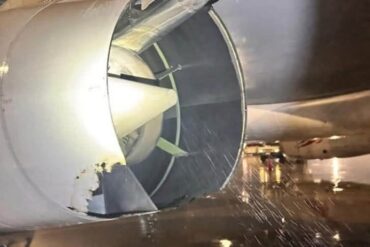
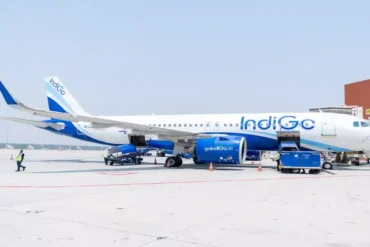
An Airbus A321neo operated by Frontier Airlines made an emergency return to Cleveland Hopkins International Airport (CLE) shortly after takeoff, following a reported engine malfunction in which flames were seen emitting from the engine. The incident, occurring in the early hours of the morning, has once again drawn attention to the persistent and troubling issues surrounding Pratt & Whitney’s PW1100G Geared Turbofan engines.
Engine Flameout Forces Rapid Return to Cleveland
The aircraft, only two years into service according to Planespotters.net, encountered a serious engine issue about 15 minutes after departure. Eyewitnesses and aviation monitoring accounts reported visible flames from one of the engines, prompting an immediate return to CLE. The crew followed standard emergency procedures, and the plane landed without injuries or further complications.

While official statements have yet to confirm whether this was a single-engine or dual-engine flameout, the safe return and lack of catastrophic reporting suggests a single-engine issue—still rare and deeply concerning. Engine flameouts are considered among the more serious airborne mechanical failures, although commercial aircraft like the A321neo are built with the capability to fly and land safely on a single engine.
P&W GTF Engines: A Mounting Crisis in Modern Aviation
The affected A321neo was equipped with Pratt & Whitney PW1100G-JM engines, a powerplant hailed for its fuel efficiency and advanced engineering. However, in reality, this engine program has been plagued by issues since its launch. The most recent scandal involves a powdered metal contamination in critical internal components—a flaw that has sparked global inspections, recalls, and mass groundings.
According to industry watchdogs, nearly one-third of all GTF-equipped aircraft globally are now grounded. Airlines across continents have been left scrambling for replacements, facing logistical nightmares in both maintenance planning and operational continuity. Frontier Airlines, among others like Spirit and JetBlue, has had to adjust schedules and delay routes due to these engine-related setbacks.
Airbus Delivery Delays & Grounded Fleets
The shortage of viable engines has even affected Airbus’s production line. With the inability to reliably source GTF engines, Airbus has had to slow down deliveries, leaving brand-new aircraft idle at factory facilities or in temporary storage.
Castellón Airport (CDT) in Spain, a relatively quiet regional hub, has turned into a visual representation of the crisis. Dozens of Airbus jets with empty nacelles—the housing for engines—line the tarmac. These aircraft are practically new, some never having flown a revenue flight, now parked indefinitely due to the engine recall chaos.
Aviation Industry Unprecedented: Scrapping New Jets
In what experts describe as a never-before-seen phenomenon, young aircraft are now being sent to scrap yards not due to obsolescence, but for parts cannibalization. Engine leasing companies and operators are dismantling 1- to 2-year-old A320neo-family jets simply to retrieve the still-functioning GTF engines, which are more valuable in use than idle on the tarmac.
Lee McConnellogue, CEO of the UK-based aerospace recycling firm eCube, remarked to Reuters:
“I can’t say I remember it happening on this scale before, because we’ve never had an issue like this on such a popular engine.”
The situation has upended traditional aviation economics. In some cases, the engine’s lease value nearly matches the entire aircraft’s appraised worth, making scrapping a cold but necessary business decision.
What Caused the Flameout Over Cleveland?
While the official cause of the Frontier incident remains under investigation, the timing raises valid suspicions. The widespread production quality issues tied to P&W’s GTF line, combined with the fleet-wide strain on serviceable engines, point to possible links. The powdered metal contamination is believed to have compromised turbine durability, making engines more prone to premature wear or sudden failure.
Adding fuel to speculation, Frontier’s fleet expansion plan included aggressive adoption of the A321neo platform, heavily reliant on the PW1100G series. As the airline adds more routes and frequencies, it places greater pressure on already overstressed engine supply chains and maintenance schedules.
Safety Protocols and Redundancies Prove Effective
Despite the drama of an airborne flameout, the incident serves as a testament to the robust safety engineering of modern commercial jets. The A321neo, certified for extended operations (ETOPS) and dual-engine performance, handled the malfunction without further incident. Emergency training for flight crews also played a crucial role, ensuring a composed and efficient return.
Still, aviation analysts argue that even with a clean safety record, such events erode public confidence. For passengers unfamiliar with engine performance metrics, seeing flames erupt from a wing-mounted engine mid-air is nothing short of terrifying.
Global Impact of the GTF Crisis
Beyond the Frontier event, the P&W engine issue has reverberated across the entire aviation ecosystem:
- Spirit Airlines, facing bankruptcy proceedings, is returning dozens of GTF-powered jets to lessors.
- Airlines in Asia and Europe have grounded hundreds of planes, leading to cancelled routes and operational cutbacks.
- Maintenance, Repair & Overhaul (MRO) centers are operating at maximum capacity, yet still unable to meet the unprecedented demand for engine inspections and replacements.
The imbalance between supply and demand has created a brutal triage environment, where only select engines can be overhauled in time, leaving others sidelined indefinitely.
Looking Ahead: Frontier’s Crisis Management and Industry Response
For Frontier Airlines, this event could lead to heightened scrutiny from regulators and adjustments in maintenance oversight. Although the airline has not yet released a detailed post-incident report, the recurrence of GTF engine problems will likely prompt internal audits and operational reassessments.
The broader industry is also exploring alternative sourcing strategies. Competing engine manufacturer CFM International, whose LEAP engines have a significantly lower grounding rate (just 4%), is seeing renewed interest from carriers reconsidering their long-term engine alliances.
Yet for airlines already locked into PW1100G contracts, escape is not simple. Engine swaps involve complex certification, retrofitting, and significant capital costs—not to mention the ripple effect across fleet planning and fuel efficiency targets.
Conclusion: A Glimpse into Aviation’s Fragile Future
The Frontier Airlines A321neo’s emergency return to Cleveland is not just an isolated mechanical hiccup—it is a symbol of the fragile interdependencies that define modern aviation. The GTF engine debacle underscores how a single supplier’s manufacturing defect can ripple through the entire global flight network, grounding jets, bankrupting carriers, and forcing strategic shifts at the highest levels.
Until Pratt & Whitney fully rectifies the root cause of its engine failures and replenishes the global supply chain with reliable units, incidents like the Cleveland flameout may become an unsettling norm rather than an exception. Frontier’s safe return was a win for safety protocols, but also a warning bell echoing across hangars worldwide.