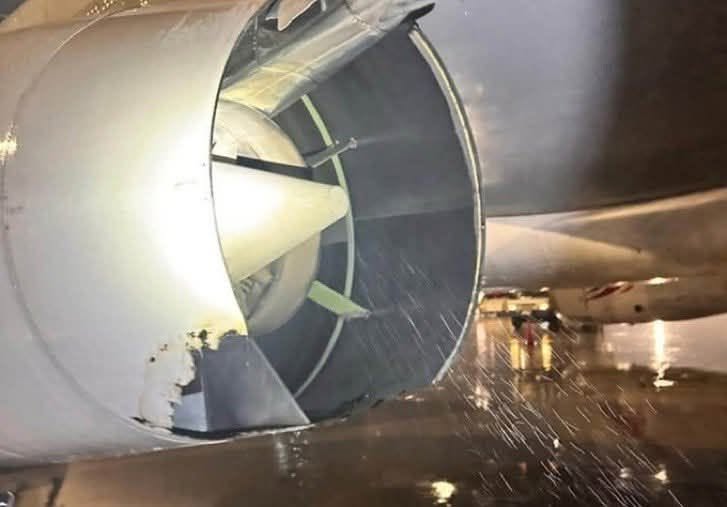
Lightning-related incidents in commercial aviation often draw intense public attention, especially when visual evidence suggests unusual engine behavior. A recent SriLankan Airlines Airbus A330-200 operating flight UL606 from Colombo to Sydney became the subject of such scrutiny after reportedly encountering a lightning strike shortly after departure on June 12. The aircraft, carrying 207 passengers and 16 crew members, returned to Bandaranaike International Airport as a precautionary measure after the crew observed indications of abnormal conditions during climb-out. Despite alarming imagery circulating online, the flight landed safely without injuries, underscoring the effectiveness of modern aircraft lightning protection systems.
Lightning strike incident over Colombo airspace
Aviation Safety Network data identified the aircraft as Airbus A330-243 registered 4R-ALH, powered by Rolls-Royce Trent 772B-60 engines. The aircraft had just entered its initial climb phase when the lightning event was reported, prompting the flight crew to assess system status and initiate a return to Colombo. Witness accounts and tracking data suggested a rapid decision-making process consistent with standard operating procedures for potential electrical or engine-related anomalies. Sri Lanka’s civil aviation authorities later confirmed the safe return of the aircraft within controlled airspace, noting that preliminary inspections would be required to determine whether the engines or external surfaces sustained any measurable damage.
Images shared by aviation observers on social platforms appeared to show brief flames or sparks near the right engine during climb, intensifying public concern about the severity of the event. However, aviation experts caution that lightning interactions with aircraft can produce transient visual effects without necessarily indicating catastrophic damage. The Airbus A330 is engineered with conductive pathways that channel electrical energy along the fuselage and away from critical systems. In this case, the aircraft’s long-service history and robust design characteristics likely contributed to its ability to remain controllable despite the alarming visual phenomena reported.
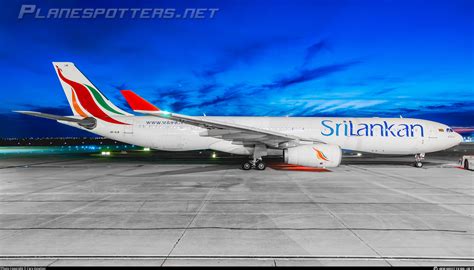
Aircraft and engine configuration details
4R-ALH is part of SriLankan Airlines’ Airbus A330-200 fleet, a widebody type commonly deployed on long-haul routes linking Colombo with destinations in Australia, Europe, and Asia. The aircraft is powered by two Rolls-Royce Trent 772B-60 turbofan engines known for their efficiency and reliability in extended operations. Configured with a dual-class cabin layout, it accommodates 18 business-class passengers and 252 in economy, supporting high-density intercontinental services. Built in 2004, the airframe represents a mature but still active example of the A330 family, which continues to serve many global carriers. Aviation engineers note that modern commercial aircraft are specifically designed to withstand lightning strikes, incorporating conductive skins, bonding straps, and redundant electrical systems that minimize risk to flight safety even when direct strikes occur.
Operational response and safety systems
Following the event, the flight crew elected to discontinue the long-haul journey to Sydney and return to Colombo as a precautionary measure. This decision aligns with standard airline procedures prioritizing immediate inspection after suspected lightning strikes, particularly when engine anomalies are observed or reported. SriLankan Airlines later confirmed that the aircraft landed safely and that a replacement aircraft was arranged to continue the service, minimizing disruption for passengers. Industry practice dictates that aircraft exposed to lightning undergo comprehensive engineering checks, including engine inspections, avionics diagnostics, and structural surface assessments before being cleared for return to service. Although unsettling for passengers and observers, such turnbacks are a routine element of aviation risk management designed to ensure continued airworthiness and operational safety.
Investigation context and aviation safety perspective
Post-incident assessments for events involving lightning strikes typically follow a structured investigative framework involving airline engineering teams, civil aviation authorities, and aircraft manufacturers. The primary objective is to determine whether electrical discharge caused any structural compromise, system malfunction, or engine damage that could affect continued airworthiness. In most modern airliners, including the Airbus A330 family, redundant design architecture significantly reduces the likelihood of catastrophic outcomes, even when direct strikes involve engine nacelles or leading edges. Investigators will analyze flight data recorder information, maintenance logs, and pilot reports to reconstruct the sequence of events with precision. While public attention often focuses on visible phenomena such as sparks or flames, technical evaluations frequently reveal that such effects are transient and not indicative of persistent failure. Nevertheless, each incident contributes valuable data to ongoing safety improvements across the aviation industry, reinforcing certification standards and operational procedures. The SriLankan Airlines case underscores how disciplined crew response, combined with robust aircraft design, ensures that even high-visibility weather events result in safe outcomes rather than escalation into emergencies. Such events reinforce continuous training, engineering refinement, and global aviation safety collaboration across operators and regulators worldwide oversight systems in practice today globally.