Defining Approach Climb and Landing Climb
Approach Climb (AC)
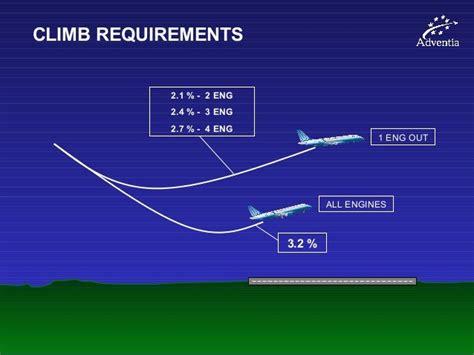
The Approach Climb (AC) is the climb performance required during a one-engine-out go-around while in the approach configuration. Certified under FAR 25.121(d), the approach climb is vital for ensuring that an aircraft can still maintain adequate altitude with one engine inoperative during the critical phase of approach. The approach climb must meet specific performance thresholds, with the Vs (stalling speed) being no greater than 110% of the landing configuration’s related Vs.
This certification specifies the required minimum steady climb gradients based on the number of engines: 2.1% for two-engine aircraft, 2.4% for three-engine aircraft, and 2.7% for four-engine aircraft. These gradients reflect the aircraft’s ability to maintain climb performance even with one engine disabled, ensuring that the aircraft can clear any obstacles in its path while executing a go-around maneuver.
Landing Climb (LC)
The Landing Climb (LC) refers to the go-around performance required when the aircraft is in the landing configuration, meaning all engines are operating and the landing gear is extended. This limit is specified by FAR 25.119, which mandates a minimum steady gradient of 3.2% for the aircraft to ensure it can safely climb out in the event of a missed approach. The landing climb is critical because it reflects the aircraft’s ability to perform a go-around when fully configured for landing. This is particularly important when an aircraft has just touched down or is in the process of landing and must immediately climb away from the runway.
The LC performance thresholds are often more restrictive than the AC limits, meaning that the landing climb limit is typically the more stringent of the two when an aircraft’s weight is being assessed for takeoff or landing planning purposes.
Certification and Aircraft Flight Manual (AFM) Limits
Weight-At-Threshold (WAT) Limits
The certification of both approach climb and landing climb limits is detailed in the Aircraft Flight Manual (AFM). The AFM provides crucial information regarding the Weight-At-Threshold (WAT) limits, which are designed to ensure that an aircraft can perform a safe missed approach or go-around. These WAT limits are based on the performance characteristics of both the AC and LC.
For example, the WAT limit will dictate the maximum weight an aircraft can have at the threshold of the runway while still being able to execute a safe go-around with the required climb gradient. This ensures that the aircraft has sufficient performance capabilities to clear any obstacles and avoid runway overruns during a go-around or missed approach scenario.
The WAT limits also govern the aircraft’s landing weight and operational weight limits. They help to define the maximum landing weight, ensuring that the aircraft is within the acceptable range for go-around performance under both approach and landing climb conditions.
Operational Use in Pre-flight Planning
Pre-flight planning involves ensuring that the aircraft’s actual weight does not exceed the WAT limits established by the AC or LC certification. The aircraft’s structural landing weight is also an important consideration, as it determines whether the aircraft can safely perform the required go-around climb. Additionally, flight planning must account for field-length limits using the 60%/40% rule. This rule specifies that, under normal conditions, the aircraft should be able to take off and climb out at the appropriate climb gradient with a significant safety margin.
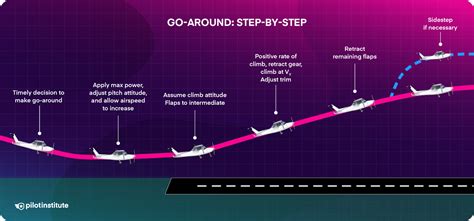
For an all-engines-operating (AEO) missed approach, pilots must promptly reconfigure the aircraft to the approach flap setting and retract the landing gear to optimize the climb performance. For example, on aircraft like the 737, pilots would typically adjust the flaps to 15 degrees and retract the gear. This is critical because it maximizes the aircraft’s climb performance during the go-around, especially when full power from all engines is available.
One-Engine-Inoperative (OEI) Approach and Critical Performance Margins
OEI Go-Around Scenarios
In contrast to the all-engines-operating scenario, the one-engine-inoperative (OEI) approach presents a much more challenging climb scenario. In this case, the aircraft is unable to use the full thrust of all its engines, making climb performance significantly more critical. Pilots typically use no more than approach flaps when performing an OEI go-around, and the landing gear remains extended.
The performance margins during an OEI go-around are generally marginal, meaning that the aircraft’s ability to maintain climb performance is more limited. This limitation is especially important in scenarios where runway length is a factor. Using flaps beyond the approach setting during an OEI go-around requires compelling justification that the aircraft has enough runway length to accommodate the reduced performance. This ensures that the aircraft can safely clear any obstacles without compromising its climb capability.
Importance of Flap Settings and Gear Configuration
The configuration of the aircraft’s flaps and gear is critical in determining the LC or AC performance during an OEI scenario. Pilots must carefully balance the flap settings to optimize climb performance while also considering the aircraft’s gear configuration. Extending the landing gear reduces the aircraft’s overall performance, so pilots must be judicious in managing these settings during a missed approach or go-around.
Legal and Safety Considerations
Variation in Rules and Jurisdictional Differences
While the AC and LC limits are widely adopted as performance thresholds, there are differences in how they are interpreted and applied in various jurisdictions. Some operators view these limits as mandatory for flight operations, while others consider them more of a takeoff planning tool. This discrepancy can lead to variations in operational procedures across different regions.
In CAT II/III operations with two-engine aircraft, for example, the required AC gradient increases from 2.5% to 3.0% to accommodate the more stringent conditions associated with low-visibility operations. This variation in requirements is critical for flight crews to consider when operating under different regulatory environments.
Operators often adopt conservative weight and runway-length criteria to mitigate legal and safety risks associated with exceeding the AC or LC limits. By doing so, they ensure that they are well within performance margins and can handle unforeseen circumstances during missed approaches or go-arounds.
Conclusion
The Landing Climb Limit (LC) and Approach Climb Limit (AC) are essential elements of safe aviation operations. These limits define the critical performance thresholds that aircraft must meet during go-arounds and missed approaches. Whether flying with all engines operating or in a one-engine-out scenario, pilots must be diligent in planning and adhering to these limits to ensure the safety of their flights. By understanding the technical specifications, certification requirements, and operational nuances of LC and AC, aviation professionals can better prepare for challenging flight scenarios, optimize their aircraft’s performance, and navigate complex regulations with confidence. Knowledge of these limits is vital not only for maintaining legal compliance but also for ensuring safe and efficient flight operations in all conditions.