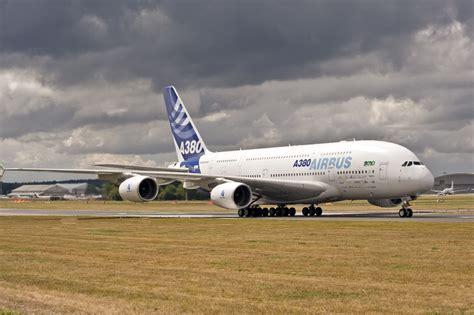
The Airbus A380 is a marvel of modern aviation—a double-decker, four-engine behemoth capable of carrying over 800 passengers in an all-economy configuration. However, for all its technological brilliance and capacity leadership, the aircraft exhibits a noticeably slower climb rate compared to other widebody jets. This performance attribute isn’t a flaw, but rather a consequence of aerodynamic realities, structural limitations, and the physics of flying a super-heavy aircraft.
The Physics of Mass: Why Weight Matters in Climb Performance
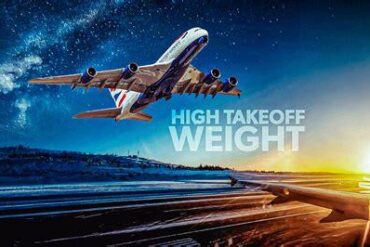
With a maximum takeoff weight (MTOW) of 575,000 kg (1,268,000 lbs), the Airbus A380 is by far the heaviest commercial passenger aircraft ever built. Its engines—four Rolls-Royce Trent 900s or Engine Alliance GP7200s—generate a combined 300,000 pounds of thrust, the highest of any commercial jetliner. Yet even this immense power is not enough to offset the sheer mass of the aircraft in the early phases of flight.
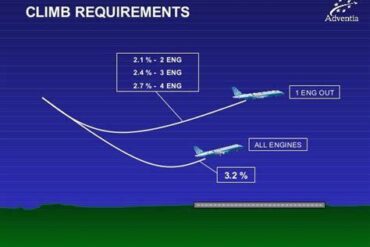
In aviation, the thrust-to-weight ratio is a crucial determinant of climb rate. While military jets prioritize this ratio to achieve high angles of attack, commercial airliners must strike a balance between efficiency, safety, and engine performance longevity. For the A380, this means that initial climb rates rarely exceed 1,500 feet per minute (fpm). The aircraft must carefully manage its energy budget—speed, altitude, and engine output—so that climb performance remains within operationally safe margins.
Engine Power vs. Aerodynamic Drag
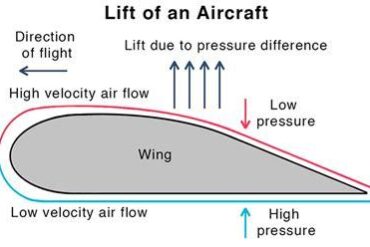
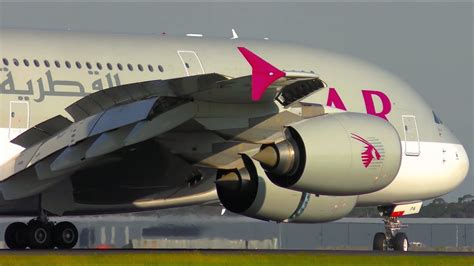
While the A380 boasts exceptional thrust, it also generates enormous aerodynamic drag, particularly in the dense lower atmosphere. The aircraft’s wingspan of 79.75 meters and large fuselage surface area contribute significantly to parasitic drag during takeoff and climb. The wide chord and high aspect ratio of the A380’s wings are designed to provide lift for long-haul cruising rather than rapid altitude gain.
Moreover, engine efficiency decreases with altitude, particularly during climb. The higher an aircraft goes, the thinner the air becomes, which means jet engines cannot operate at peak thrust. This drop in thrust performance becomes more pronounced beyond FL150 (15,000 feet), at which point the A380’s climb rate begins to taper off from 2,500 fpm to around 1,300 fpm, and eventually 1,000 fpm as it approaches cruise altitude.
Climb Rate Profile: A Step-by-Step Breakdown
Based on Eurocontrol data, the climb performance of the A380 across altitudes looks like this:
- Initial climb to 5,000 ft: 190 knots IAS at 1,500 fpm
- Climb to FL150: 320 knots IAS at 2,500 fpm
- Climb to FL240: 320 knots IAS at 1,300 fpm
- Climb to cruise (FL350–FL400): around 1,000 fpm
This gradual reduction in rate of climb is typical of heavy aircraft, but particularly so for the A380. During cruise, the jet settles at Mach 0.85, but the path to get there is deliberate and measured.
How the A380 Compares to Other Widebodies
To put its performance in context, let’s examine how the A380 fares against similar aircraft in initial climb phase:
| Aircraft | Initial Climb IAS | Initial ROC (fpm) |
|---|---|---|
| Airbus A380 | 190 knots | 1,500 |
| Boeing 747-8 | 230 knots | 2,500 |
| Boeing 777-300ER | 200 knots | 3,000 |
| Airbus A350-900 | 220 knots | 3,000 |
| Boeing 787-9 | 190 knots | 2,700 |
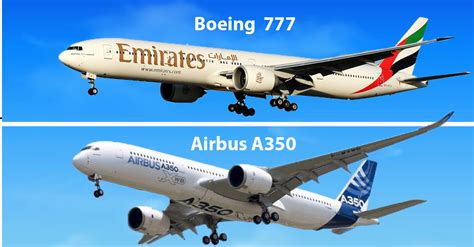
The A380 lags behind these more modern, twin-engine widebodies due to both its higher mass and older aerodynamic design philosophy. The A350 and 787 Dreamliner, with their use of carbon composite materials, weigh significantly less and benefit from advanced high-bypass turbofan engines that offer superior thrust-to-weight ratios despite having only two engines.
Descent Rates: The Downward Mirror
Just as climb rates are constrained, so too are descent rates. The A380 typically descends at 1,000 fpm from cruise altitude, increasing to 2,000 fpm down to FL100, and resuming 1,000 fpm during final approach. Compared to the 747-8, which can descend at 3,000 fpm below FL100, the A380 requires earlier descent planning—often beginning its descent nearly 30 minutes before landing to ensure smooth vertical navigation.
| Aircraft | Descent to FL240 | Descent to FL100 | Approach Descent |
|---|---|---|---|
| Airbus A380 | 1,000 fpm | 2,000 fpm | 1,000 fpm |
| Boeing 747-8 | 1,500 fpm | 3,000 fpm | 1,500 fpm |
| Airbus A350-1000 | 1,500 fpm | 2,500 fpm | 1,500 fpm |
| Boeing 787-9 | 2,500 fpm | 2,500 fpm | 1,500 fpm |
Airport Infrastructure Limits and Operational Impacts
The A380’s slow climb and descent profiles have operational implications beyond just timing. The aircraft’s enormous size requires specialized airport infrastructure. Under ICAO Code F, airports must feature 60-meter-wide runways, expanded taxiways, reinforced tarmac, and upgraded gate areas to accommodate the aircraft’s double-deck jet bridges.
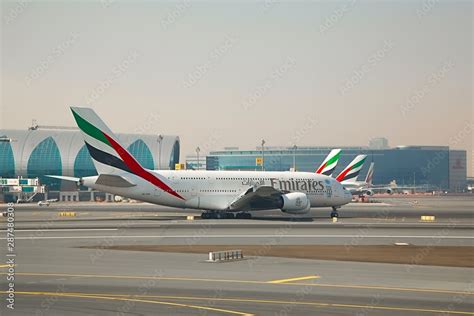
Globally, fewer than 150 airports are A380-certified, with only 16 in the United States. The most A380-heavy operations occur at Dubai International Airport (DXB)—the mega-hub of Emirates, the aircraft’s largest operator.
Raw Power: Four Engines, Maximum Thrust
While the A380 doesn’t climb like a sports car, it has unmatched engine thrust in the commercial segment. Each engine outputs roughly 75,000 lbf, providing a total of 300,000 lbf—more than six Boeing 737s combined. Though individual engines like the GE90 on the 777-300ER may surpass the Trent 900 in single-unit power, the A380 wins through scale.
Here’s how its MTOW compares with other giants:
| Aircraft | Maximum Takeoff Weight |
|---|---|
| Airbus A380 | 575,000 kg |
| Boeing 747-8 | 447,700 kg |
| Airbus A340-600 | 380,000 kg |
| Boeing 777-9 | 351,534 kg |
| Airbus A350-1000 | 319,000 kg |
Even the Boeing 777-9, soon to be the longest aircraft in commercial history, will not approach the A380 in terms of mass or thrust requirement. Thus, the aircraft’s slow climb is not a flaw—but the necessary price of scale.
Pilots Weigh In: Handling the Beast
Pilots consistently report that the A380 is surprisingly agile despite its size. Ali Kashwani, an Emirates captain, noted that the aircraft is “extremely responsive and easy to handle,” with remarkable stability and control. Captain Francis Carr further added that although takeoff requires deliberate management, the jet “slows down and descends quicker than you’d expect,” thanks to its large control surfaces and efficient fly-by-wire systems.
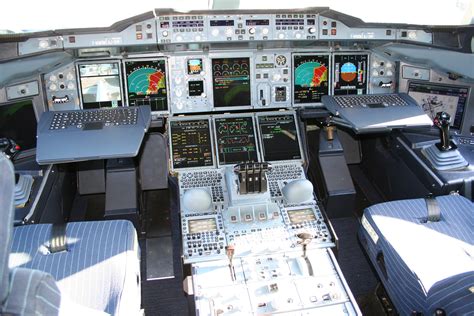
The Airbus cockpit commonality—standardized across A320 to A380 families—also allows for easier pilot transitions through Crew Cross Qualification (CCQ). While its slow climb demands respect and planning, it does not equate to poor performance. The A380 delivers smooth, powerful, and predictably elegant flying characteristics.
Conclusion: Designed for Comfort, Not Aggression
The slow climb rate of the Airbus A380 is a direct result of its unprecedented scale, weight, and mission profile. Designed to maximize comfort and range, not raw vertical performance, the aircraft trades high climb rates for endurance and stability. As the world’s only full-length double-decker airliner, its performance envelope is uniquely tuned.
This gentle ascent isn’t a weakness—it’s the engineering signature of aviation’s largest triumph, embodying the principle that greatness takes its time getting off the ground.