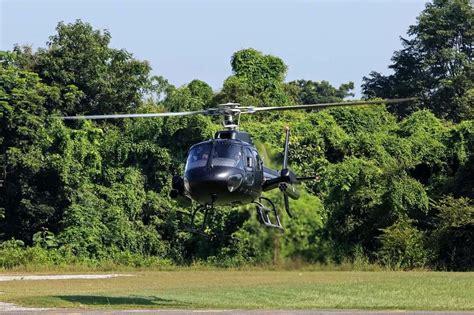
The helicopter stands as one of aviation’s most remarkable engineering feats, offering unparalleled versatility in both flight and landing capabilities. Unlike fixed-wing aircraft, helicopters can hover, reverse, take off vertically, and, most intriguingly, land in tight or unconventional spaces. This makes them invaluable in search and rescue operations, medical emergencies, military missions, and even executive transportation. Yet, despite the apparent freedom of vertical flight, there are strict limitations on where helicopters can actually land. Contrary to popular belief, helicopter pilots can’t simply pick any spot and touch down. A wide array of legal, safety, environmental, and operational constraints guide and, more often than not, restrict this decision.
Legal Restrictions and Airspace Regulations
Aviation laws around the globe treat helicopters with relative leniency compared to commercial airplanes, but this doesn’t translate to total freedom. Federal Aviation Administration (FAA) regulations in the United States, for example, outline specific requirements for helicopter operations in both controlled and uncontrolled airspace. Helicopters are granted some exemptions under Part 91 and Part 135 operations, but landing outside of designated helipads or airports typically requires prior approval.
Even when laws don’t prohibit a landing, local jurisdictions often impose their own ordinances. City councils, municipal aviation departments, and zoning boards may ban helicopter landings in public parks, school grounds, and residential neighborhoods unless there is an emergency or a special event permit has been issued. For example, landing a helicopter on a city rooftop, while technically feasible, usually requires months of paperwork, inspections, and safety verifications.
Landing on private property is generally permitted if the pilot has the landowner’s consent, but it still must comply with broader legal frameworks. In many countries, repeated landings on private land can trigger zoning or noise complaints that bring about legal ramifications.
Safety Comes First: The Physical Risks of Unplanned Landings
Although helicopters are equipped to land in far more diverse terrain than fixed-wing aircraft, this capability comes with substantial risk. Pilots must evaluate the ground condition, nearby obstacles, and the general stability of the environment before attempting to land. For example, loose gravel, sand, snow, or waterlogged fields can all spell disaster for rotorcraft attempting to settle.
Wind is another dangerous factor. Helicopters are particularly susceptible to crosswinds, downdrafts, and turbulence when flying close to the ground. Urban areas with skyscrapers and confined valleys can create wind tunnels that destabilize even experienced pilots during descent.
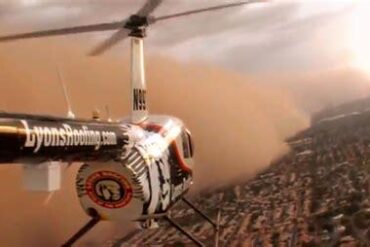
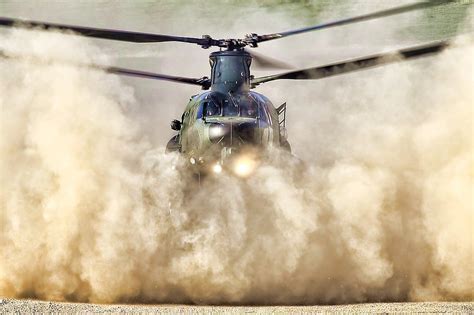
There’s also the concern of brownout and whiteout conditions, where sand or snow, respectively, gets kicked up into the air by the rotor wash, completely obscuring the pilot’s vision. This can cause catastrophic crashes during what would otherwise be a controlled landing.
Emergency Landings: When the Rules Change
During an emergency, everything changes. Helicopter pilots are granted wide discretion to land wherever necessary to preserve life and minimize damage. If a mechanical failure, fuel issue, or onboard medical emergency occurs, pilots can choose the safest available site, whether it’s a highway median, farm field, or even a parking lot.
The key here is pilot judgment. They are trained to assess options in real time, often in mere seconds. But even in emergencies, pilots are taught to avoid certain locations unless absolutely necessary. High-traffic zones, near power lines, or atop unstable structures are to be bypassed unless no safer option exists.
Post-landing, these emergency touchdowns often require the operator to file incident reports with local aviation authorities, and in some cases, may result in temporary suspension pending review—even if the pilot made the correct call under pressure.
Restricted Areas: No-Fly and No-Land Zones
There are regions where helicopters cannot legally land under any circumstances outside of emergencies. These include military zones, nuclear power plants, national landmarks, prisons, and some international borders. These areas are often patrolled by radar and monitored by defense systems that will act if they perceive an unauthorized craft entering controlled airspace.
Pilots are expected to review Notice to Air Missions (NOTAMs) before each flight to understand current restrictions or alerts along their route. Violating these zones, even unintentionally, can lead to criminal charges, loss of licensure, or even being intercepted by military aircraft.
Weather and Terrain Considerations
The dream of landing a helicopter in a mountain meadow or remote jungle clearing is not always aligned with reality. Weather conditions play a central role in where and whether a helicopter can land. Fog, lightning, and strong gusts can all render an area unsuitable, even if the terrain appears flat and spacious.
Slope angle, for instance, must typically be under 12 degrees for a safe touchdown, depending on the landing gear design. Additionally, the rotor’s diameter must clear nearby obstacles like trees, utility poles, or antennas by a wide margin. Even long grass can pose a hazard, potentially obscuring rocks, debris, or soft patches that could tip the helicopter.
Experienced pilots sometimes perform what’s known as a confined area landing, a highly technical maneuver that involves vertical descent into a tight spot. However, this requires specialized training and clearance from air traffic control in urban or controlled zones.
Experience Matters: Pilot Proficiency and Aircraft Type
Pilot experience directly influences landing capability. A seasoned aviator may confidently land on a mountaintop helipad in 30-knot crosswinds, while a novice might avoid even slightly sloped terrain. Many private owners undergo only basic training, which limits their comfort zone significantly.
Additionally, the type of helicopter plays a huge role. Light helicopters like the Robinson R44 have different handling characteristics and landing limitations compared to larger or heavier rotorcraft such as the Bell 412 or the Sikorsky UH-60 Black Hawk. Military helicopters are designed for combat insertions and rugged landings, often equipped with gear that can absorb hard touchdowns or operate in austere environments. Civilian craft, however, are generally optimized for comfort and minimal rotor wash, making them ill-suited for rough conditions.
Infrastructure Matters: The Importance of Designated Helipads
Despite the ability to land in open spaces, the preferred and most practical option is to use a designated helipad. These areas are constructed with non-slip surfaces, lighting for nighttime operations, wind indicators, and sufficient clearance from buildings and other hazards. More importantly, they are typically registered with aviation authorities and included in navigation databases used by pilots.
Urban heliports may be hospital-based, commercial-use, or private-use only. In many countries, regulations mandate specific approach and departure paths to minimize noise pollution and prevent accidents. Deviating from these paths, even for convenience, can trigger fines or jeopardize the operator’s license.

Helicopter Noise and Community Considerations
Helicopters are notoriously noisy, producing low-frequency vibrations and rotor blade “slap” sounds that can disturb residents. This is why public complaints are a powerful deterrent to free-range helicopter landings. In places like Los Angeles and New York, where chopper traffic is frequent, local aviation boards receive hundreds of complaints monthly about noise and perceived safety threats.
In response, many municipalities have created voluntary fly-quiet programs, restricting operations to specific corridors and hours. Violating these guidelines may not always be illegal, but it earns the operator negative attention and often results in policy crackdowns.
Final Thoughts: More Regulated Than You Think
Though the image of a helicopter gently descending into a scenic field or an urban plaza may seem plausible, the reality is far more nuanced. Legal barriers, safety hazards, technical limitations, and public sensitivities all serve to create a web of restrictions that govern where a helicopter can land. While emergencies provide temporary exemptions, the overall framework remains tightly controlled, particularly in populated or sensitive areas.
What appears to be freedom of the skies is, in truth, carefully choreographed compliance with a multitude of aviation laws and operational best practices. Helicopter pilots may have more landing options than their fixed-wing counterparts, but “anywhere” is never truly an option.