Flying helicopters through sandstorms is not merely a test of piloting skill—it is a brutal confrontation between engineering and the raw, abrasive force of nature. The whirling desert air, filled with pulverized rock and fine dust, doesn’t just challenge visibility; it corrodes, ignites, and confounds even the most advanced rotorcraft systems. Beneath the beauty of shimmering halos and glowing blades lies a landscape of danger where physics and pyrotechnics converge.
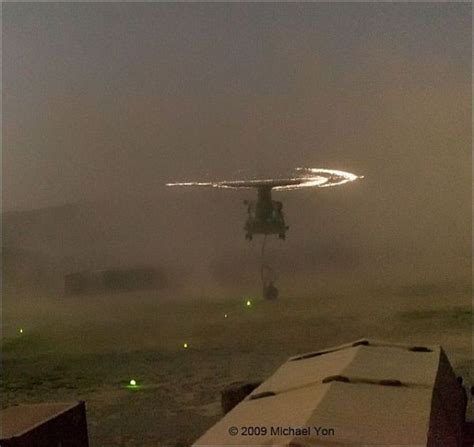
When helicopters dip low in desert conditions, their rotor blades stir up blinding clouds of fine sand, giving rise to one of aviation’s most surreal optical effects—the Kopp-Etchells Effect. At first glance, it resembles a sparkling nebula swirling around the blades—a celestial light show that turns war machines into kinetic sculptures. Yet the science behind this luminous display is anything but gentle.
The Kopp-Etchells Effect: Sparks Born of Violence
Coined by war photographer Michael Yon in 2009 during his time embedded with troops in Afghanistan, the Kopp-Etchells Effect was named in honor of two fallen soldiers: US Army Ranger Benjamin Kopp and British soldier Joseph Etchells. Despite being widely photographed, the phenomenon was misunderstood for years. Some thought it was caused by static electricity, an assumption later debunked by NASA engineers.
What actually happens is far more intense. Helicopter blades are often fitted with abrasion-resistant metal strips, typically made from titanium or nickel alloys, to protect them from erosion. But when these metals come into contact with high-speed sand particles—especially in vast, saturated clouds—a violent interaction occurs. The sand blasts micro-fragments of metal off the rotor blades, turning them into airborne powder.
If the metal is pyrophoric, it ignites on contact with air. This spontaneous ignition of fine metal dust, known as pyrophoric oxidation, is what causes the blades to sparkle in the night. Each flash is a tiny combustion, born not of electricity, but of friction, velocity, and chemistry. The Kopp-Etchells Effect, then, is not a gentle glow. It’s combustion made visible.
Sand as a Silent Destroyer of Helicopters
Beyond visual spectacle, sandstorms represent a mechanical and operational crisis for helicopters. These aircraft rely heavily on the precision of their rotor systems and the integrity of their engines—both of which are aggressively assaulted in sandy environments.
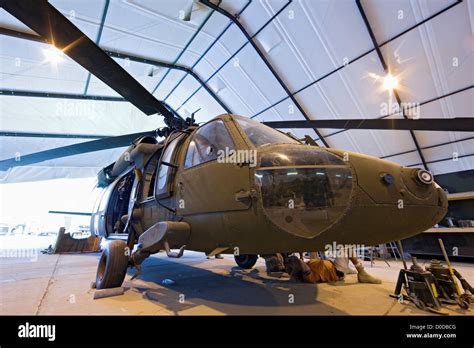
Fine sand is a persistent enemy. It abrades the composite materials of rotor blades, which leads to performance degradation and eventual failure. Worse still, sand infiltrates every possible opening on the aircraft, including air intakes and mechanical housings. Even with advanced particle separators and filtration systems, some of this fine grit finds its way into turboshaft engines, leading to accelerated wear.
As the engine breathes in abrasive material, components like compressor blades, turbine vanes, and bearings degrade rapidly. The outcome is a drop in available power, reduced performance, and a spike in maintenance cycles. In battlefield operations, this could spell the difference between mission success and catastrophic failure.
Brownout: When Dust Renders Pilots Blind
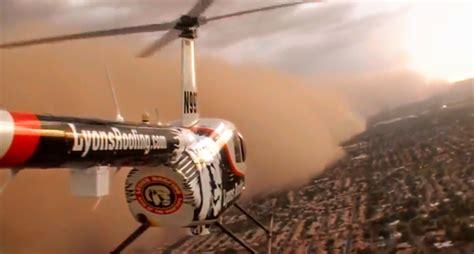
Perhaps the most treacherous effect of flying in sand is what’s called brownout. Unlike a simple case of poor visibility, brownout is a full-spectrum disorientation event. As a helicopter hovers close to the ground, its downwash stirs up a thick cloud of sand and dust from every direction. This turbulent, opaque vortex completely engulfs the aircraft.
Pilots lose all visual cues. The horizon vanishes, and the ground reference disappears. Even with night vision goggles or infrared systems, brownout conditions make it nearly impossible to gauge altitude or orientation. The result? Pilots often misjudge their height, drift laterally, or bank unintentionally—all while assuming they’re holding steady.
The consequences are deadly. According to Breaking Defense, brownouts have led to the loss of more than 600 American service members and 400 vertical-lift aircraft over the past two decades. More personnel and helicopters have been lost to brownouts than to enemy fire since 2001. These aren’t combat shoot-downs. They’re crashes caused by spatial disorientation and the limitations of human perception under stress.
Engineering Against the Sand
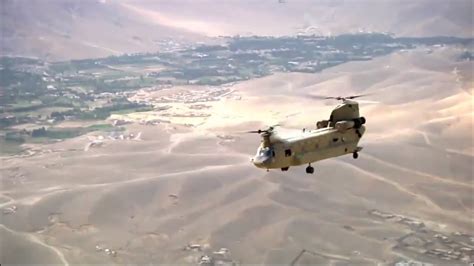
To combat the scourge of sand, engineers have introduced a variety of systems to helicopters designed for desert warfare. These include:
- Inertial particle separators that use centrifugal force to fling sand particles away from air intakes.
- Enhanced filtration systems on engine housings to trap fine particles before they enter.
- Rotor blade coatings and metal edges made of more abrasion-resistant materials.
- Helmet-mounted displays and synthetic vision systems to help pilots operate through visual obstruction.
Yet, these technologies have their limits. No system is 100% effective against the sheer volume of dust stirred up in a full sandstorm. At some point, piloting skill and mission risk become the final deciding factors.
Tactical Adjustments in Dusty Theaters
Military doctrine has evolved in response to the risk posed by sandstorms. Pilots in Afghanistan, Iraq, and parts of North Africa are trained extensively in dust landing techniques, often using simulators that replicate brownout environments. Some tactical approaches include:
- Approaching landing zones downwind to prevent dust from blowing into the rotor arc.
- Using pre-established landmarks or infrared beacons for orientation.
- Employing vertical descent techniques rather than shallow glides to reduce dust intake.
- Conducting airdrop missions or high hover insertions when landing is deemed too risky.
These adjustments help mitigate risk, but they also limit operational flexibility. The more complex the maneuvering required, the longer the aircraft remains exposed to threats.
Maintenance Burden and Combat Readiness
The wear and tear from sand doesn’t end with a single mission. The long-term maintenance burden on helicopters operating in dusty environments is staggering. Rotorcraft deployed in desert conditions require more frequent inspections, including blade replacement, engine overhaul, and avionics checks. Each sortie through a sandstorm chips away at system integrity.
This means that in conflict zones, aviation maintenance crews operate on tight margins. Helicopters must be rotated out of service regularly, spare parts must be stocked in abundance, and maintenance hangars must be equipped to handle high-cycle overhauls in harsh conditions.
The Human Factor: Mental Strain in Sandstorm Missions
Beyond the engineering and physics lies the human toll. Flying into a brownout demands extreme composure. Pilots often experience vestibular disorientation, where the body’s inner ear sends conflicting signals about motion and balance. Many describe the sensation as trying to hover while blindfolded on a trampoline.
Split-second decision-making becomes a gamble. One wrong nudge of the collective or cyclic can result in blade strikes, mast bumping, or a hard landing. In such scenarios, the difference between survival and tragedy may rest on a pilot’s last 10 seconds of instinct.
Combat pilots often report that the most terrifying moments of deployment weren’t under fire—but trying to land a helicopter in dust so thick it felt like flying through liquid concrete. These aren’t just anecdotes. They are reminders of how environmental conditions can surpass even the chaos of combat in lethality.
Conclusion: A War Fought Against Nature
Flying helicopters through sandstorms is more than a technical challenge—it’s a war against elemental chaos. The Kopp-Etchells Effect may dazzle with its cosmic brilliance, but it’s merely the surface sign of a violent mechanical struggle. From engine decay to brownout fatalities, sand inflicts a relentless assault on aviation.
Despite advancements in rotorcraft design, filtration, and pilot training, the desert continues to punish even the most modern aircraft. Every takeoff in a dusty theater is a gamble, where a single grain of sand can be the seed of destruction. And behind every halo of sparks is a warning: that nature, when stirred by steel and power, always fights back.