Antarctica, the last great wilderness on Earth, remains largely untouched not only by human settlement but by commercial aviation. Despite its scientific significance, strategic importance, and growing appeal as a tourist frontier, airlines do not regularly fly to Antarctica. The absence is not due to oversight or lack of curiosity, but rather an intricate weave of logistical, environmental, economic, and regulatory barriers that make sustained airline operations nearly impossible.
The Unforgiving Environment of Antarctica
Antarctica’s brutal climate is the foremost obstacle. With temperatures plunging below -60°C (-76°F) and hurricane-strength winds slicing through open plains, aircraft systems face intense stress, while landing conditions are frequently perilous.
Runways in Antarctica are either carved from snow, compacted ice, or the elusive “blue ice” — natural ice so dense that wheeled aircraft can land. These runways shift with glacial movement and require near-constant maintenance. The weather changes rapidly and often without warning, complicating both takeoff and landing schedules. A sudden whiteout can ground planes indefinitely, and a landing miscalculation can be catastrophic on unpaved, slippery surfaces.
Absence of Population & Infrastructure
The lack of a permanent civilian population on the continent translates into nonexistent commercial demand. Apart from a few thousand rotating scientists and support personnel at research stations, there are no residents, commuters, or cargo flows that justify regular commercial flights.
Facilities such as McMurdo Station, Casey Station, or Troll Research Base are geared toward science, not tourism or commerce. Unlike even the most remote inhabited places on Earth, Antarctica has no hotels, hospitals, or transit infrastructure to support airline passengers.
The rare exceptions — like the Whichaway Camp run by White Desert — cater to ultra-high-net-worth tourists and rely entirely on chartered aircraft, not scheduled airline services.
Charter Flights: The Only Viable Option
Specialized charter flights have filled the void where scheduled airlines cannot tread. These flights often originate in Cape Town, Punta Arenas, Oslo, Hobart, or Christchurch — the main Antarctic gateway cities. But these are not your standard Airbus or Boeing routes.
Hi Fly & White Desert
Hi Fly, a Portuguese charter operator, has pioneered large aircraft landings in Antarctica. Its recent Airbus A330-300 touchdown at Wolf’s Fang Runway in December 2025 was a milestone in aviation history. Operating on behalf of luxury operator White Desert, the flight was part of an exclusive, seasonal offering to adventure travelers.

Hi Fly previously made history by landing an Airbus A340 in 2021, showcasing its capability on blue ice runways. Flights typically depart from Cape Town, and only operate in Antarctic summer months (November to February), when the weather is marginally more stable.
Smartwings & Norse Atlantic
Other key players include Smartwings, which flew a Boeing 737 MAX 8 to Troll Airfield in support of the Norwegian Polar Institute, and Norse Atlantic Airways, which flew a Boeing 787 Dreamliner named Everglades to the same destination. These missions primarily support scientific operations, not passenger travel.
These unique journeys are coordinated through Aircontact, a Scandinavian air broker. Most flights carry equipment, researchers, or supplies, although a few rare trips include civilian adventure travelers.
Regulatory & Technical Barriers
The limitations of air travel to Antarctica also stem from international treaties and aviation regulations. The Antarctic Treaty System prioritizes scientific cooperation and environmental protection, severely restricting commercial exploitation. Establishing regular airline services would require overcoming a minefield of red tape.
From an aviation standpoint, ETOPS (Extended-range Twin-engine Operational Performance Standards) requirements further complicate things. Given Antarctica’s lack of diversion airports, twin-engine jets must meet the highest ETOPS certifications to ensure safety in case of an engine failure mid-flight. These certifications are rare, costly, and demand top-tier aircraft and crew.
Moreover, the region is poorly mapped for aviation purposes. With limited radar coverage, navigation relies heavily on GPS, and communication with air traffic control is intermittent at best. Emergencies in such a context pose life-threatening risks.
No Strategic Flight Path Advantage
Unlike the Arctic, which lies along major transcontinental routes between North America, Europe, and Asia, Antarctica offers no geographic advantage to any major global airline corridor. It is situated too far south, disconnected from population centers and trade networks.
Flights over the Arctic make sense: they shorten trips between New York and Tokyo or London and Los Angeles. No such efficiency is gained by flying over Antarctica. Southbound routes from Cape Town or Hobart don’t benefit from polar shortcuts; thus, overflying Antarctica has no economic utility for global aviation.
The Scarcity of Airfields
The limited number of runways suitable for fixed-wing aircraft further undermines the possibility of regular flights. Here are a few key airfields that stand out:
- Teniente R. Marsh Martin Airport (Chile): Gravel runway on King George Island, relatively accessible.
- Wolf’s Fang Runway (White Desert): Blue-ice surface usable by widebody jets in summer.
- Troll Airfield (Norwegian Polar Institute): Located in Queen Maud Land, used for research missions.
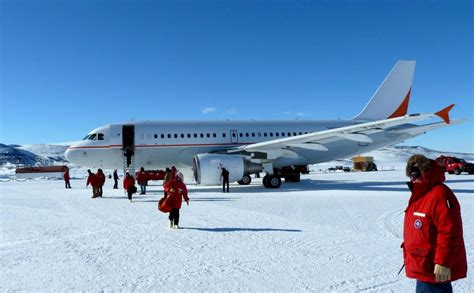
- Wilkins Aerodrome (Australia): Supports limited A319 flights from Hobart.
- Union Glacier Runway (ALE): Formerly Patriot Hills, used for logistics.
Most of these are seasonal, and none meet the year-round operational standards of modern commercial airports.

Government Operations: The Backbone of Antarctic Air Travel
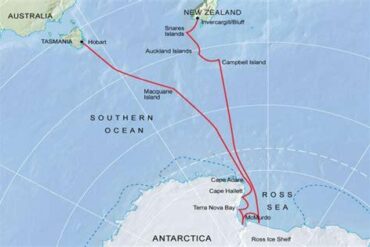
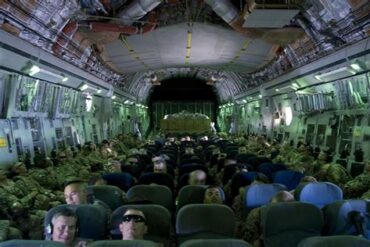
Beyond charters, the majority of Antarctic flights are government-funded military and scientific operations. The U.S. Antarctic Program’s “Operation Deep Freeze,” for example, relies heavily on C-17 Globemaster III aircraft from Christchurch to Phoenix Airfield, serving McMurdo Station.
New Zealand, Australia, Russia, and other nations operate military and research aircraft to supply their outposts. Aircraft like the LC-130 Hercules, Basler BT-67, and Twin Otter — often equipped with skis — dominate the skies, built for short, rough landings in unpredictable conditions.
Russia’s Novo Runway is used by heavy Ilyushin Il-76 jets, while Australia’s Wilkins Aerodrome facilitates limited commercial-grade access via Airbus A319s. Yet, these are exceptions — not the rule — and serve specific national research mandates.
The Economics of Antarctic Air Travel
From a financial standpoint, flying to Antarctica is a non-starter for most airlines. The costs of fuel, insurance, aircraft modification (if needed), crew training, cold-weather survival gear, and risk mitigation are astronomical. Flights need to be fully loaded with passengers and cargo to justify expenses, and Antarctica offers no such consistent demand.
Furthermore, in the event of delays — a frequent occurrence due to volatile weather — the costs escalate dramatically. Unlike typical airlines, which rely on multiple daily flights and dense passenger volumes, Antarctic operations involve days or weeks of planning for a single sortie.
Antarctic Sightseeing Flights: The Closest Alternative
The only regularly scheduled flights that interact with the continent in any way are sightseeing overflights. Qantas offers non-landing flights over Antarctica, primarily from Australian cities like Melbourne and Sydney, using Boeing 787 Dreamliners. These flights cross over the edge of the continent, offering aerial views without touching down.
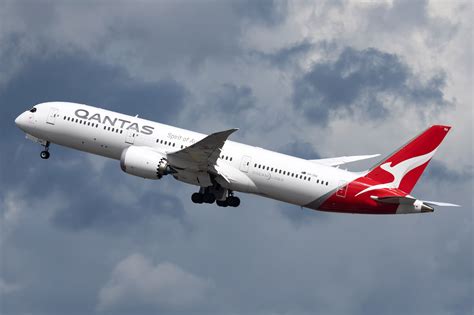
These charter-style adventures sell out quickly, reflecting a strong curiosity among travelers — but not strong enough to make landing flights commercially viable. Passengers enjoy 12–14-hour round trips, complete with expert commentary, but never leave the aircraft.
The Future: Will Commercial Flights Ever Be Feasible?
Advancements in aviation technology, such as ultra-long-range aircraft, better GPS-guided landing systems, and improved weather forecasting tools could someday make Antarctica more accessible. Innovations in green aviation and increased demand for eco-tourism may also incentivize operators to explore new routes.
Still, the challenges remain immense. Unless Antarctica experiences a paradigm shift — such as the creation of permanent civilian settlements or critical trade infrastructure — scheduled commercial airline service will remain an elusive dream.
Final Thoughts
Antarctica’s enduring isolation is not a failure of ambition, but a testament to the planet’s untamable extremes. Airlines have tested the limits of what is possible, but for now, only charters and military-grade missions touch the southernmost continent. For those eager to glimpse the icy expanse, chartered adventure travel or sightseeing overflights remain the only portals — and perhaps, for the foreseeable future, the only ones we’ll need.