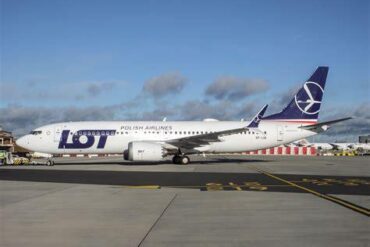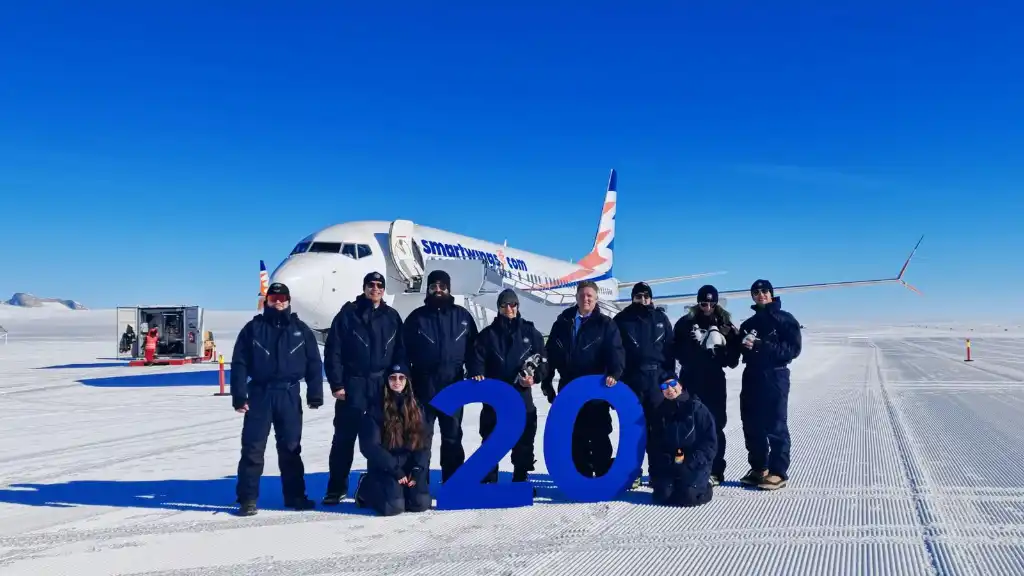
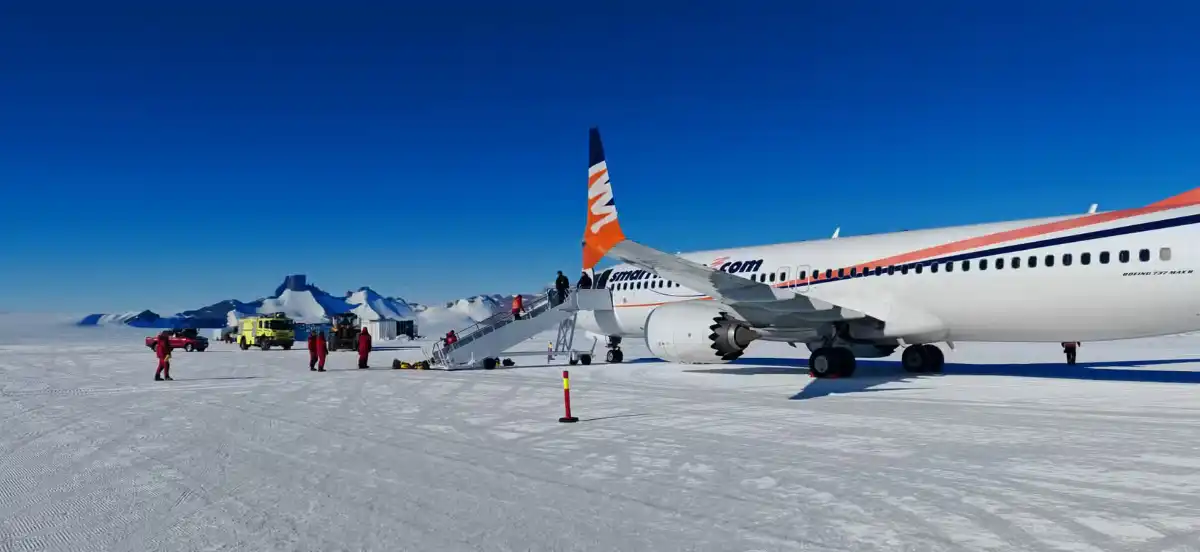
Antarctica is one of the most remote and unforgiving environments on Earth, a continent defined by extreme cold, shifting ice, and unpredictable weather systems. Commercial aviation rarely ventures this far south, and when it does, the operations are usually carried out by specialized aircraft designed specifically for polar logistics. Yet in a remarkable demonstration of modern aviation capability, Czech airline Smartwings successfully operated a Boeing 737 MAX 8 to Antarctica, supporting scientific research efforts at the remote Troll Research Station in Queen Maud Land.
The mission, completed in late February, represented the airline’s 20th logistical flight to Antarctica, reinforcing its growing reputation as one of the few civilian operators capable of conducting such complex operations. Using a narrow-body jet normally associated with short- and medium-haul passenger routes across Europe, Smartwings proved that—with meticulous planning and highly trained crews—even a modern commercial aircraft like the Boeing 737 MAX can operate in one of the harshest aviation environments on the planet.
The operation was far from a routine charter flight. Every stage of the journey required careful coordination between pilots, ground teams, meteorologists, and polar logistics specialists. From route planning across continents to the delicate landing on an ice runway deep within Antarctica, the mission showcased a remarkable blend of aviation expertise and scientific collaboration.
A Multi-Continent Journey Toward the Antarctic Frontier
The aircraft involved in the mission, registered OK-SWM, began its journey on February 23 with a carefully planned route linking several continents. The flight initially departed from Oslo Airport in Norway, carrying supplies and equipment destined for the Norwegian-operated Troll Research Station.
From Oslo, the aircraft made a stop in Prague, the Czech Republic, before continuing south to Abuja, Nigeria. These intermediate stops served logistical and operational purposes, allowing the crew to manage fuel loads, cargo requirements, and regulatory procedures for a flight that would eventually cross into one of the least accessible regions on Earth.
The aircraft arrived in Cape Town, South Africa, early on February 24. Cape Town acts as one of the primary gateways for Antarctic logistics missions due to its relative proximity to the continent and established infrastructure supporting polar operations. Once on the ground, the Smartwings crew began the critical preparation phase for the final leg of the journey.
Unlike conventional airline schedules, flights to Antarctica depend entirely on narrow weather windows. Pilots and meteorologists spent two days monitoring atmospheric conditions across the Southern Ocean and Queen Maud Land, ensuring that visibility, winds, and surface conditions would allow a safe landing on the ice runway serving Troll Station.
Waiting for the Perfect Weather Window
Operating a Boeing 737 MAX 8 in Antarctica requires precise environmental conditions. The runway at Troll Station is not asphalt or concrete but rather a carefully prepared ice strip, which must be maintained to ensure sufficient friction and structural stability for jet operations.
Only when meteorological forecasts confirmed acceptable conditions did the crew receive clearance to depart. In the early hours of February 26, the aircraft lifted off from Cape Town and began its long flight south across the frigid Southern Ocean toward Antarctica.
For pilots, the approach into Troll Station is unlike almost any other landing in commercial aviation. With limited ground infrastructure, minimal navigation aids, and rapidly changing weather patterns, crews rely heavily on specialized training and detailed pre-flight planning. The surface conditions of the ice runway must also be carefully inspected to ensure the aircraft can land and stop safely.
When the aircraft finally touched down at Troll, it marked another milestone in the airline’s growing portfolio of polar aviation achievements.
Delivering Supplies to a Critical Antarctic Research Hub
Troll Research Station is operated by the Norwegian Polar Institute and serves as a vital center for scientific work in East Antarctica. Researchers stationed there conduct studies ranging from climate science and atmospheric monitoring to glaciology and environmental research.

Maintaining operations at such an isolated location requires a constant flow of supplies, equipment, and personnel. Traditional Antarctic logistics often rely on cargo aircraft or long overland traverses across the ice. However, the use of a modern jet like the 737 MAX 8 significantly improves efficiency, allowing larger loads and faster transport between continents.
During this mission, Smartwings delivered essential cargo supporting ongoing scientific projects. Equipment, operational supplies, and logistical materials were unloaded after the aircraft arrived at the station’s ice runway.
The aircraft remained at Troll overnight, giving the crew time to rest while technicians and ground teams ensured the aircraft remained ready for its return journey. Operating in Antarctica demands strict adherence to safety procedures and environmental guidelines, as the continent is protected by international treaties designed to preserve its fragile ecosystem.
Returning With Polar Expedition Members
On the afternoon of February 27, the Boeing 737 MAX departed Troll Station once again, this time carrying members of a polar expedition heading north. The aircraft retraced its route back to Cape Town, where the crew could conduct inspections and prepare for the remaining legs of the journey back through Africa and Europe.
This return flight highlighted the dual role of Antarctic aviation missions: they transport critical supplies southward while also enabling the safe rotation of scientists and researchers working in extreme isolation.
The successful completion of the journey represented the 20th Antarctic mission conducted by Smartwings, an impressive record in a niche segment of aviation that few airlines attempt.
The Historic Role of the Boeing 737 MAX in Antarctica
Smartwings has already secured a place in aviation history through its Antarctic operations. In January 2022, the airline became the first carrier to land a Boeing 737 MAX on the Antarctic continent, demonstrating the aircraft’s ability to operate safely in extreme environments when supported by detailed operational planning.
The 737 MAX is typically associated with commercial passenger routes across Europe, Asia, and North America. However, its range, fuel efficiency, and modern avionics make it capable of performing specialized charter missions when properly configured.
For polar operations, crews undergo extensive preparation that includes:
- Advanced polar navigation procedures
- Training for remote airfield operations
- Detailed understanding of Antarctic meteorology
- Coordination with international research logistics teams
Such missions illustrate how modern commercial aircraft can be adapted for highly specialized roles far beyond their traditional airline operations.
Why Antarctic Aviation Remains Rare
Despite advances in aircraft technology, flights to Antarctica remain extremely uncommon. The continent presents unique challenges that limit aviation activity to specialized charter operators and national research programs.
Infrastructure is minimal, weather conditions change rapidly, and environmental protections impose strict operational limits. Many Antarctic airfields consist of seasonal ice runways, requiring constant monitoring to ensure they remain safe for aircraft operations.
As global scientific interest in Antarctica continues to grow—particularly in areas such as climate change and polar ecosystems—the demand for reliable logistics support is likely to increase. Airlines capable of performing these missions play a crucial role in bridging the vast distance between research stations and the rest of the world.
The February mission to Troll Station demonstrates how Smartwings has carved out a unique niche in Antarctic aviation, combining commercial aviation expertise with the specialized demands of polar logistics. With each successful mission, the airline further strengthens its position among the small group of operators capable of flying modern jet aircraft to the frozen frontier of Antarctica.