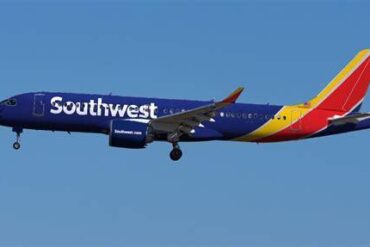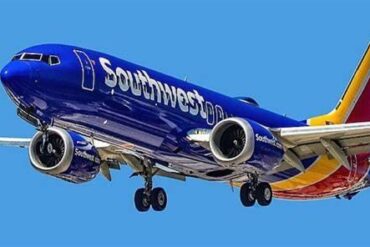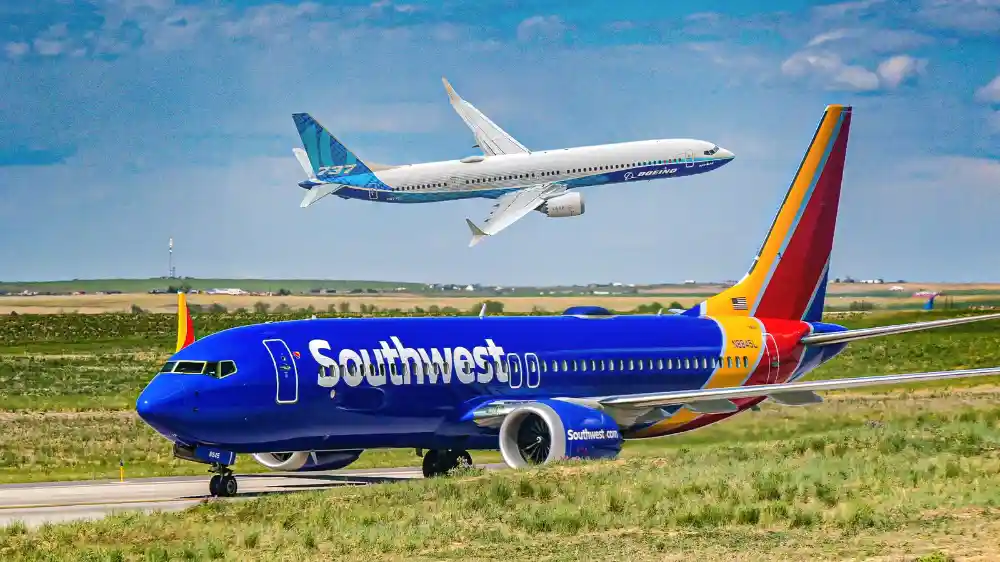
Southwest Airlines occupies a unique position in the global aviation industry. Few airlines have built their entire identity around a single aircraft family as successfully as Southwest has with the Boeing 737. For more than five decades, the Dallas-based carrier has refined its operating model, network strategy, maintenance systems, and crew training around one aircraft type. While many airlines continuously seek larger and more capable aircraft to maximize efficiency, Southwest has taken a markedly different path.
At a time when the Boeing 737 MAX 10 and Airbus A321neo are becoming increasingly important to airlines worldwide, Southwest remains remarkably unconcerned about adding Boeing’s largest MAX variants. The carrier has instead doubled down on the smaller Boeing 737 MAX 7 and Boeing 737 MAX 8, creating a fleet strategy that perfectly aligns with its business model rather than following broader industry trends.
This approach may seem unusual from the outside. After all, larger narrowbody aircraft are dominating airline order books across the globe. Yet Southwest’s resistance to the MAX 9 and MAX 10 is not a sign of hesitation or conservatism. It is the result of a carefully calculated strategy that prioritizes flexibility, frequency, simplicity, and operational efficiency above all else.
After purchasing more than 1,700 Boeing 737 aircraft throughout its history, Southwest arguably remains Boeing’s most influential airline customer. The relationship between the two companies has shaped not only Southwest’s growth but also the evolution of the 737 itself.
By understanding why Southwest remains committed to the MAX 7 and MAX 8 while showing little interest in the MAX 9 or MAX 10, it becomes clear that the airline is playing a very different game than many of its competitors.
The Growing Popularity of Larger Narrowbody Aircraft
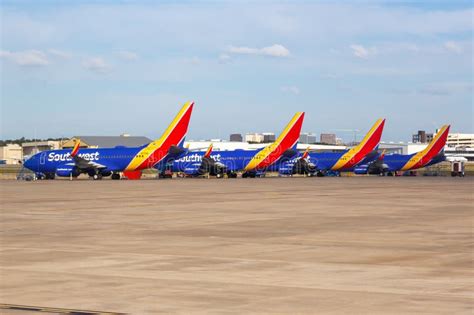
The modern airline industry has increasingly embraced larger single-aisle aircraft. Carriers across Europe, North America, Asia, and the Middle East have discovered that stretching existing aircraft designs can produce significant economic advantages.
Aircraft manufacturers typically develop a baseline model and then create larger or smaller variants. The larger versions generally offer lower operating costs per seat because fuel consumption and crew expenses do not increase proportionally with passenger capacity. As a result, airlines can spread costs across more travelers, improving profitability.
This trend has become particularly evident with the latest generation of narrowbody aircraft. The Airbus A321neo has emerged as one of the most successful commercial aircraft ever produced, attracting thousands of orders from airlines seeking greater capacity without moving into widebody territory.
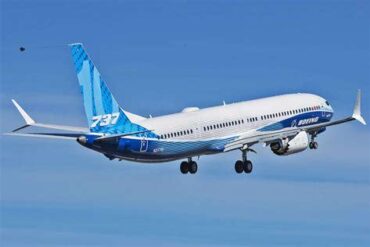
Boeing responded with the 737 MAX 10, a stretched version of the 737 MAX family designed to compete directly with Airbus’s larger offering. Thanks to improved engines and aerodynamic refinements, the MAX 10 offers substantially more seats than the MAX 8 while consuming only modestly more fuel.
For many airlines, the economics are compelling. Routes that previously required multiple smaller aircraft can often be served more efficiently with fewer larger aircraft. Airport slot constraints, rising labor costs, and increasing demand have all contributed to the popularity of larger narrowbodies.
Yet Southwest does not face these challenges in the same way as many of its rivals.
Southwest’s Business Model Favors Frequency Over Size
The foundation of Southwest’s success has never been based on operating the largest aircraft possible. Instead, the airline built its reputation around providing frequent departures, extensive connectivity, and convenient schedules.
Unlike many ultra-low-cost carriers that focus heavily on maximizing seats per flight, Southwest historically emphasized customer convenience. The carrier developed a point-to-point network that allowed passengers to travel directly between numerous city pairs without relying on traditional hub-and-spoke systems.
This strategy created a competitive advantage, particularly among business travelers who value departure flexibility. Rather than offering one or two daily flights with large aircraft, Southwest often operates multiple frequencies throughout the day using smaller aircraft.
In this environment, adding significantly larger airplanes does not necessarily improve performance. In many cases, operating more flights with moderately sized aircraft creates greater customer appeal than consolidating passengers onto fewer departures.
The airline’s network structure therefore naturally favors aircraft that offer flexibility rather than maximum capacity.
For Southwest, the question is not how many passengers can fit on a single flight. The more important question is how effectively an aircraft can support the airline’s high-frequency operating model.
A Long History of Avoiding the Largest 737 Variants
Southwest’s reluctance to embrace the largest members of the Boeing 737 family is not a new phenomenon.
Historically, the airline has consistently preferred smaller variants even when larger options were available. During the Boeing 737 Classic era, Southwest primarily operated the 737-300 and 737-500 while avoiding the larger 737-400 altogether.
Similarly, throughout much of the Next Generation era, the airline relied heavily on the Boeing 737-700. The larger Boeing 737-800 did not enter Southwest service until 2012, long after many competitors had adopted larger aircraft as fleet cornerstones.
This pattern reveals an important aspect of Southwest’s philosophy. The airline rarely chases industry trends simply because they are popular. Instead, management evaluates aircraft through the lens of operational fit.
The result has been a fleet structure built around aircraft that support the airline’s unique network requirements rather than maximizing seat counts.
Why Fleet Simplicity Matters More Than Ever
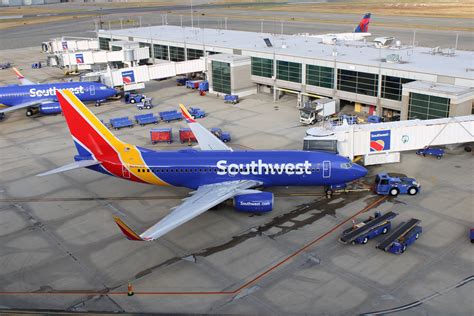
One of Southwest’s greatest competitive advantages is its extraordinary level of fleet commonality.
Today, the airline operates nearly 800 aircraft, all of which belong to the Boeing 737 family. This level of standardization is almost unmatched among major airlines.
Operating a single aircraft family delivers numerous benefits. Pilot training becomes simpler and less expensive. Maintenance procedures remain highly standardized. Spare parts inventories are easier to manage. Aircraft scheduling becomes more flexible because virtually every aircraft can substitute for another.
These efficiencies generate substantial cost savings across the organization.
Introducing additional aircraft variants inevitably increases complexity. Although the MAX 10 remains part of the 737 family, adding another major subfleet would still require new operational planning, additional training considerations, and increased fleet management complexity.
Southwest’s long-term goal appears focused on simplifying its fleet even further. The airline aims to transition toward a fleet centered primarily around the MAX 7 and MAX 8, reducing the number of active aircraft variants.
Under such a strategy, adding the MAX 10 offers limited advantages while introducing additional complexity.
The Unique Role of the Boeing 737 MAX 7
The Boeing 737 MAX 7 occupies a very unusual position within the global aviation market.
Compared with other MAX variants, the aircraft has generated relatively modest sales. Most airlines prefer either the larger MAX 8 or MAX 10 because those aircraft provide stronger revenue potential.
However, Southwest represents a major exception.
The airline accounts for the overwhelming majority of MAX 7 orders and played a significant role in shaping the aircraft’s development. Boeing effectively tailored portions of the MAX 7’s design to address Southwest’s operational preferences.
Unlike the older 737-700, the MAX 7 benefits from design changes that improve efficiency while also increasing capacity. The aircraft offers more seats than its predecessor while maintaining the flexibility Southwest values.
For Southwest, the MAX 7 serves as the ideal replacement for hundreds of aging 737-700 aircraft.
Rather than pursuing dramatic growth in aircraft size, the carrier can achieve gradual capacity increases throughout its network while preserving the operational characteristics that have defined its business model for decades.
This makes the MAX 7 strategically more valuable to Southwest than the larger MAX 9 or MAX 10.
The MAX 8 Already Covers Southwest’s Higher-Capacity Needs
While the MAX 7 receives significant attention due to its delayed certification process, the Boeing 737 MAX 8 remains the true backbone of Southwest’s future fleet.
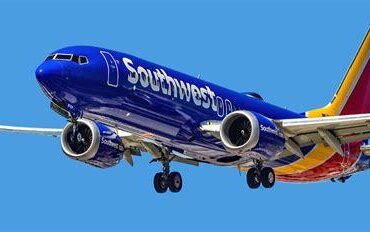
The airline has ordered nearly 500 MAX 8 aircraft and has already taken delivery of hundreds. With seating capacity significantly higher than the 737-700, the MAX 8 already provides meaningful network-wide upgauging.
For Southwest, this is a critical point.
Many airlines order larger aircraft because they need additional capacity. Southwest is already achieving that objective through the ongoing replacement of older 737-700s with MAX 8s and MAX 7s.
The transition allows the carrier to increase available seats without fundamentally changing its operational model.
As more MAX 8s enter service and MAX 7 deliveries begin, Southwest will naturally experience a substantial increase in overall fleet capacity. The airline therefore faces little pressure to pursue even larger aircraft.
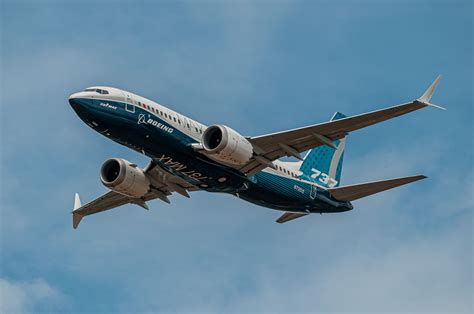
Why the Boeing 737 MAX 10 Solves a Problem Southwest Does Not Have
The Boeing 737 MAX 10 exists primarily because Boeing needed a stronger competitor to the Airbus A321neo.
Across the industry, airlines increasingly demand aircraft capable of carrying more passengers while maintaining narrowbody economics. The MAX 10 addresses this requirement by offering improved per-seat costs and higher capacity than the MAX 8.
For airlines facing slot restrictions at major airports, the MAX 10 can be particularly attractive. If an airline cannot add additional flights, increasing aircraft size becomes the most effective way to accommodate growth.
Southwest, however, generally operates under different circumstances.
The carrier’s network includes numerous secondary airports and point-to-point routes where frequency often matters more than aircraft size. Many of its markets simply do not require the passenger volumes that would justify widespread MAX 10 deployment.
Moreover, the benefits of the MAX 10 become less compelling when weighed against Southwest’s commitment to fleet simplicity and operational flexibility.
The aircraft solves capacity constraints that Southwest largely does not face.
Certification Delays Have Reinforced Existing Priorities
Both the MAX 7 and MAX 10 have experienced lengthy certification delays, creating uncertainty for airlines awaiting deliveries.
For Southwest, however, the situation has not altered the company’s long-term fleet vision.
The airline continues to view the MAX 7 as a central component of its future strategy. Once certification is completed, deliveries will accelerate the retirement of older Next Generation aircraft while maintaining fleet consistency.
The MAX 10’s certification timeline, by contrast, carries far less strategic significance for Southwest. While other airlines eagerly await the aircraft’s arrival, Southwest has no urgent operational requirement that depends on the MAX 10 entering service.
This difference highlights how distinct Southwest’s priorities remain compared with many global competitors.
Why Southwest’s All-737 Future Remains Secure
Industry observers periodically speculate about Southwest eventually introducing a second aircraft type. The Airbus A220 is frequently mentioned as a potential candidate due to its impressive economics and growing popularity.
Yet history suggests such a shift remains unlikely in the near future.
Southwest’s all-737 strategy continues to deliver powerful advantages. Few airlines have achieved comparable levels of operational standardization at such scale. The carrier’s maintenance systems, training infrastructure, scheduling processes, and corporate culture are all deeply intertwined with the Boeing 737.
As long as the 737 family continues meeting Southwest’s requirements, there is little incentive to disrupt a proven formula.
The airline’s future fleet vision appears increasingly clear: a streamlined combination of Boeing 737 MAX 7 and Boeing 737 MAX 8 aircraft capable of supporting growth while preserving the operational simplicity that has long defined Southwest’s success.
Southwest Is Following Its Own Playbook
The absence of Boeing 737 MAX 9 and MAX 10 orders is not an oversight, nor is it a temporary pause before a future purchase announcement. It reflects a deliberate strategic choice rooted in Southwest Airlines’ unique operating philosophy.
While much of the airline industry races toward larger narrowbody aircraft, Southwest remains focused on flexibility, frequency, fleet commonality, and network efficiency. The airline already possesses the tools it needs through the MAX 7 and MAX 8, both of which align closely with its long-established business model.
The MAX 10 may become an essential aircraft for many carriers around the world, particularly those competing directly against the Airbus A321neo. Southwest, however, operates according to a different set of priorities. Its growth strategy does not depend on maximizing aircraft size. Instead, it depends on maximizing operational efficiency across a vast point-to-point network.
For that reason, Southwest is unlikely to lose sleep over the MAX 9 or MAX 10 anytime soon. The airline has spent decades proving that success is not determined by flying the biggest aircraft available, but by flying the right aircraft for the job.