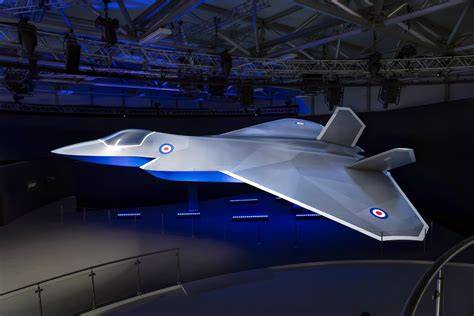
The road to a sixth-generation fighter does not begin with a sleek prototype emerging from a factory. Long before a combat aircraft takes shape, engineers must prove that its sensors, communications, electronic warfare systems, software, and autonomous capabilities can operate together under realistic conditions. For the Global Combat Air Programme (GCAP), that demanding work is being carried out partly aboard an aircraft that once carried ordinary airline passengers: a Boeing 757-200.
Known as Excalibur, the heavily modified aircraft is operated by UK aviation specialist 2Excel Aviation and developed with Leonardo UK as part of Team Tempest. Rather than being the fighter itself, the 757 functions as a flying laboratory where technologies destined for GCAP can be installed, connected, tested, modified, and tested again before they are squeezed into a far smaller combat-aircraft environment.
That makes the aircraft particularly important. A fighter jet has limited room for experimental equipment, limited electrical and cooling capacity, and little tolerance for major redesign once production configurations become established. A Boeing 757 offers engineers something much more valuable: space, payload capacity, endurance, and flexibility. Technologies can therefore be tested in the air years before they are mature enough to fly on the eventual fighter.
Why GCAP Needs a Boeing 757 Testbed
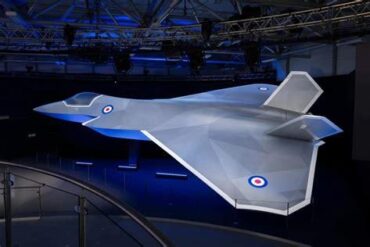
GCAP is being developed by major industrial partners from the United Kingdom, Italy, and Japan, with BAE Systems, Leonardo, and Mitsubishi Heavy Industries forming the core industrial structure. The program is intended to create an advanced combat-air system capable of operating in an increasingly connected battlespace.
That ambition creates an unusual engineering problem. The future fighter will not simply depend on a powerful engine, sophisticated radar, or low-observable shaping. Its effectiveness will increasingly come from how successfully it can combine information from numerous sensors, communicate with other platforms, employ electronic warfare, and coordinate with uncrewed aircraft.
Computer simulation is indispensable for developing these capabilities, but simulation cannot reproduce every feature of a real flight environment. Aircraft vibration, electromagnetic interference, atmospheric conditions, sensor geometry, latency, antenna performance, software behavior, and interactions between different systems can produce results that are difficult to predict entirely on the ground.
This is where Excalibur becomes valuable. Leonardo has described airborne testing as a fundamental enabler because it allows engineers to evaluate technologies in representative environments and gather information that modeling alone cannot provide.
The Boeing 757 was selected for practical reasons. Its large fuselage can accommodate racks of electronics, computing equipment, power systems, instrumentation, and experimental hardware. Its performance also allows it to operate in environments relevant to future fighter systems without requiring engineers to modify an expensive and tightly optimized combat-aircraft prototype every time a component changes.
From Iberia Airliner to Flying Laboratory
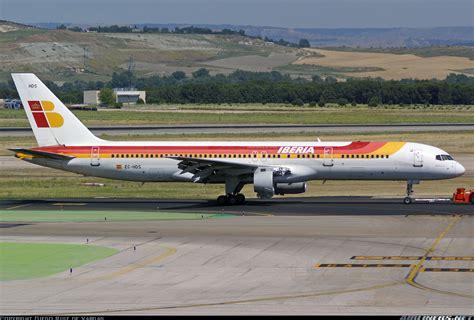
The history of Excalibur is almost as interesting as its current mission. The aircraft was originally delivered to Spanish flag carrier Iberia in 2000, carrying the registration EC-HIR. Its manufacturer serial number is 29308, and its original configuration was about as far removed from a sixth-generation fighter program as possible.
For several years, it performed conventional airline duties before moving through a succession of operators and leases. It subsequently operated with Turkey’s Atlasjet and was also leased to airlines including Ethiopian Airlines, Eritrean Airlines, and Saudi Arabian Airlines.
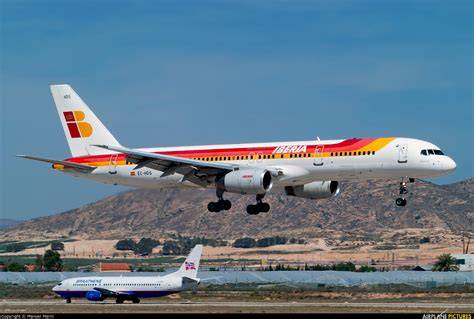
In 2012, the aircraft entered the UK aviation market with Titan Airways, becoming G-POWH. Four years later, Titan leased it to Jet2. Its commercial career eventually came to an end when 2Excel Aviation acquired it in 2023 and registered it as G-FAI.
The transformation illustrates one of aerospace testing’s most useful principles: an aircraft does not need to have been designed as a testbed to become an exceptionally capable one. A mature commercial platform can provide engineers with a proven airframe, reliable flight characteristics, substantial internal volume, and the ability to carry equipment that would be difficult to accommodate elsewhere.
Excalibur also benefits from having a second Boeing 757 associated with the program. The other aircraft was acquired by 2Excel in 2020 after serving with Britannia Airways and its successor organizations, including the TUI Airways lineage. That aircraft was eventually dismantled at Lasham Airfield, allowing components and other resources to support Excalibur.
What Excalibur Is Testing for Tempest
The most important part of Excalibur is not its fuselage. It is the technology inside it.
The aircraft is being progressively modified to support a broad range of systems associated with GCAP. External changes have included distinctive side pods and an extensively modified nose, while additional structural and system modifications are being introduced as the program advances.
Among the technologies expected to be evaluated are electronic warfare, communications, electro-optical and infrared systems, radar, and infrared search-and-track capabilities. These technologies are not being developed in isolation. Their ability to exchange information and function as an integrated system is arguably more important than the performance of any individual component.
GCAP’s architecture includes concepts such as Integrated Sensing and Non-Kinetic Effects (ISANKE) and Integrated Communications Systems (ICS). These are intended to help create an aircraft capable of sensing its environment, combining information from multiple sources, communicating securely, and responding to threats with a level of integration beyond traditional fighter architectures.
That means engineers need to understand not only whether a radar works, but also how radar information interacts with other sensors. They need to know how electronic-warfare data affects the broader tactical picture, how communications networks behave under stress, and how quickly information can move through the system.
Excalibur provides the physical environment needed to answer those questions.
The Integration Challenge Behind Sixth-Generation Air Combat
The most significant innovation may not be a single sensor at all. It may be the integration layer connecting everything together.
Modern combat aircraft generate enormous quantities of information. A sixth-generation platform is expected to process information from onboard sensors, offboard sources, other aircraft, uncrewed systems, and potentially wider military networks. The challenge is turning that flood of raw information into useful and timely decisions.
A Boeing 757 offers an enormous advantage during this stage of development. Engineers can install experimental equipment without being constrained by the final dimensions of a fighter. They can observe how different systems communicate, identify unexpected interactions, alter software, replace hardware, and conduct another flight test.
This process reduces risk before the technology reaches the fighter.
The advantage becomes even more important when considering size, weight, power, cooling, and electromagnetic compatibility. A system that performs perfectly in a laboratory may behave differently once installed beside several other high-powered systems. A testbed gives engineers an opportunity to discover these problems while there is still time to redesign the architecture.
Excalibur and Collaborative Combat Aircraft
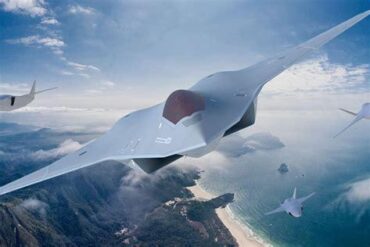
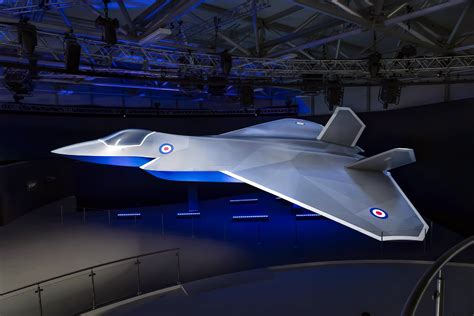
GCAP is not being conceived simply as a single fighter operating alone. A central element of future air combat is expected to involve uncrewed aircraft working alongside crewed platforms.
These aircraft, often described as Collaborative Combat Aircraft or similar teaming systems, could perform missions such as sensing, electronic warfare, surveillance, communications relay, or weapons delivery. Their precise capabilities will depend on the eventual operational architecture, but the underlying concept requires the crewed fighter to coordinate with multiple autonomous or semi-autonomous assets.
That introduces another enormous testing challenge.
The fighter must be capable of communicating with these platforms, sharing sensor information, assigning tasks, and maintaining an accurate tactical picture. The interaction also has to remain reliable when communications are degraded or the electromagnetic environment becomes hostile.
Excalibur gives Team Tempest a way to investigate these concepts at meaningful scale. Engineers can test sensor networking, data links, multi-system interactions, and autonomous teaming concepts without waiting for the final GCAP aircraft to become available.
This is especially valuable because software and networking capabilities can evolve continuously. A large testbed allows new technical packages to be introduced as the program progresses, supporting what aerospace engineers often call spiral development.
A Platform That Can Evolve With GCAP
Excalibur is not a finished product frozen in one configuration. Its modifications are being introduced progressively.
The initial stages focus on establishing the aircraft’s structural and operational suitability. Once the appropriate clearances are obtained, the platform can move toward increasingly sophisticated onboard system testing. Eventually, it is expected to carry technical data packages supporting the wider GCAP development effort.
The planned expansion includes an advanced Multi-Function Radio Frequency System (MFRFS) radar, electronic-warfare equipment, infrared search-and-track technology, and electro-optical systems.
That phased approach is strategically important. Sixth-generation combat aircraft are being developed over long timescales, while digital technology changes much faster. A testbed that can accept new equipment allows engineers to avoid locking the program into yesterday’s technology simply because it was available when the airframe was first tested.
The 757 can also perform another less glamorous but useful function. Because it remains a transport-capable aircraft, it can move engineering teams and equipment between relevant testing locations and partner nations. In a multinational program involving the UK, Italy, and Japan, that flexibility has practical value.
The Wider European Testbed Ecosystem
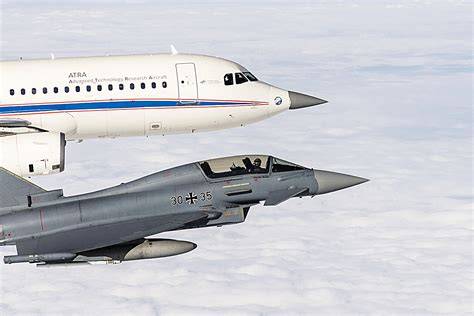
Excalibur is not the only commercial aircraft being used to develop advanced European combat-aircraft technology. Airbus operates an A320 Advanced Technology Research Aircraft, commonly known as ATRA, which has been used to support Eurofighter Typhoon development and radar technology maturation.
Another Airbus testbed, also called Excalibur, has supported work involving the Eurofighter and other advanced capabilities. The repeated use of names such as Excalibur and Catfish can be confusing, because several unrelated aerospace programs have adopted them.
The broader principle, however, is consistent: commercial aircraft make excellent laboratories for military technology.
The United States has followed the same philosophy for decades. Lockheed Martin’s famous Boeing 757 testbed, known as Catfish, supported development associated with the F-22 Raptor. The Boeing 737-based CATBird was used during the development of the F-35 Lightning II, while Boeing’s Flying Test Bed has supported multiple military aircraft programs.
NASA has also operated numerous modified commercial aircraft for research, demonstrating that the approach extends well beyond fighter development.
Why the Ex-Iberia 757 Matters to Europe’s Fighter Future
The significance of Excalibur is therefore much larger than the aircraft itself. It represents a deliberate attempt to de-risk GCAP before the fighter reaches its final form.
Instead of discovering late in development that sensors cannot exchange information effectively, that electromagnetic interference affects another system, or that an autonomous teaming architecture performs differently in the real world than expected, engineers can identify these problems earlier.
That can save substantial amounts of money and time. More importantly, it can prevent technological compromises from becoming embedded in the final combat aircraft.
The strategy is particularly relevant to GCAP because the program aims to deliver a system that is highly connected, software-intensive, and capable of operating alongside uncrewed assets. Traditional aircraft development methods remain important, but they are no longer sufficient by themselves.
The 757 therefore acts as a bridge between digital engineering and physical combat capability. It is large enough to host experimental architecture, fast enough to conduct realistic airborne testing, and mature enough to provide a dependable platform while cutting-edge systems evolve.
GCAP’s Position in the Sixth-Generation Race
GCAP also occupies an unusual position internationally. The program is intended not only to produce an advanced fighter for its partner nations but also to create an export-oriented sixth-generation combat aircraft.
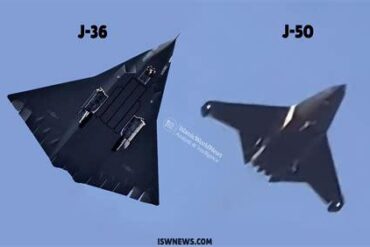
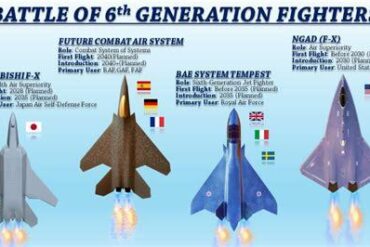
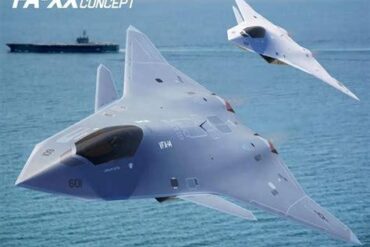
The United States is developing its own next-generation fighter capabilities, including the Air Force’s F-47 program and the Navy’s F/A-XX effort. China’s next-generation fighter development is also attracting considerable attention. Russia has discussed concepts such as the MiG-41, although publicly available information about the program remains limited.
Europe’s competitive landscape has been complicated by the fate of the rival Future Combat Air System (FCAS) initiative involving France, Germany, and Spain. Industrial disagreements have created uncertainty around that program, while France has also pursued its own future fighter ambitions.
GCAP consequently has an important industrial and strategic role. Its success would give the UK, Italy, and Japan a common next-generation combat-aircraft ecosystem while potentially creating an aircraft that can be offered to international customers.
For that reason, the testing infrastructure supporting GCAP matters almost as much as the eventual fighter prototype.
From Passenger Jet to Future Battlespace Laboratory
There is something almost poetic about the journey of G-FAI. It began life carrying passengers for Iberia, spent years moving through international airline operations, and eventually became an airborne laboratory for technologies intended to define the next era of military aviation.
Yet its transformation is also highly practical. A sixth-generation fighter cannot be developed effectively by testing everything on the fighter itself. Engineers need a flexible aircraft where systems can be exposed to real-world conditions, modified rapidly, and evaluated repeatedly.
Excalibur provides precisely that environment.
Its Boeing 757 airframe may have originated in an earlier generation of aviation, but the technology being tested aboard it belongs firmly to the future. Radar, electronic warfare, infrared sensing, secure communications, data fusion, autonomous teaming, and networked combat capabilities can all be examined in realistic airborne conditions before they are integrated into GCAP.
The irony is fitting: an aircraft designed decades ago to connect European cities may now be helping determine how Europe’s next-generation fighter connects sensors, pilots, weapons, software, and autonomous aircraft across the battlespace.
That is why the former Iberia 757 matters. It is not merely supporting the development of GCAP. It is helping engineers discover whether the fundamental promise of sixth-generation air combat—integration at unprecedented scale—can actually work in the real world.