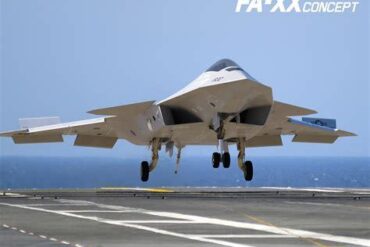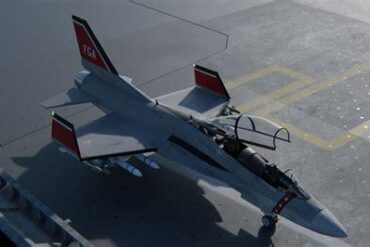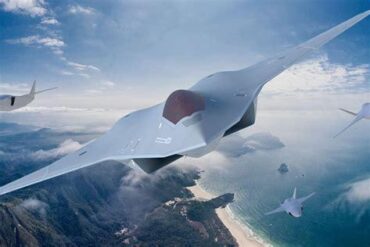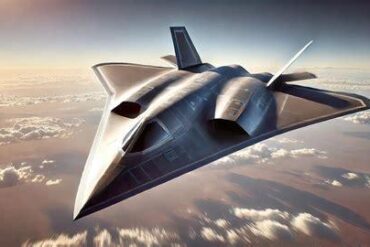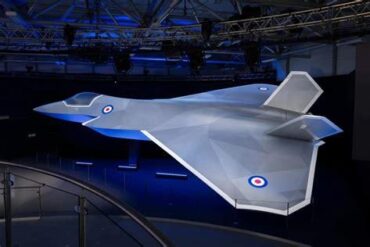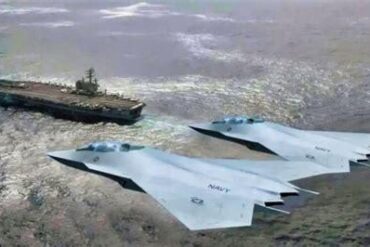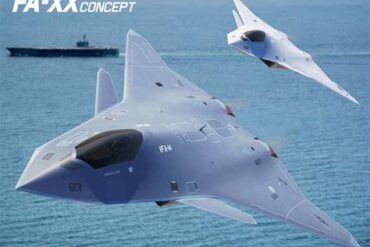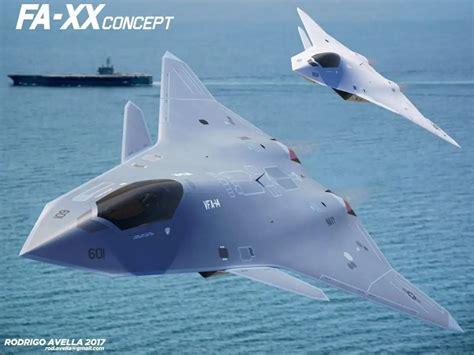
The F/A-XX program represents the future of carrier-based air dominance for the United States Navy. As America’s military competitors—chiefly China—accelerate the development and fielding of advanced anti-access/area denial (A2/AD) systems, the Navy’s next-generation fighter must be built not just for survivability but for uncompromised lethality in contested battlespaces. With an initial budget request of $1.4 billion in FY2026, the F/A-XX is not just another airframe—it is the centerpiece of the Navy’s sixth-generation vision for air superiority.
Emerging from a multi-decade legacy of Super Hornet and Growler dominance, the F/A-XX will define the Navy’s Next Generation Air Dominance (NGAD) path. It will not operate alone. Rather, the fighter will function within a broader ecosystem of uncrewed aerial platforms, networked sensors, and data fusion systems, propelling the Carrier Strike Group (CSG) of the future into an entirely new combat paradigm.
The Strategic Imperative: Outpacing China’s A2/AD Umbrella
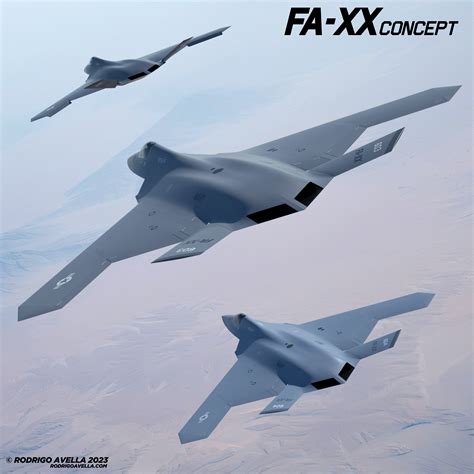
China’s expanding military footprint in the South and East China Seas, combined with its ongoing investments in hypersonic missiles, radar systems, and long-range interceptors, makes the operational environment for US naval aviation increasingly precarious. The F/A-XX is purpose-built to pierce these modern A2/AD bubbles, ensuring American naval air power retains global reach and survivability.
This aircraft will likely incorporate all-aspect stealth, advanced electronic warfare capabilities, and beyond-visual-range weapons, but more critically, it will operate seamlessly with Collaborative Combat Aircraft (CCAs)—loyal wingman drones designed to perform high-risk or force-multiplier tasks. These unmanned systems will share targeting data, extend sensor reach, and absorb the first wave of enemy fire, protecting the manned F/A-XX pilot and preserving high-value assets.
The Multi-Billion Dollar Push: Budget and Prioritization
In its FY2026 budget request, the US Navy highlighted the F/A-XX program as a core pillar of its future force structure, allocating $1.4 billion for development. Beyond that, the Navy seeks over $2 billion for munitions industrial base improvements, signaling the need for parallel investments in long-range, survivable weapons systems.
In a letter to lawmakers, the Navy emphasized: “Navy’s 6th Generation Strike Fighter aircraft is a critical component of both the future Carrier Strike Group (CSG) and the air wing of the future.” These funds are expected to pave the way for a full contract award—likely in 2026 or early 2027.
However, inter-service competition complicates the picture. The US Air Force’s F-47 NGAD program—developed by Boeing—is further along, with contract awards already secured. The Pentagon has signaled a need to prioritize F-47 development first, stating that this approach will ease pressure on the defense industrial base and allow the Navy more time for technological maturation.
Design Goals: What the F/A-XX Will Likely Feature
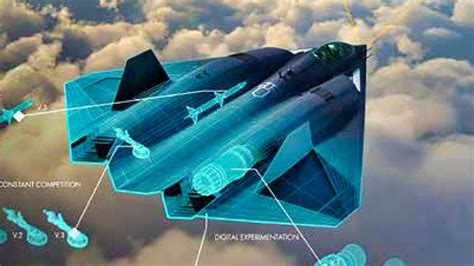
While specifics remain classified, available data, industry statements, and informed projections suggest the F/A-XX will include the following features:
- Next-Gen Stealth: Including improved radar-absorbent materials and conformal design.
- AI Integration: Real-time data processing and autonomous mission assistance.
- Supercruise: Sustained supersonic flight without afterburners.
- Sensor Fusion: Integration of onboard and offboard data sources into a single tactical picture.
- Long-Range and High Payload: To strike targets deep within enemy territory.
- Loyal Wingmen: Ability to command and collaborate with CCAs in real-time.
These design attributes aim to extend the Navy’s strike capabilities far beyond current platforms, making the F/A-XX a multi-domain operations centerpiece.
The Role of Defense Industry Giants
The competition to develop the F/A-XX is fierce. The Navy’s requirements have drawn Boeing, Lockheed Martin, and Northrop Grumman into the design race. Each firm brings unique experience:
- Boeing: Manufacturer of the Super Hornet and EA-18G Growler, offering evolutionary experience.
- Lockheed Martin: Developer of the F-35 and F-22, with proven stealth and software integration.
- Northrop Grumman: Pioneers in unmanned platforms and B-21 stealth bomber design.
Engine development, another key component, is reportedly being pursued by Pratt & Whitney and GE Aerospace. The selected powerplant will need to deliver not only superior thrust-to-weight ratio and fuel efficiency but also support stealth integration and adaptive-cycle capabilities—allowing the aircraft to optimize power output for speed, range, or endurance based on mission needs.
Collaborative Combat Aircraft: Wingmen of the Future
Perhaps the most revolutionary aspect of the F/A-XX is its designed integration with uncrewed platforms. These Collaborative Combat Aircraft will serve a multitude of roles:
- ISR (Intelligence, Surveillance, Reconnaissance)
- Electronic Warfare & Decoy Operations
- Kinetic Strike Missions
- Communications Relay & Data Link Extension
By flying with CCAs, the F/A-XX can preserve its stealth and extend mission survivability, while engaging in high-risk strike missions without compromising the manned aircraft.
The AI-backed collaboration between manned and unmanned platforms will represent a profound leap forward in air combat doctrine—effectively turning each fighter into a miniature networked strike group.
Technological Hurdles and Development Timeline
Despite enthusiasm, challenges remain. Developing a clean-sheet fighter with integrated CCA compatibility, stealth, speed, and survivability demands enormous time, funding, and testing.
Pentagon officials have acknowledged that the Air Force’s F-47 NGAD is farther along. This has triggered a strategic pause for the Navy’s program, allowing F/A-XX more room for technical maturation and risk mitigation. The Navy appears committed to a measured rollout, avoiding the rushed integration issues that once plagued early F-35 deployments.
If current trends hold, F/A-XX could achieve initial operational capability (IOC) by the mid-to-late 2030s, though early prototypes or demonstrators could emerge by the end of this decade.
The Broader Impact on Naval Aviation and Carrier Strategy
The arrival of F/A-XX will transform Carrier Air Wing (CVW) architecture. Instead of solely relying on manned squadrons for all missions, the future air wing will resemble a hybrid model, blending:
- Sixth-Gen Fighters (F/A-XX)
- CCAs and Uncrewed Air Vehicles (UAVs)
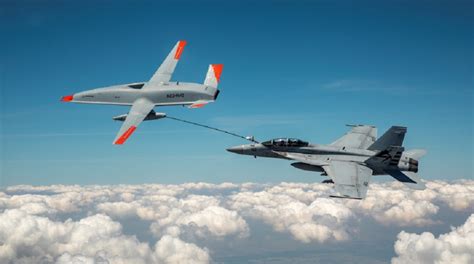
- Refueling Drones (e.g., MQ-25 Stingray)
- Specialized Electronic Attack UAVs
This will enhance sortie generation rates, operational flexibility, and resilience in contested airspace. Furthermore, the evolution of naval doctrine will place greater emphasis on distributed lethality, data-linked formations, and mission fluidity—where individual platforms shift roles dynamically in response to real-time data.
Looking Ahead: The Future of US Naval Dominance
The F/A-XX program is not just an airframe—it is a symbol of America’s long-term commitment to carrier-based dominance in a multi-domain battlespace. Its development comes at a crucial time, with China’s military modernization and Russia’s disruptive tactics demanding innovation at scale.
With stealth, autonomy, AI, and system-of-systems integration at its core, the F/A-XX promises to be the most advanced carrier-based fighter the world has ever seen. Its successful fielding will ensure that American aircraft carriers remain the most formidable floating fortresses for decades to come.
In the coming years, as demonstrators take flight, contracts are finalized, and test data emerges, the F/A-XX will move from the realm of speculative design into operational reality. The race for sixth-generation air dominance has begun—and the Navy’s future depends on it.