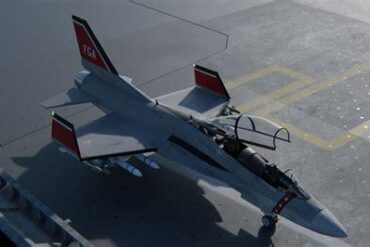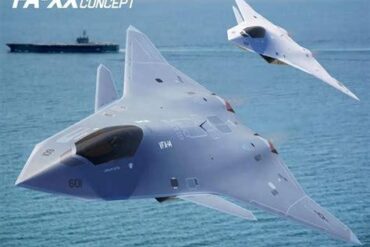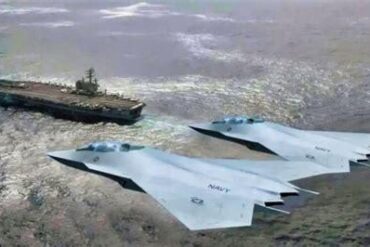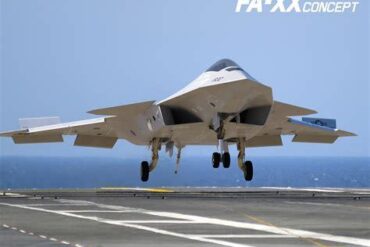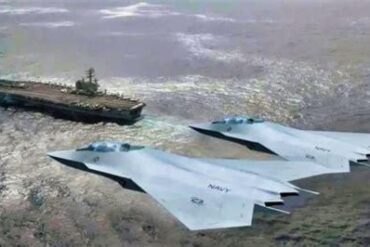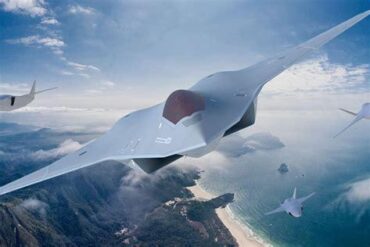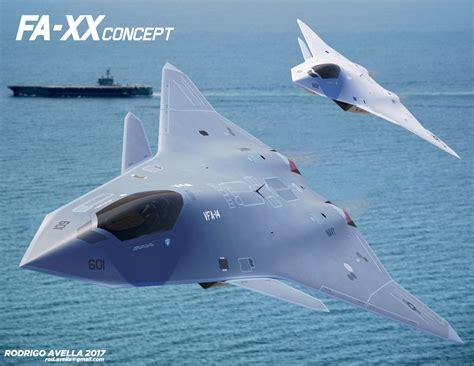
The F/A-XX program, the U.S. Navy’s ambitious plan for a sixth-generation carrier-based fighter jet, is making headlines once again — and this time, its survival may depend on a brewing power struggle between Congress, the Pentagon, and the White House. Just weeks after the Department of Defense sought to freeze its development, lawmakers in the Senate Appropriations Committee are moving to restore funding for the program, igniting what could be one of the most consequential budget battles in the future of U.S. naval aviation.
A Program on the Edge: How the F/A-XX Almost Died
The Pentagon’s Fiscal Year 2026 defense budget, released in June, dealt a serious blow to the Navy’s next-generation fighter plans. The proposal effectively froze the F/A-XX program, allocating just $74 million for completing its preliminary design while redirecting resources to the F-47, the Air Force’s own sixth-generation fighter. Defense Secretary Pete Hegseth justified the move by arguing that “the industrial base can only handle going fast on one program at this time,” underscoring that the presidential priority was to “go all-in” on the F-47.
In practice, this meant shelving the Navy’s project in favor of the Air Force’s — a move that infuriated Navy leadership and raised concerns about whether America’s carrier-based aviation could keep pace with adversaries like China, whose naval air power is growing at an unprecedented rate.
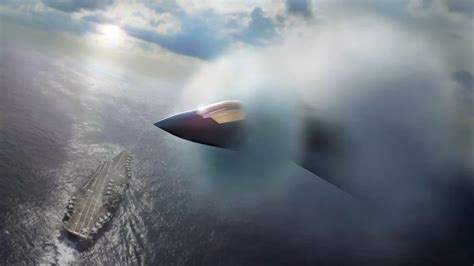
Congress Steps In: $1.4 Billion Back on the Table
Congress, however, has other plans. In a draft spending bill, the Senate Appropriations Committee signaled its intent to restore $1.4 billion in funding for the program. This figure aligns closely with the amount listed in the Navy’s Unfunded Priority List (UPL), a legally mandated document that branches submit to Congress each year to outline needs not covered in the official budget.
“The $1.4 billion figure aligns directly with a call for additional F/A-XX funding that the Navy had reportedly included in its annual Unfunded Priority List,” reported The War Zone. This unusual move effectively pits the Navy and its congressional allies against the Pentagon and White House, signaling a rare but significant internal conflict over priorities.
Why the White House Is Pumping the Brakes
The White House, via a mid-July Statement of Administration Policy, has voiced strong opposition to restoring the F/A-XX funding. The statement emphasized that running two parallel sixth-generation fighter programs — the Air Force’s F-47 and the Navy’s F/A-XX — could overwhelm the defense industrial base, potentially delaying the F-47 program. The administration framed the F-47 as a higher-priority project, warning that awarding the F/A-XX contract “is likely to delay the higher-priority F-47 program, with low likelihood of improving the timeline to field a Navy sixth-generation fighter.”
Boeing’s Counterargument: We Can Build Both
Boeing, the contractor spearheading the F/A-XX project, strongly disagrees. Steve Parker, CEO of Boeing Defense and Space, countered the Pentagon’s claims, asserting that the company and the broader defense industrial base can support simultaneous development of both advanced fighters. This is a high-stakes claim, as it challenges the prevailing narrative that resources must be consolidated around a single program.
The debate isn’t just about budgets. It’s about whether the U.S. can sustain a dual-pathway approach to sixth-generation air dominance — one tailored for the Air Force and one for the Navy — without compromising delivery timelines or cost efficiency.
The Bigger Picture: Why the Navy Needs the F/A-XX
The F/A-XX is designed to succeed the F/A-18E/F Super Hornet and EA-18G Growler, which have been the backbone of carrier aviation for decades. As China ramps up its carrier capabilities and Russia continues modernizing its fleet, the Navy argues that a dedicated sixth-generation platform is critical for preserving American maritime air superiority. Unlike the F-47, which is optimized for the Air Force’s land-based missions, the F/A-XX will incorporate navalized features for catapult launches, arrested landings, and operations in harsh maritime environments.
Moreover, the F/A-XX is expected to integrate advanced stealth, AI-driven mission systems, and collaborative drone operations — hallmarks of sixth-generation fighter design — to meet emerging threats.
The Symbolism Behind the F-47 Naming
Adding intrigue to the debate is the political symbolism of the F-47’s designation. According to Bloomberg, emails suggest the number “47” was chosen partly to honor President Trump, the 47th President of the United States. While the administration hasn’t officially confirmed this, it has fueled speculation that political considerations are influencing budget allocations.
The High-Stakes Industrial Base Dilemma
At the heart of the controversy is a question of capacity. Can the U.S. defense industrial base realistically deliver two sixth-generation fighters at once? The Pentagon argues no, citing risks of talent shortages, overextended supply chains, and schedule slippage. But Boeing’s rebuttal paints a different picture, one in which coordinated investment and workforce expansion could make dual development feasible.
This tug-of-war is more than just budgetary — it’s a strategic gamble. If Congress forces the administration to fund the F/A-XX while keeping the F-47 on track, the defense industry will be tested as never before. Conversely, prioritizing one program could mean ceding a competitive edge in naval aviation for years to come.
What Happens Next?
The Senate’s move to restore funding sets the stage for a tense negotiation between lawmakers and the White House. If Congress succeeds, the Navy could regain momentum for its flagship fighter project. But if the administration holds firm, the F/A-XX risks being relegated to a long-term placeholder, surviving only as a design study while the F-47 dominates the sixth-generation landscape.
The outcome of this fight will shape not only the future of naval aviation but also America’s broader approach to next-generation warfare. Will the U.S. bet everything on a single platform, or diversify its air dominance strategy across both services? The answer could define U.S. military airpower for the next three decades.