Air Seychelles is making a calculated and timely return to long-haul flying, reintroducing nonstop service between Mahé (SEZ) and Paris Charles de Gaulle (CDG)—a route absent from its network for nearly eight years. The twist is as compelling as the comeback itself: the airline is doing so without owning a single widebody aircraft, instead leveraging a leased Etihad Boeing 787-9 to bridge the gap during a period of global aviation disruption.
A Temporary Lifeline for Tourism and Connectivity
The reinstated route will operate three times weekly from March 22 to April 29, 2026, providing a vital air link between the Seychelles and one of its most important European markets. Flights are scheduled with precision to accommodate both leisure travelers and international connections, departing Mahé in the morning and arriving in Paris by late afternoon, while the return overnight service ensures a seamless travel experience.
This 4,871-mile journey, blocked at approximately 10 hours eastbound and 10 hours 30 minutes westbound, is more than a simple route relaunch. It is a direct response to ongoing disruptions in the Middle East, which have constrained traditional transit pathways through Gulf hubs. For a tourism-dependent nation like the Seychelles, restoring direct access to Europe is not just beneficial—it is essential.
The Etihad 787: A Strategic Wet Lease Solution
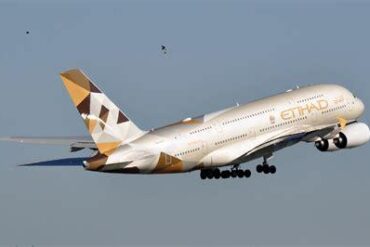
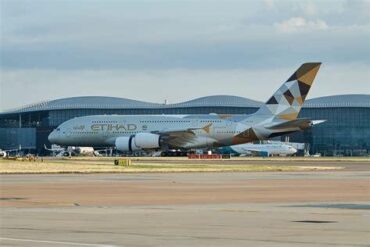
Air Seychelles’ current fleet—comprising two Airbus A320neos and five DHC-6-400 Twin Otters—is entirely unsuited for long-haul operations. To overcome this limitation, the airline has turned to a wet lease agreement with Etihad Airways, bringing in a Boeing 787-9 Dreamliner complete with crew, maintenance, and operational support.
The aircraft features a two-class configuration with 290 seats, including 28 business class seats and 262 in economy, offering a full-service experience aligned with international expectations. This arrangement allows Air Seychelles to maintain brand presence on the route while relying on Etihad’s operational expertise—a pragmatic solution during a period when widebody capacity is unevenly distributed across the industry.
For Etihad, the deal is equally advantageous. With certain long-haul operations impacted by regional instability, deploying idle aircraft through partnerships ensures continued revenue generation and asset utilization.
A Full-Circle Moment in Airline History
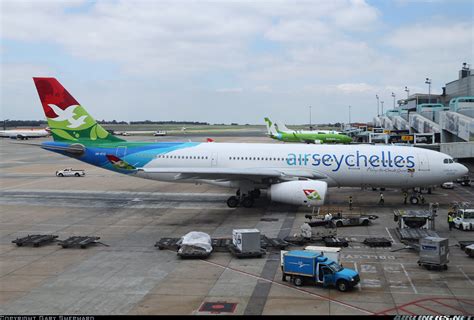
The return to Paris carries a strong sense of déjà vu. Air Seychelles last operated this route in 2018, during a period when Etihad held a 40% stake in the airline and активно encouraged network expansion among its equity partners. At the time, Air Seychelles operated Airbus A330s, enabling direct long-haul services to Europe.
However, financial pressures led to a dramatic restructuring that same year. The airline withdrew from long-haul markets, returned its A330 fleet, and refocused on regional operations. Ironically, some of the final flights on the Paris route were already being operated by Etihad aircraft, foreshadowing today’s arrangement.
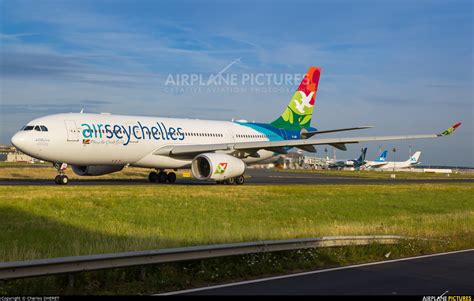
Etihad eventually exited its investment in 2021, selling its stake for a symbolic $1, marking the end of a high-profile but financially challenging partnership. That makes the current collaboration—absent any ownership ties—particularly notable. It reflects a shift from equity-driven expansion to flexible, tactical cooperation.
Why Paris Matters More Than Ever
France has long been a cornerstone market for Seychelles tourism, consistently delivering high-value visitors drawn to the archipelago’s luxury resorts and pristine beaches. Reintroducing direct flights eliminates the friction of multi-stop itineraries, making the destination significantly more attractive at a time when traveler confidence and convenience are paramount.
Air Seychelles CEO Sandy Benoiton underscored this importance, emphasizing that the route enhances both international connectivity and the resilience of the tourism sector. In a volatile aviation environment, such targeted route deployments can stabilize visitor flows and support broader economic recovery.
A Short-Term Move with Long-Term Implications
While the Paris service is explicitly temporary, its implications extend far beyond the six-week operating window. It serves as a real-world test of demand elasticity, operational feasibility, and the effectiveness of wet leasing as a strategic tool for small carriers.
If successful, the route could pave the way for future seasonal long-haul operations or inspire similar partnerships with other airlines. It also highlights a broader industry trend: smaller national carriers adopting asset-light models to remain competitive without the financial burden of owning widebody fleets.
In an era defined by uncertainty, Air Seychelles’ return to Paris is not just a nostalgic revival—it is a sharp, adaptive move that blends past experience with present necessity.