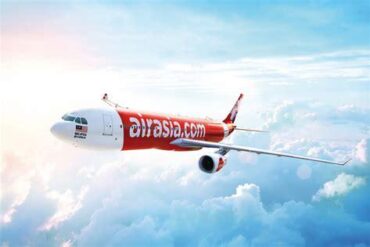
AirAsia is making an audacious return to the global aviation spotlight with a strategic Gulf hub initiative and long-haul European expansion that promises to reshape the low-cost travel landscape across Asia, the Middle East, and Europe. Spearheaded by Group CEO Tony Fernandes, the airline’s renewed ambitions align with a broader recovery trajectory, following the devastating disruptions of the COVID-19 pandemic.
The new blueprint integrates multi-leg connectivity into AirAsia’s once exclusively point-to-point model, thereby enabling cost-effective global routing that connects Southeast Asia, the Gulf, and Western Europe.
Strategic Shift: Building a Gulf Gateway to the West
At the heart of AirAsia’s resurgence is the development of a new Gulf hub, designed to act as a critical bridge between Kuala Lumpur and major European cities. Although the specific location has not yet been finalized, industry speculation points toward major Gulf airports such as Doha (DOH), Abu Dhabi (AUH), or Dammam (DMM). These hubs offer ideal geographic placement for splitting long-haul flights into more manageable segments while also tapping into growing regional traffic.
According to Fernandes, this approach will allow passengers to enjoy cheaper fares with one convenient stopover, offering seamless transitions from Asia to Europe. With roughly 8% of AirAsia’s passengers already using the airline for connecting services, the Gulf hub strategy aims to amplify this segment significantly.
AirAsia’s current focus on Riyadh (RUH), Jeddah (JED), and Dammam (DMM) as initial Middle Eastern destinations underscores its commitment to the region. Despite regional instability, the Gulf expansion represents a calculated risk that aligns with broader global travel demand and the need for alternative transit hubs outside congested European gateways.
From Retrenchment to Rebound: AirAsia’s Post-Pandemic Renaissance
AirAsia was among the hardest-hit carriers during the pandemic, with grounded fleets, slashed routes, and financial instability threatening its survival. However, the airline has emerged with renewed vigor, backed by streamlined operations and a more diversified revenue model.
Part of this recovery is anchored in cost-optimization, specifically through targeting secondary airports rather than traditional hubs. These include less congested and more affordable European cities like Cologne (CGN), Glasgow (GLA), and Dublin (DUB), which offer lower landing fees and less competitive saturation.
This Ryanair-style pivot is a deliberate response to shifting dynamics in low-cost aviation, especially after the shutdown of Jetstar Asia, which Fernandes attributed in part to airport resistance against budget airlines. By sidestepping such barriers, AirAsia aims to create a resilient operational model that survives market volatility.
The Return of AirAsia X: Long-Haul Dreams Reignited
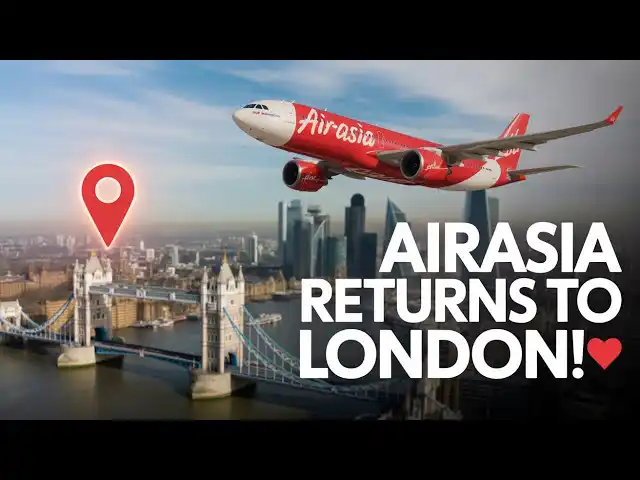
The revival of AirAsia X (D7) marks a critical chapter in the airline’s broader re-expansion plans. Known for its once-prominent long-haul offerings, AirAsia X had previously suspended services to London and Paris due to rising costs and weak demand. But in a new aviation environment hungry for affordable transcontinental options, the subsidiary is poised for a bold re-entry.
The resumption of flights to London Gatwick (LGW) is expected to kick off the European comeback. Other cities under active consideration include Manchester (MAN), Paris Orly (ORY), Frankfurt (FRA), and Shannon (SNN). These routes reflect a deeper understanding of price-sensitive travelers who seek budget alternatives to legacy carriers.
In pursuing these underserved markets, AirAsia X plans to leverage interline agreements and codeshare partnerships, enhancing its European network without the high costs associated with major hubs like Heathrow. This will allow the airline to remain nimble and offer ultra-competitive fares.
Innovation Beyond Aviation: AirAsia’s Multi-Sector Expansion
While aviation remains its core business, AirAsia is methodically building a multi-sector empire that includes fintech, logistics, aircraft maintenance, and consultancy services. The AirAsia Super App, for example, offers ride-hailing, hotel bookings, food delivery, and financial services — transforming the airline into a regional tech ecosystem.
Though previous plans to list these subsidiaries in New York via SPACs have been postponed, the company remains committed to monetizing its digital and operational assets. This diversification is essential to buffering against the cyclical risks of the airline sector.
Middle East Connectivity: A Market of Opportunity and Risk
The Middle East corridor represents a fertile yet complex frontier. With Saudi Arabia opening up under its Vision 2030 initiative, tourism and religious travel have skyrocketed. AirAsia’s addition of Kuala Lumpur–Riyadh and Kuala Lumpur–Jeddah routes is timely, as it seeks to attract both leisure and Umrah/Hajj pilgrims.
Moreover, by offering affordable connections into the Kingdom, AirAsia is positioning itself as a viable alternative to legacy Gulf carriers like Emirates and Qatar Airways. Yet, ongoing geopolitical tensions and fluctuating fuel prices pose significant operational challenges.
Navigating Europe’s Low-Cost Market Landscape
Re-entering Europe won’t be without competition. Giants like Ryanair, easyJet, and Wizz Air dominate intra-European traffic, while Turkish Airlines and Emirates control long-haul routes. AirAsia’s competitive edge lies in its hybrid model — offering low-cost long-haul paired with connectivity through its Gulf hub.
By targeting underserved airports, AirAsia can evade the capacity and pricing wars that plague larger hubs. Furthermore, the airline’s Asian network remains unmatched in terms of breadth, offering an ideal feeder network for European tourists heading to destinations like Bali, Bangkok, Phuket, and Tokyo.
Financial Prudence and Operational Efficiency
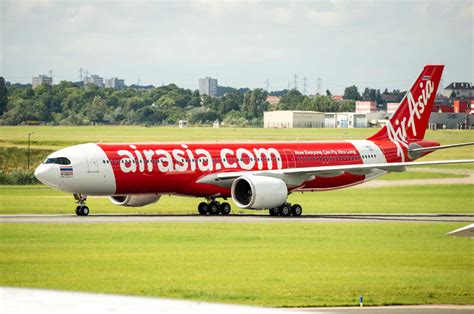
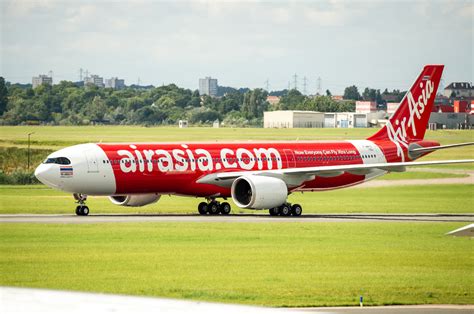
Despite bullish growth, AirAsia remains cautiously optimistic. Rising jet fuel costs, currency fluctuations, and regulatory pressures necessitate a lean cost structure. As such, the airline is focusing on fleet optimization using fuel-efficient Airbus A330neo aircraft, which offer extended range and lower operating costs.
Additionally, AirAsia’s investment in maintenance capabilities and predictive tech systems aims to reduce delays and operational hiccups, especially as it prepares for transcontinental service reliability.
Looking Ahead: AirAsia’s Long-Term Global Vision
The synergy between AirAsia Group and AirAsia X is now more apparent than ever, as the airline integrates short-haul, long-haul, and digital service layers into a unified travel experience. With a Gulf hub serving as its transcontinental fulcrum and a re-entry into major European markets, AirAsia is set to become a formidable player in global low-cost aviation.
If the current momentum holds, AirAsia could redefine long-haul budget travel, transforming perceptions of affordability and accessibility for millions of flyers from Asia, the Middle East, and Europe.

Final Thoughts: Bold Moves, Balanced Risks
AirAsia’s growth strategy is bold, calculated, and full of potential. By weaving together network diversification, Gulf strategic positioning, and digital innovation, the airline is sculpting a resilient post-pandemic identity.
The route to success, however, hinges on flawless execution, geopolitical stability, and the airline’s ability to balance aggressive expansion with financial discipline. As the aviation world watches, AirAsia’s new journey through the skies of Europe and the Middle East may well serve as the next case study in global low-cost disruption.