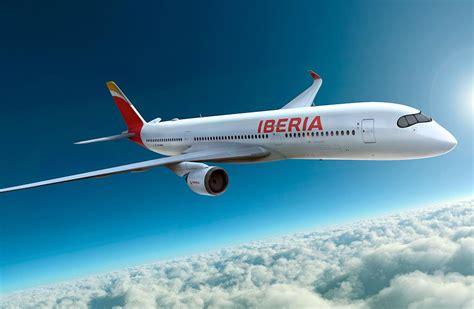
Iberia, Spain’s national airline and a cornerstone of the International Airlines Group (IAG), is undergoing a dynamic transformation that aims to reposition Madrid-Barajas Airport as a leading European hub for transatlantic travel. With a substantial €6 billion ($6.9 billion) investment outlined in its ‘2030 Flight Plan,’ the airline is poised to expand its North American footprint aggressively—both in scale and sophistication.
The centerpiece of this strategy is an expansion of its long-haul fleet from 45 to 70 aircraft. Iberia plans to bring in new-generation widebodies like the Airbus A330-900 and A350-900, alongside the A321XLR, a single-aisle long-haul workhorse suited for thinner North American routes. This diverse fleet composition will allow Iberia to launch flights to new cities while optimizing efficiency on existing ones.
The Foundation: Iberia’s Current North American Network
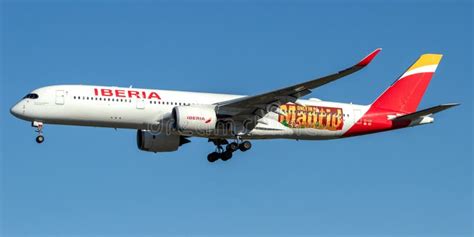
In June 2025, Iberia maintains a robust transatlantic schedule with 102 weekly departures from Madrid to 10 North American destinations, offering 30,839 outbound seats. This marks a 7% increase from June 2024 and a 24.3% jump compared to June 2019. The current network includes:
- New York JFK
- Miami (MIA)
- Los Angeles (LAX)
- Chicago O’Hare (ORD)
- Boston Logan (BOS)
- San Juan, Puerto Rico (SJU)
- Washington Dulles (IAD)
- San Francisco (SFO)
- Dallas/Fort Worth (DFW)
- Mexico City (MEX)
Notably, only three routes—Madrid to Los Angeles, San Juan, and San Francisco—face no direct competition, giving Iberia a unique edge on those corridors. In contrast, heavily contested routes like Madrid–JFK are shared with American Airlines, Delta, and Air Europa, while Madrid–Miami features Iberia, American Airlines, and Air Europa.
A Load Factor That Tells a Story
Operational data reflects high efficiency and sustained demand. Iberia’s average load factor to the U.S. in June 2025 reached 89.96%, with top-performing routes like:
- Chicago-O’Hare at 93.05%
- Miami at 91.58%
- New York-JFK at 91.33%
- San Juan at 91.26%
These figures reveal a healthy appetite for Iberia’s transatlantic services. Despite macroeconomic uncertainties and shifting U.S. travel sentiment, demand remains high, especially for premium cabins—a trend Iberia is keen to capitalize on.

New Horizons: Announced and Upcoming Routes
Under the 2030 plan, Iberia announced three new North American destinations:
- Philadelphia International Airport (PHL)
- Toronto Pearson International Airport (YYZ)
- Monterrey International Airport (MTY)
These cities reflect strategic decisions aligned with both Oneworld alliances and market demand. Philadelphia is a key American Airlines hub, enabling seamless connections. Toronto extends Iberia’s reach into Canada’s lucrative transatlantic market. Monterrey, meanwhile, opens a premium business corridor between Spain and northern Mexico’s industrial powerhouse.
Additionally, in October 2025, Iberia will inaugurate a four-times-weekly Madrid–Orlando service using the A330-300, making it the third carrier to attempt this route in the 21st century after Air Comet and Iberojet.
Iberia’s Long-Haul Fleet: The Engine of Expansion
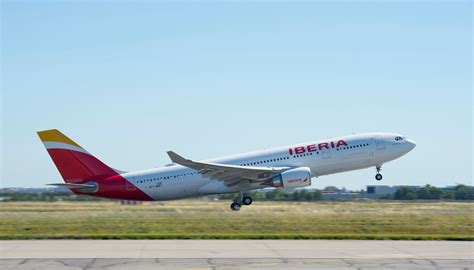
Iberia’s future rests heavily on its fleet strategy. As of June 2025, it operates:
- 14 Airbus A330-200s
- 8 Airbus A330-300s
- 22 Airbus A350-900s
- 3 Airbus A321XLRs
Additionally, Iberia is supplementing operations with wet-leased aircraft:
- 5 A330-200s from LEVEL
- 2 A330-300s from Wamos Air and World2Fly
- 1 A330-900 from Iberojet Portugal
To support the 2030 expansion, Iberia has confirmed orders for six A350-900s, while IAG holds options for 21 A330-900s, some of which are likely to be deployed under the Iberia brand.
This diverse fleet composition positions Iberia well for network flexibility. The A321XLRs are particularly useful for mid-sized U.S. cities with growing traffic but insufficient demand for widebodies, allowing Iberia to enter underserved markets economically.
Where Next? Iberia’s Data-Driven Target List
Using booking data from OAG, Iberia is eyeing U.S. markets with significant indirect traffic to Madrid. Some compelling candidates include:
- Houston Intercontinental (IAH): 43,167 annual passengers
- Las Vegas (LAS): 37,344 passengers
- Denver International (DEN): 30,506 passengers
- Phoenix Sky Harbor (PHX): 25,526 passengers
These cities lack nonstop Iberia service but show strong underlying demand, often connecting via U.S. or European hubs. Notably, Houston and Denver are United Airlines hubs, a Star Alliance competitor, which may complicate market entry unless Iberia provides a compelling value proposition. In contrast, Phoenix and Philadelphia are American Airlines strongholds, providing natural feed for Iberia’s services.
Iberia’s Competitive Matrix: Alliances and Adversaries
Operating within the Oneworld Alliance, Iberia collaborates closely with American Airlines on transatlantic flights. This strategic relationship allows for coordinated schedules, shared codes, and joint venture pricing, particularly helpful in competitive U.S.–Europe corridors.
However, Iberia still faces challenges from:
- Delta Air Lines (SkyTeam)
- Air Europa (SkyTeam, being acquired by IAG)
- JetBlue (independent, newly flying Boston–Madrid)
- Aeromexico (SkyTeam, serving Mexico City)
The Madrid–New York JFK market, for instance, is served by Iberia, American, Delta, and Air Europa—creating a saturated environment. Future routes must be carefully selected to avoid cannibalization and optimize load factors.
Risks on the Horizon: Economy vs. Premium Strategy
While premium cabins remain strong, Iberia must navigate weakening demand for economy-class seats from U.S. points-of-sale. IAG CEO Luis Gallego noted during Q1 earnings that U.S. economy demand had softened, although the UK market remained robust. Despite this, Iberia’s bookings for Q2 were above 2024 levels, suggesting resilience.
However, macroeconomic shifts, like potential political instability in the U.S., or deteriorating U.S.–EU relations, could suppress transatlantic demand. Iberia’s ability to diversify destinations and match aircraft size to demand will be essential.

Conclusion: Madrid as a Gateway to the West
With its 2030 Flight Plan in full swing, Iberia is no longer content to be a regional European player—it is building itself into a major transatlantic force. Its clear-eyed focus on fleet renewal, route optimization, and alliance synergy gives it a competitive edge. As North American travelers increasingly look to Spain for leisure and business, Iberia is ready to meet them with more frequencies, better aircraft, and expanded connectivity.
Madrid is poised to become not just a European hub—but a truly global gateway. And Iberia, with its roots in Spanish aviation history and its eyes fixed firmly across the Atlantic, is finally spreading its wings wide enough to meet that ambition.