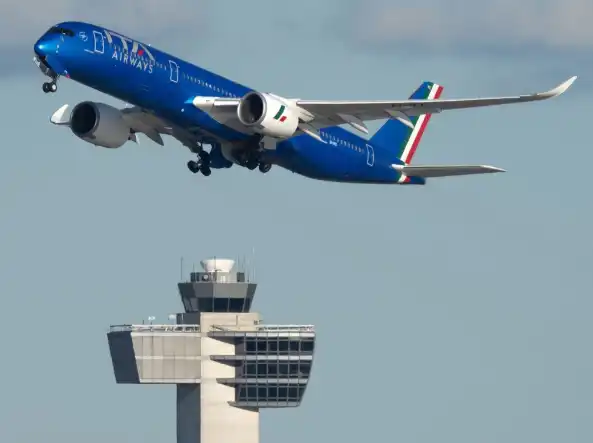
Italy’s flagship airline, ITA Airways, is undergoing a transformative phase as it lays the groundwork for an aggressive intercontinental expansion plan spanning from 2026 to 2030. With the backing of Lufthansa—which now holds a 41% stake alongside the Italian Ministry of Economy and Finance—ITA is preparing to launch over a dozen new long-haul routes originating from its Rome Fiumicino hub. These moves are designed to fortify its revenue streams and establish long-term sustainable profitability, even as competition in the European skies intensifies.
The 2026–2030 Industrial Plan: Profitability Over Volume
At the heart of ITA’s new strategy is a firm pivot toward long-haul operations, which CEO Joerg Eberhart has identified as more profitable than short-haul and intra-European flights. The airline’s 2026–2030 business plan, currently under confidential review, focuses on building a more lucrative network by connecting Rome with high-yield markets across North America, Asia, Africa, and South America.
Eberhart, speaking privately during the IATA summit in New Delhi, emphasized the need for routes that offer not just full cabins, but profitable yields. Unlike the volume-driven strategies of low-cost competitors, ITA’s approach is precision-focused: targeting markets where strong partner alliances can guarantee feed traffic and increase seat occupancy through code-sharing and joint ventures.
U.S. Expansion: Newark and Houston Take Center Stage
One of the most anticipated moves is the upcoming launch of flights to Newark Liberty International Airport and Houston George Bush Intercontinental Airport in 2027. These additions will complement existing U.S. destinations like JFK and Boston, expanding the carrier’s footprint in one of the world’s most profitable aviation markets.
Both Newark and Houston are hubs for United Airlines, a member of the “A++” transatlantic joint venture alongside Lufthansa and Air Canada. ITA is set to formally join this alliance in 2027, enabling seamless interline connections and optimized schedules. The Newark route, in particular, will offer Italian travelers direct access to United’s vast East Coast network and provide competitive alternatives to New York JFK.
Asia-Pacific Ambitions: Singapore and Osaka on the Horizon
In Asia, ITA is laying the foundation to extend its services beyond its current Tokyo Haneda operations. Singapore has emerged as a priority due to Lufthansa’s joint venture with Singapore Airlines, allowing for deep network integration and shared customer benefits. Singapore also serves as a strategic gateway to Southeast Asia and Australasia, regions with rising demand for premium European connectivity.
Meanwhile, in Japan, ITA plans to inaugurate flights to Osaka, reinforcing its footprint in a market characterized by robust corporate and tourism demand. Osaka’s connection to All Nippon Airways (ANA)—another Lufthansa partner—adds further commercial logic, enabling reciprocal feeder traffic and mutual scheduling benefits.
India and South Asia: Mumbai Launch in 2026
ITA’s growing focus on South Asia includes a scheduled 2026 launch of Rome–Mumbai services, which would complement the existing New Delhi route. India’s aviation sector has shown strong post-pandemic recovery, with business and diaspora travel driving sustained demand. Moreover, Air India’s partnership with Lufthansa Group strengthens the rationale for this expansion, as it provides onward connectivity across India’s secondary cities.
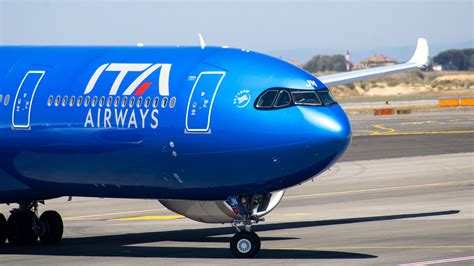
This move comes as ITA prepares to receive a new Airbus A330neo, part of a measured expansion of its long-haul fleet. From 2026 to 2030, the airline will add one intercontinental aircraft per year, culminating in a five-aircraft boost—four A350s and one A330neo.
Africa Strategy: Medium-Haul Jets, Big Opportunity
Africa is another continent firmly in ITA’s sights. The airline is considering the deployment of Airbus A321neo aircraft, which, while narrow-bodied, are capable of efficiently handling medium-haul intercontinental routes. Two leading contenders for new African destinations are Abidjan (Ivory Coast) and Lagos (Nigeria). These cities offer strong economic and cultural ties to Europe, and underserved direct connectivity.
However, the airline is being cautious. While Riyadh is showing promising performance, routes like Dakar and Jeddah have underperformed, prompting a potential reevaluation. ITA is determined to optimize its African network not just for coverage, but for consistent load factor and profitability metrics.
South American Focus: Buenos Aires and Santiago
South America is already proving fruitful for ITA. Buenos Aires is currently delivering strong returns, prompting plans for increased frequency and deeper cooperation with Aerolíneas Argentinas. During the IATA meetings, Eberhart was seen engaging with the Argentine carrier’s top brass, indicating potential enhancements to the existing code-sharing agreement.
Another tantalizing possibility is a return to Santiago de Chile. This former Alitalia stronghold is under serious consideration, though Eberhart is cautious. Despite solid passenger volumes, historical data shows that the Rome–Santiago route once incurred a €16 million loss, despite generating nearly €67 million in revenue and attracting 120,000 passengers in 2019. For Santiago to make a comeback, yield optimization and fleet efficiency will be paramount.
Seasonal and Leisure Routes: Capturing the Winter Sun
Recognizing Italian travelers’ preference for winter escapes, ITA is also evaluating several seasonal routes to sun-soaked destinations. Top contenders include Zanzibar, Santo Domingo, and Havana. These would be marketed heavily through travel agencies and vacation tour operators, relying on bundled holiday packages to fill aircraft during the colder months.
These “counter-seasonal” routes could also help maximize aircraft utilization during ITA’s off-peak periods, enhancing operational efficiency and spreading fixed costs across a broader revenue base.
Geopolitical Shifts: Reopening to China and Middle East Revival
Should Russian airspace reopen to European carriers, a significant opportunity could reemerge: the China market. Previously unviable due to rerouting challenges, destinations like Beijing, Shanghai, Hong Kong, and even Moscow may return to ITA’s radar. These cities were once cornerstones of Alitalia’s long-haul portfolio and could again prove valuable with restored overflight rights.
In parallel, a more stable Middle East could lead to the relaunch of profitable historical routes such as Tehran, Beirut, and Amman. These markets not only offer business and leisure demand but also substantial diaspora flows, which tend to support consistent year-round performance.
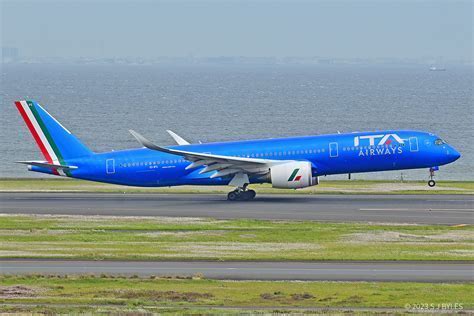
Fleet Development: Strategic, Not Aggressive
ITA’s fleet strategy is marked by measured investment. Unlike some carriers that order dozens of aircraft in anticipation of demand, ITA will gradually increase its long-haul capability with one new aircraft annually over five years. This ensures that fleet growth remains in lockstep with actual network performance and financial health.
The blend of Airbus A350s and A330neos offers operational flexibility, reduced fuel burn, and superior passenger comfort. Their range and efficiency make them ideal for the varied mission profiles ITA envisions—from long transpacific hauls to high-density routes in Latin America.
Conclusion: A New Chapter Rooted in Profit, Not Nostalgia
ITA Airways’ expansion blueprint marks a decisive shift away from the legacy-driven, loss-ridden strategies of Alitalia, embracing instead a disciplined, data-backed model. Every new route—be it to Newark, Mumbai, or Osaka—must demonstrate tangible, sustainable profitability.
Under Eberhart’s leadership and with Lufthansa’s strategic oversight, ITA is shedding its state-dependent past and aligning with global aviation best practices. If the current plan holds, by 2030, Rome Fiumicino will be a major international hub once again—not just for Italian travelers, but for Europe.
The world is watching. And flying.