The commercial aviation sector is at a crossroads, caught between crippling aircraft groundings and audacious growth aspirations. While Airbus operators around the globe grapple with persistent technical setbacks, a bold vision emerges from within the United States, where Breeze Airways envisions a meteoric rise to a 400-aircraft fleet. This dichotomy—paralysis and progress—reveals the profound challenges and strategic recalibrations defining today’s aviation landscape.
Airbus Groundings: A Worsening Global Crisis
The grounding of Airbus aircraft, specifically those powered by Pratt & Whitney engines, continues to upend airline operations across continents. Nowhere is this more apparent than in the case of Wizz Air, one of Europe’s fastest-growing budget carriers. Despite its ambitious expansion over the last few years, the airline faces mounting frustration as grounded aircraft erode both market share and operational efficiency.
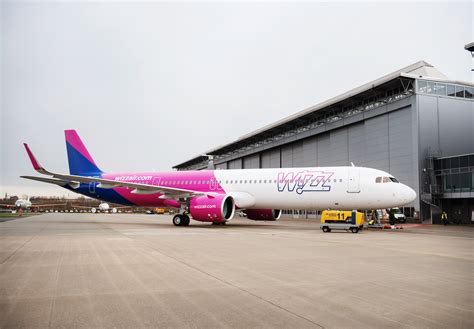
Wizz Air confirmed at the International Society of Transport Aircraft Trading (ISTAT) Conference in Prague that the groundings are likely to persist until at least 2027. This extended timeline marks nearly half a decade of fleet underutilization, particularly among the A320neo family, with 36 out of 38 grounded aircraft being high-capacity A321neos.
The underlying cause lies in engine-related issues with Pratt & Whitney’s GTF (Geared Turbofan) engines, which continue to suffer from performance deficiencies and require time-consuming inspections. According to Wizz Air, bottlenecks within Pratt & Whitney’s maintenance and repair operations have led to prolonged downtime, keeping as many as 51 aircraft parked at a time.
The ramifications are severe. Budget carriers like Wizz Air operate on razor-thin margins and depend on high aircraft utilization rates to maintain profitability. With dozens of planes grounded, the airline is forced to curtail routes, delay growth plans, and face rising operational costs—all while competitors capitalize on the capacity gap.
Not an Isolated Incident: A Global Web of Disruptions
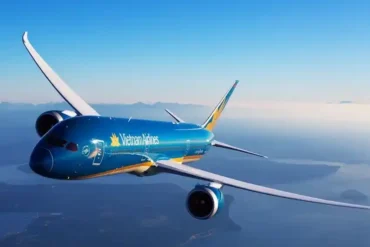
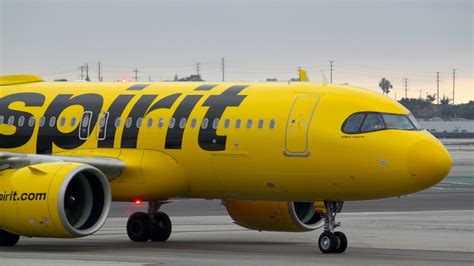
Crucially, Wizz Air’s predicament is far from unique. The Airbus grounding crisis has spread to numerous operators worldwide. From Spirit Airlines and JetBlue in the U.S., to Air New Zealand, Air Baltic, and even Vietnam Airlines, the issue is now systemic. While some operators battle Pratt & Whitney-related issues, others, like Vietnam Airlines, have faced similar difficulties with Rolls-Royce Trent 1000 engines powering their Boeing 787s.
For global carriers, especially those in competitive low-cost segments, the cumulative impact of grounded aircraft over multiple years is catastrophic. These are not legacy jets nearing retirement but state-of-the-art Airbus A320neo and A220 units, intended to be the fuel-efficient workhorses of the next decade. The economic damage is amplified by the paradox that brand-new aircraft—delivered but unusable—sit idle, generating zero revenue.
Breeze Airways: Betting Big on Strategic Expansion
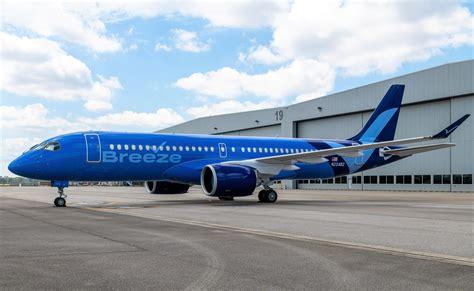
In stark contrast to the chaos, a story of ambition is unfolding in the United States. Breeze Airways, a relative newcomer to the aviation space, has revealed audacious plans to scale its fleet to 400 aircraft, positioning itself as a major player in the domestic and eventually international market.
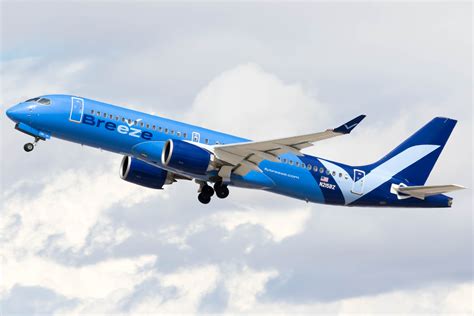
Founded by aviation veteran David Neeleman, who also launched JetBlue and Azul, Breeze Airways currently operates just over 50 aircraft, including 48 Airbus A220s. Despite having six aircraft currently grounded due to the same Pratt & Whitney engine woes, the airline remains undeterred in its growth trajectory. Speaking to Bloomberg, Neeleman asserted that the U.S. market has sufficient demand to support this level of expansion—provided it is executed with precision and focus.
Why Breeze Thinks 400 Aircraft is Viable
Neeleman’s confidence stems from underserved U.S. city pairs that legacy carriers have historically ignored. Breeze aims to capture these unexploited routes by offering point-to-point services rather than routing all traffic through major hubs. This strategy allows Breeze to avoid congested airspaces and gain a foothold in secondary markets—an approach that could yield substantial returns if scaled effectively.
The airline is also eyeing international expansion by 2026, leveraging its growing A220 fleet to launch transborder and transcontinental services. The A220’s fuel efficiency, range, and low operating costs make it ideal for both domestic and thin international routes, allowing Breeze to tap into a new echelon of connectivity.
Why Not the A320neo? Fleet Discipline at Breeze
What raises eyebrows, however, is Breeze’s decision to steer clear of the Airbus A320neo family—the very aircraft type currently in widespread use across low-cost and legacy airlines. While the A320neo would appear to be a logical choice for scaling up capacity, Neeleman has dismissed the idea, arguing that introducing another fleet type would complicate operations and dilute the airline’s efficiency.
Instead, Breeze is pinning its hopes on the A220-500, a proposed stretch version of the A220 that would offer seating for approximately 150–160 passengers—providing a sweet spot between the current A220-300 and the larger A320neo. Like Air Baltic, Breeze is lobbying hard for the A220-500 as a more operationally coherent step forward that maintains fleet commonality while unlocking new market potential.
The Ghost of Spirit Airlines: A Cautionary Tale
Breeze’s deliberate, methodical approach is not without reason. The airline is keeping a close eye on Spirit Airlines, which recently filed for bankruptcy protection—its second such filing in recent years. Spirit’s overambitious growth, coupled with the same engine-related groundings plaguing the industry, has led to capacity overcommitments and severe cash flow constraints.
Neeleman has emphasized that Breeze aims to grow sustainably, without the kind of reckless expansion that can collapse an airline under its own weight. The current aviation environment rewards lean operations, agility, and strategic discipline—values Breeze seems to be adopting wholeheartedly.
Engine Troubles Still Lurk Beneath Optimism
Even as Breeze paints a rosy picture of the future, its current operations are not immune to the industry-wide technical shortfalls. The six grounded A220s in its fleet, while numerically small, represent a significant percentage of available capacity. For a fleet of under 50 aircraft, every grounded unit carries substantial implications.
Pratt & Whitney’s inability to resolve these engine issues at scale continues to threaten the entire next-generation single-aisle market. As more A220s and A320neos enter service worldwide, the maintenance demands on engine suppliers will only intensify. Breeze’s long-term growth could be stymied if engine overhauls remain backlogged for years, delaying not only operations but also planned route launches.
What Lies Ahead for Airbus, Operators, and the Market?
The crisis surrounding grounded Airbus aircraft is a reckoning not just for airlines, but for OEMs and engine manufacturers alike. For Airbus, whose A320neo and A220 lines are vital to its commercial strategy, reputational risks mount as aircraft continue to sit idle. For Pratt & Whitney, the path forward is steeper still, requiring massive logistical improvements, part availability, and trust rebuilding across airline customers.
Meanwhile, for startups like Breeze Airways, the situation is a high-stakes gamble. If engine reliability improves and A220 production scales smoothly, Breeze could emerge as the blueprint for disciplined, sustainable airline growth in underserved markets. However, if technical issues persist or worsen, the airline may find itself entangled in the same operational quagmire that has ensnared its peers.
Conclusion: A Tale of Two Futures
As the aviation world watches these developments unfold, two narratives continue to diverge. On one hand, we see an industry reeling from grounded next-gen aircraft and crippling engine delays. On the other, we witness a nascent airline planning to leapfrog competitors through calculated expansion and fleet strategy.
The tension between these realities will shape the future of air travel in profound ways. Whether Breeze Airways can soar above the technical turbulence remains to be seen—but in a world where grounded jets have become a symbol of stagnation, Breeze dares to imagine flight.