Commercial aviation stands as one of humanity’s greatest engineering triumphs, a system so refined that millions of flights traverse the globe each year with astonishing reliability. Yet beneath this remarkable safety record lies a quieter, more unsettling truth: progress in aviation has often been paid for in fragments of wreckage, in black box recordings, and in the unanswered questions that follow catastrophe. Every era of flight has produced aircraft that promised to redefine travel—only to expose the limits of human understanding when those promises failed.
These controversial aircraft were not simply machines that malfunctioned. They were catalysts. Each one forced the aviation industry to confront uncomfortable realities about design assumptions, certification standards, and the fragile balance between innovation and safety. Their stories are not just about engineering failures, but about overlooked warnings, institutional blind spots, and the uneasy tension between ambition and caution.
By examining these aircraft closely, a pattern emerges—one that repeats across decades. A breakthrough design enters service. Confidence grows. Then something breaks, often catastrophically. What follows is not just investigation, but reckoning.
The Comet Disaster: When the Jet Age Broke Apart Mid-Air
In the early 1950s, the de Havilland Comet represented nothing less than the future of aviation. Sleek, pressurized, and powered by jet engines, it flew higher and faster than any commercial aircraft before it. Passengers who stepped aboard were not just traveling—they were stepping into a new era.
For a brief moment, Britain appeared to dominate the jet age. The Comet was revolutionary, and its success seemed inevitable. But then, without warning, the future began to disintegrate.
In January 1954, a BOAC Comet departed Rome and climbed into the sky. Somewhere near the island of Elba, it broke apart mid-flight. There was no distress call, no indication of trouble—just a sudden, catastrophic failure. Less than three months later, another Comet crashed near Naples under eerily similar circumstances.
At first, investigators struggled to understand what could cause a modern jetliner to simply disintegrate at cruising altitude. Weather was ruled out. Pilot error seemed unlikely. What remained was far more disturbing: the possibility that the aircraft itself was fundamentally flawed.
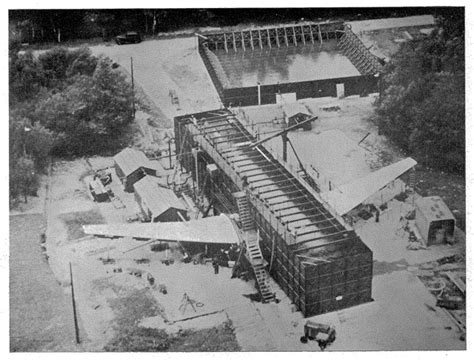
The answer, when it came, reshaped aviation forever. Through painstaking reconstruction and innovative water tank testing, investigators discovered that the Comet’s pressurized fuselage was failing due to metal fatigue. Tiny cracks formed around the corners of its square windows—areas of concentrated stress—and grew over repeated pressurization cycles until the structure could no longer hold.
This was not a minor oversight. It was a revelation that the industry had underestimated the cumulative effects of high-altitude flight. The Comet had introduced a new operational reality—continuous pressurization and depressurization cycles—that engineers had not fully understood.
The consequences were profound. Aircraft design shifted toward rounded windows, stronger materials, and rigorous fatigue testing. But the Comet’s legacy remains sobering: the aircraft that launched the jet age also became its first major casualty. It proved that innovation, when it outpaces understanding, can carry invisible risks.
Lockheed Electra: The Aircraft That Shook Itself to Pieces
If the Comet revealed the dangers of structural fatigue, the Lockheed L-188 Electra exposed something even more elusive—forces that could tear an aircraft apart from within, without warning or precedent.
Introduced in the late 1950s, the Electra was a powerful turboprop airliner designed for performance and efficiency. Its four engines and compact wings gave it impressive capabilities, particularly on shorter runways and high-altitude routes. On paper, it was a triumph of engineering.
In reality, it became an enigma.
In September 1959, a Braniff Airways Electra disintegrated over Texas. Months later, a Northwest Airlines aircraft suffered a similar fate over Indiana. These were not survivable incidents. They were violent, instantaneous breakups that left investigators grappling with a chilling possibility: the aircraft was failing in ways that defied conventional understanding.
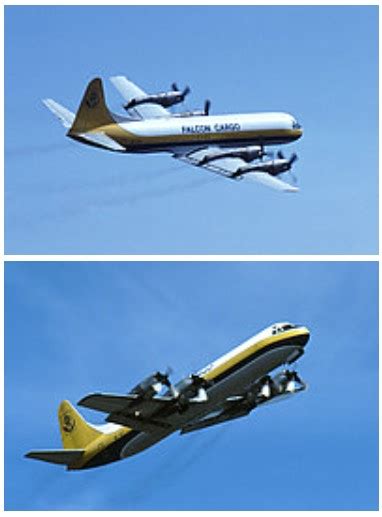
The cause, once uncovered, was as complex as it was alarming. A phenomenon known as “whirl mode flutter” had developed within the aircraft’s engine mounts. Under certain conditions, the engines began oscillating in a way that transmitted destructive vibrations into the wings. When these vibrations aligned with the natural frequency of the wing structure, the result was catastrophic resonance.
The aircraft wasn’t just breaking—it was being shaken apart by its own design dynamics.
This discovery forced engineers into unfamiliar territory. Aeroelasticity, once a niche field, became a central concern in aircraft design. Lockheed implemented extensive modifications, reinforcing engine mounts and strengthening wing structures. The Electra eventually returned to service, but its reputation never fully recovered.
Financially, the program was devastating. Technically, it was transformative. The Electra taught the industry that not all failures are visible or intuitive. Some lie hidden in the complex interplay of forces that only emerge under precise—and deadly—conditions.
The DC-10: A Pattern of Warnings Ignored
Few aircraft have carried a reputation as troubled as the McDonnell Douglas DC-10. Introduced as a widebody jet capable of serving high-demand routes, it was designed to compete in a rapidly expanding global market. Airlines embraced it. Passengers boarded it. But behind the scenes, warning signs were already emerging.
The first major incident occurred in 1972, when an American Airlines DC-10 experienced an explosive cargo door failure. The aircraft survived, but the event exposed a dangerous design vulnerability. The cargo door could be improperly secured, leading to decompression and potential loss of control.
Two years later, that vulnerability became catastrophic.
Turkish Airlines Flight 981 suffered a similar cargo door failure shortly after departing Paris. The resulting decompression caused structural collapse within the aircraft, severing critical control systems. The plane crashed into a forest, killing everyone on board.
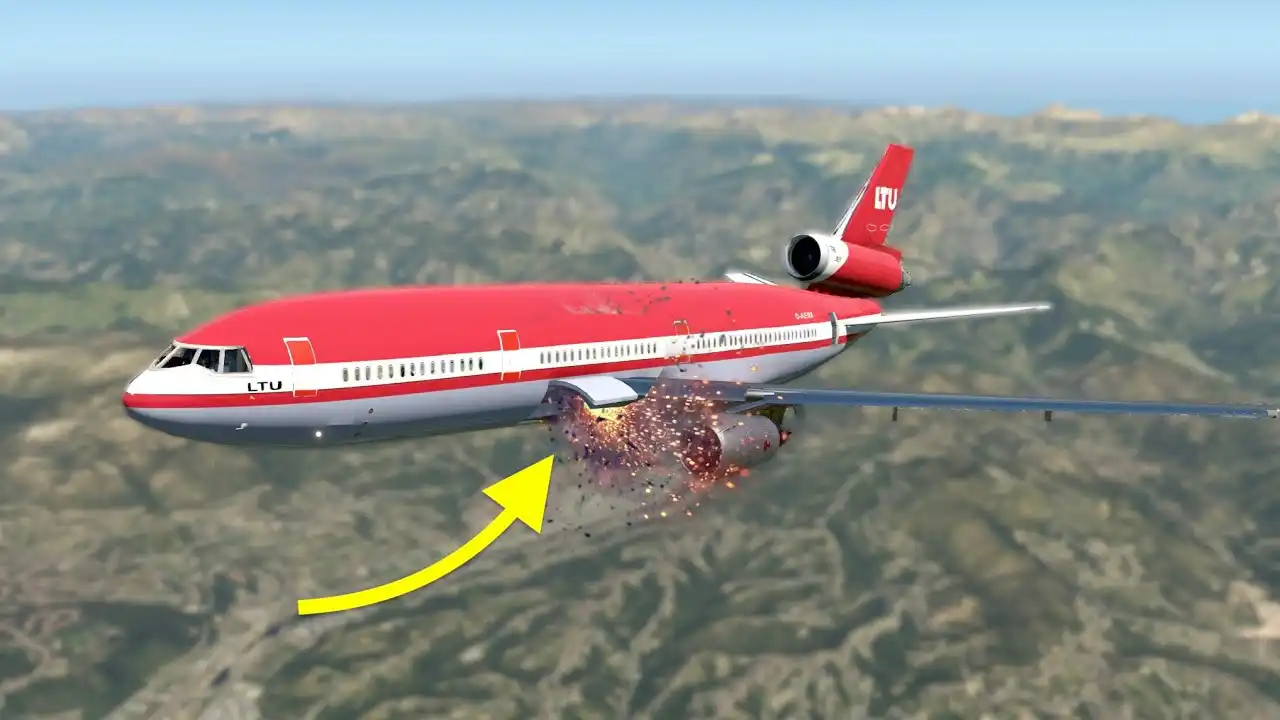
The tragedy raised urgent questions. Why had the earlier incident not prompted more aggressive corrective action? Why had a known risk remained in service?
Then came the crash that cemented the DC-10’s infamy. In 1979, American Airlines Flight 191 lost an engine during takeoff from Chicago. The separation damaged critical systems, causing the aircraft to roll uncontrollably and crash. It remains one of the deadliest aviation accidents in U.S. history.
Officially, the cause was linked to improper maintenance procedures. But the implications ran deeper. If routine maintenance could trigger such catastrophic failure, what did that say about the aircraft’s design tolerances and resilience?
The DC-10 continued flying for decades, proving its operational capability. Yet its name became synonymous with risk—not because of a single flaw, but because of a pattern. Each incident reinforced the perception that something fundamental had been overlooked.
Boeing 787 Dreamliner: When Innovation Outpaced Integration
The Boeing 787 Dreamliner was conceived as a revolution. Built with composite materials, designed for fuel efficiency, and equipped with advanced electrical systems, it promised a new era of long-haul travel. Airlines invested heavily. Passengers anticipated a more comfortable flying experience.
But shortly after entering service, the Dreamliner encountered a problem that no one could ignore.
In January 2013, a parked aircraft experienced a battery fire at Boston Logan Airport. Days later, another aircraft was forced to make an emergency landing in Japan due to battery-related warnings and smoke. These were not isolated anomalies—they pointed to a systemic issue.
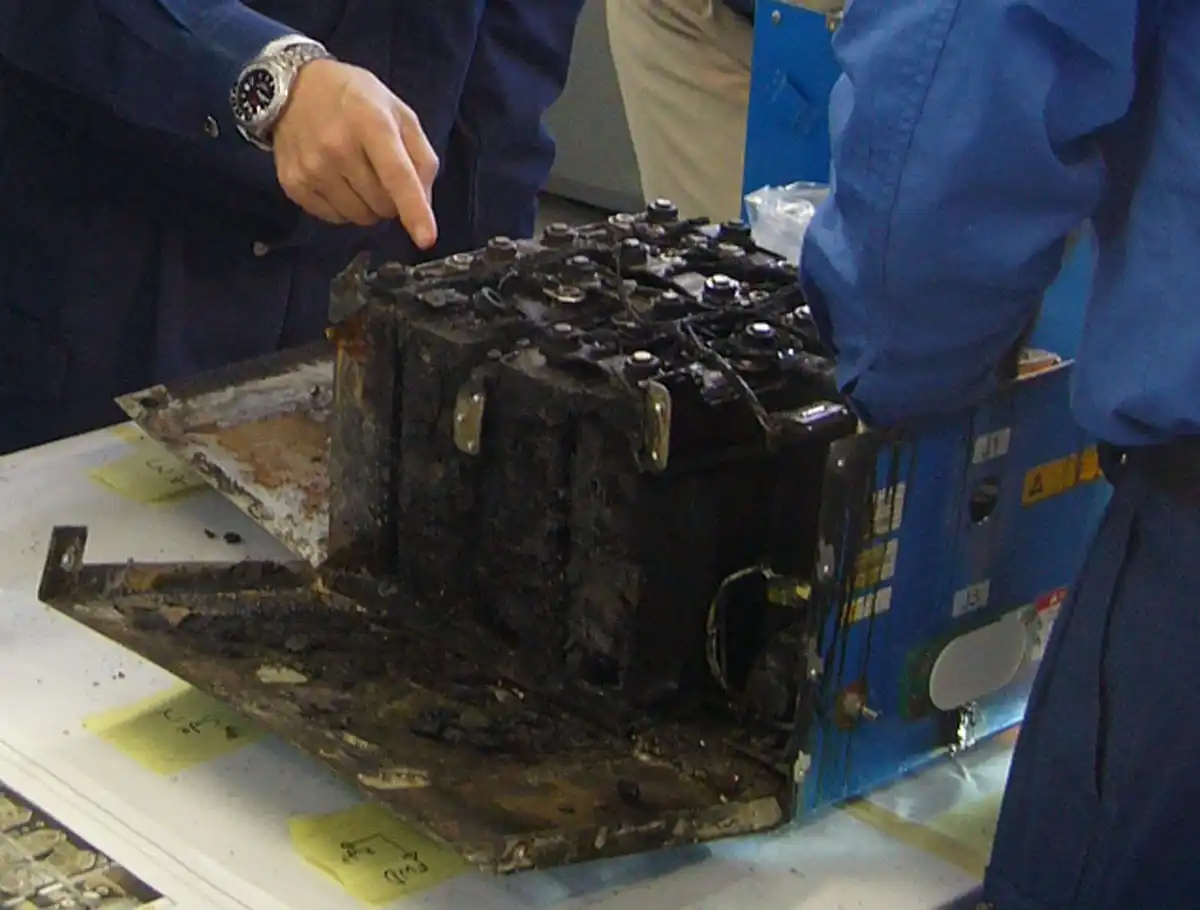
The culprit was the aircraft’s lithium-ion battery system. Under certain conditions, the batteries could enter thermal runaway—a chain reaction that leads to rapid overheating and potential fire. For an aircraft reliant on advanced electrical architecture, this was a serious vulnerability.
Regulators responded with an unprecedented move: the global grounding of the entire 787 fleet.
What made this episode particularly unsettling was that the aircraft had already been certified and delivered. It was not a prototype—it was operational. The issue had slipped through testing, validation, and regulatory oversight.
Boeing eventually implemented a comprehensive fix, including improved battery containment and monitoring systems. The Dreamliner returned to service and went on to achieve commercial success. Yet the incident left a lasting impression.
It demonstrated that modern aircraft, with their increasing complexity, could harbor risks that only become apparent in real-world operation. Certification was no longer the final word—it was part of an ongoing process of discovery.
Boeing 737 MAX: When Trust Became the Casualty
The Boeing 737 MAX was designed to be an evolution, not a revolution. It built upon a familiar platform, offering improved fuel efficiency and operational continuity for airlines. On the surface, it seemed like a safe bet—a refined version of a proven aircraft.
But beneath that familiarity lay a critical system that would become the center of one of aviation’s most significant scandals.
The Maneuvering Characteristics Augmentation System (MCAS) was introduced to address changes in handling caused by larger engines. It operated automatically, adjusting the aircraft’s nose position based on sensor input. Crucially, it relied on data from a single angle-of-attack sensor.
When that sensor failed, MCAS could activate repeatedly, forcing the aircraft’s nose downward—even if the plane was flying normally.
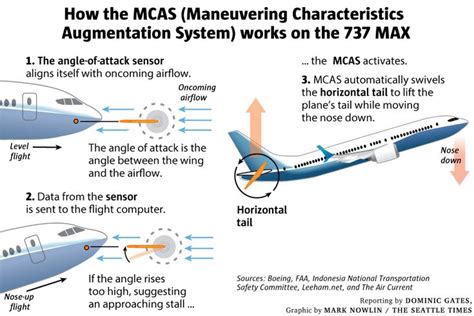
In October 2018, Lion Air Flight 610 crashed into the Java Sea. Months later, Ethiopian Airlines Flight 302 suffered a nearly identical fate. In both cases, pilots struggled against automated inputs they did not fully understand.
The similarities were impossible to ignore. The global aviation community responded with a sweeping grounding of the 737 MAX fleet.
Investigations revealed a complex web of issues: design decisions that prioritized commonality over transparency, certification processes that delegated significant authority, and communication gaps that left pilots underprepared for critical scenarios.
The technical fix—modifying MCAS to use multiple sensors and limiting its authority—was necessary. But the deeper issue was trust.
Passengers questioned the aircraft. Pilots questioned the system. Regulators questioned the certification process. For the first time in decades, confidence in a major aircraft program had been fundamentally shaken.
What These Aircraft Changed: Lessons Written in Wreckage
Each of these aircraft represents a turning point in aviation history. They are not merely examples of failure, but of transformation. The Comet led to a deeper understanding of structural fatigue. The Electra advanced the study of aeroelasticity. The DC-10 reshaped maintenance practices and design accountability. The 787 highlighted the challenges of integrating new technologies. The 737 MAX exposed vulnerabilities in modern certification and corporate decision-making.
What unites them is not just controversy, but consequence.
The aviation industry is safer today because of these lessons—but that safety was not achieved without cost. Each improvement, each regulation, each design change was forged in response to failure.
There is a persistent illusion in technological progress that systems become inherently safer over time. Aviation challenges that assumption. Safety is not a destination—it is a process, one that requires constant vigilance, skepticism, and the willingness to confront uncomfortable truths.
These aircraft remain controversial not because they were uniquely flawed, but because they revealed how even the most advanced systems can fail when assumptions go untested or warnings go unheeded.
In the end, the most enduring lesson is not about engineering. It is about humility.