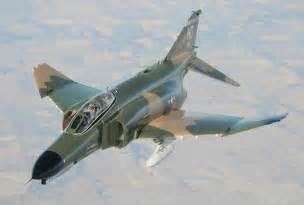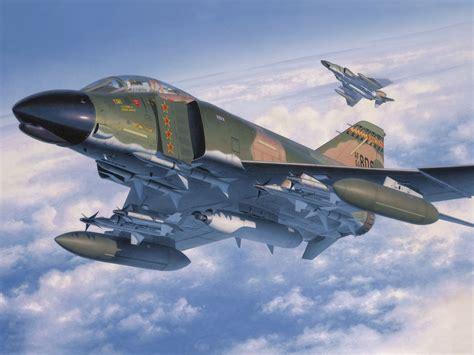
The moment the McDonnell Douglas F-4 Phantom II appeared on the runway in the late 1950s, it was obvious that aviation had taken a sharp evolutionary turn. This was not a delicate dogfighter sculpted for elegance. It was a thunderous declaration that raw power, altitude, and speed could overwhelm conventional aerodynamic wisdom. Built during a period when Cold War urgency rewarded extremes, the Phantom arrived not merely to serve, but to dominate performance charts so thoroughly that history would struggle to catch up.
In an era where most fighters were compact, single-engine machines, the F-4 looked almost excessive. Its sheer mass, twin-engine configuration, and massive radar nose made it stand out like a heavyweight entering a ring of middleweights. Critics called it ugly. Engineers called it inevitable. Within months of its introduction, the jet began rewriting aviation record books with almost casual confidence, stacking world records in speed, altitude, and climb performance faster than rivals could respond.
What followed was one of the most aggressive and successful record-setting campaigns ever executed by a military aircraft, carried out not by experimental prototypes, but largely by production-standard jets flown by U.S. Navy crews. These were not publicity stunts dressed up as science. They were demonstrations of a radical philosophy: when thrust becomes overwhelming, physics negotiates.
A Fighter Jet Designed to Intimidate Physics
By 1958, when the Phantom first flew, aviation engineers were wrestling with the limits of traditional fighter design. Speed demanded thin wings and light frames. Range and payload demanded size. Radar demanded space. The F-4 answered every demand by saying yes to all of them at once, resulting in a machine that weighed nearly 60,000 pounds at maximum takeoff and still pushed past Mach 2.2.
Nicknamed the “Rhino” and the less flattering “Double Ugly,” the Phantom dwarfed its contemporaries. It could lift a payload equal to the total weight of an entire F-86 Sabre, and its maximum takeoff weight was nearly three times that of the MiG-21. This was not accidental excess. It was deliberate engineering arrogance, powered by two General Electric J79 turbojet engines that delivered such ferocious thrust that aerodynamic compromises became acceptable.
The Phantom’s designers famously described it as a “triumph of thrust over aerodynamics.” That phrase was not marketing poetry. It was an engineering thesis, proven correct every time the throttles were pushed forward and the aircraft surged skyward faster than the math suggested it should.
The Record-Breaking Campaign That Shocked the World
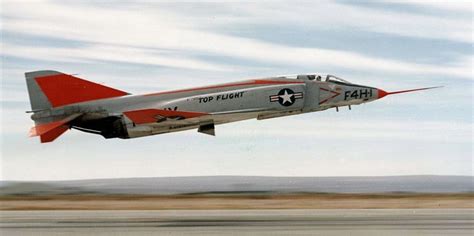
The Phantom’s ascent into aviation legend began on December 6, 1959, during Operation Top Flight. Commander Lawrence Flint Jr. took the YF4H-1 into a near-vertical zoom climb and reached an astonishing 98,557 feet, shattering the existing world altitude record previously held by a Soviet Sukhoi. At that height, the sky darkened, the engines flamed out by design, and the aircraft transitioned into a silent glide back toward Earth.
That single flight announced a new reality. Over the next three years, the F-4 would claim at least 16 officially recognized world records, with sources like the Collings Foundation crediting it with 25 total records when accounting for additional performance milestones. These achievements were not clustered in a single category. They spanned closed-course speed runs, transcontinental dashes, low-altitude velocity, sustained altitude, and time-to-climb benchmarks that redefined expectations.
In September 1960, the Phantom averaged over 1,216 miles per hour across a 500-kilometer course, then followed with an even more staggering 1,390 miles per hour just weeks later. These were not momentary bursts. They were sustained, controlled demonstrations of dominance.
Coast-to-Coast Faster Than the Sun
On May 24, 1961, to celebrate the 50th anniversary of U.S. Naval Aviation, three Phantom IIs launched on a transcontinental mission under Operation LANA. Flying from coast to coast with aerial refueling stops, the fastest jet completed the journey in 2 hours and 47 minutes, averaging nearly 870 miles per hour.
This achievement mattered beyond the headline. It proved that extreme performance was not limited to laboratory conditions. The Phantom could sustain speed, manage fuel, integrate refueling, and remain operational across an entire continent. That blend of speed and endurance was unprecedented, and it forced adversaries to reconsider interception timelines and defensive depth.
When Speed Became Dangerous
The pursuit of records is never without risk. In Operation Sageburner, the Navy attempted to claim the world sea-level speed record. During an early run, Commander J.L. Felsman was killed when his Phantom disintegrated midair, a stark reminder that pushing boundaries extracts payment. The program paused, recalibrated, and returned.
Later that year, another Phantom completed the run successfully, achieving 902.72 miles per hour below 125 feet, officially claiming the record. In November 1961, a modified Phantom pushed even further during Operation Skyburner, reaching an absolute world speed record of 1,606.34 miles per hour, equivalent to Mach 2.5. The message was unmistakable. This aircraft did not merely flirt with danger. It mastered it.
Time-to-Climb: The Phantom’s Most Brutal Statistic
If speed impressed observers, time-to-climb terrified planners. During Project High Jump in 1962, the Phantom obliterated records by reaching 3,000 meters in just 34.5 seconds, 15,000 meters in under two minutes, and 30,000 meters in just over six minutes. These numbers mattered because altitude equals advantage. An aircraft that climbs faster controls when and how combat begins.
Several of these records stood untouched for more than two decades, only falling when the F-15 Eagle—an aircraft directly influenced by Phantom combat lessons—entered service in the mid-1970s. That longevity speaks volumes about how far ahead of its time the F-4 truly was.
Engineering a Giant That Could Land on a Carrier
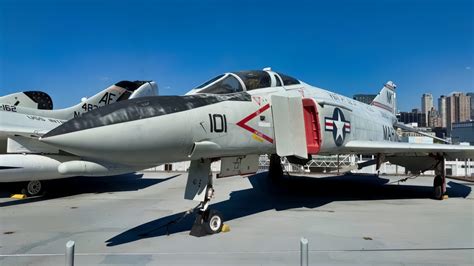
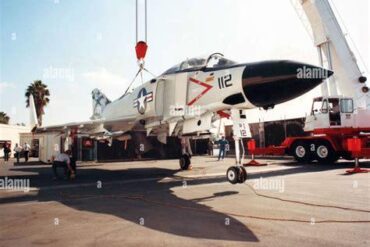
Building a jet this large and fast for aircraft carrier operations bordered on insanity. McDonnell Douglas solved the problem with a mix of innovation and brute pragmatism. The Phantom became one of the first fighters to use titanium extensively, particularly around the engine bays and central keel, where Mach-level heat and carrier landing stress converged.
To land safely at low speeds, engineers implemented a Boundary Layer Control (BLC) system that bled high-pressure air over the flaps, dramatically increasing lift during approach. Without it, the Phantom simply would not fit on a carrier deck. Instead of redesigning the entire airframe to address stability issues, engineers applied elegant visual fixes: 23-degree anhedral stabilators, 12-degree dihedral outer wings, and distinctive dogtooth leading edges that delayed stalls during aggressive maneuvers.
The result was an aircraft that looked unconventional but behaved predictably, even at the edges of its envelope.
From Record Breaker to Combat Workhorse
Records alone do not make legends. Combat does. The Phantom transitioned from experimental marvel to frontline warrior in the Vietnam War, where its strengths and weaknesses were brutally exposed. Designed as a high-altitude interceptor, it found itself dogfighting nimble MiG-17s at low altitude.
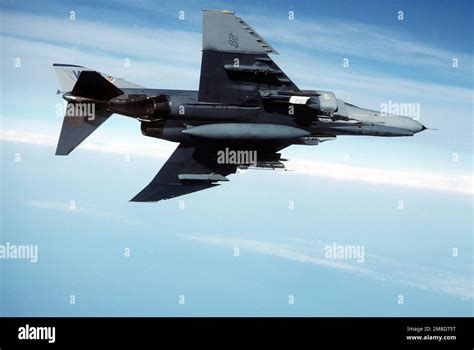
Its greatest advantage was acceleration. Pilots learned quickly that “speed is life.” The Phantom could disengage at will, climb away from danger, and re-enter the fight on its own terms. Its massive payload allowed it to carry more ordnance than some WWII heavy bombers, transforming it into a devastating multirole platform.
Early reliance on missiles proved problematic, leading to the F-4E, which added an internal M61 Vulcan cannon. Despite producing thick black exhaust trails that betrayed its position, the Phantom became the only aircraft to generate aces for both the U.S. Air Force and Navy, scoring over 100 confirmed MiG kills for the Air Force alone.
A Legacy That Refuses to Fade
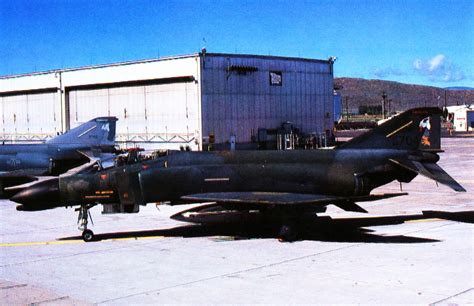
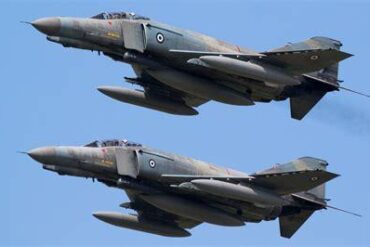
Nearly a century after its first flight, the F-4 Phantom II remains one of the most influential fighter jets ever built. Almost 100 aircraft are still in service worldwide, a testament to the durability of its design. More importantly, its philosophy reshaped fighter development. The F-15 Eagle and F/A-18 Hornet both inherited lessons written in Phantom titanium and jet fuel.
The F-4 did not just set records. It redefined what was considered possible, proving that overwhelming power, when intelligently controlled, could bend the rules of flight. In doing so, it earned its place not only in museums and history books, but in the DNA of modern air combat itself.