Drone technology is accelerating at an unprecedented pace, with breakthroughs reshaping military strategies, industrial logistics, and recreational aviation. Yet, some of the most astonishing advancements are emerging not from sprawling tech labs but from inventive small teams pushing the limits of design and materials science. A prime example is the record-smashing quadcopter known as Blackbird, developed by Australian innovators Aidan Kelly and Ben Biggs, whose ingenuity has vaulted the world of drones into a new era of high-speed flight.
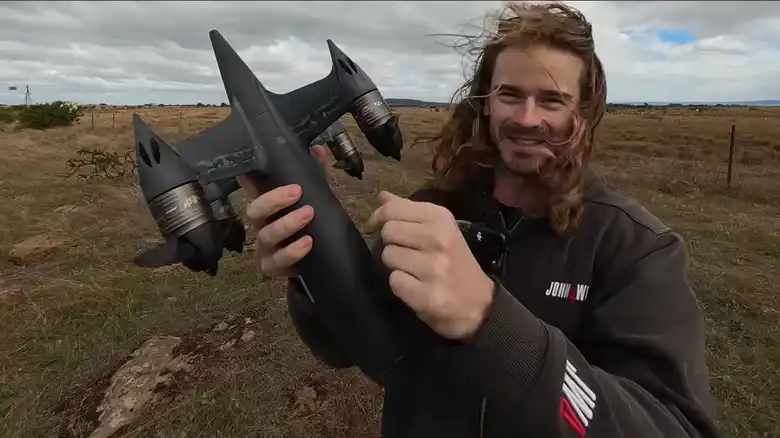
The Blackbird drone recently achieved an astonishing 453 mph, eclipsing the previous unofficial record by nearly 50 mph. This extraordinary feat, while not yet officially recognized by Guinness World Records due to a lack of certified observers, was meticulously documented on the duo’s YouTube channel, Drone Pro Hub, where viewers could witness the drone tearing through the air with a precision and velocity previously thought unattainable for battery-powered quadcopters.
At the heart of Blackbird’s performance lies the innovative use of carbon fiber, a material prized for its exceptional strength-to-weight ratio. The duo designed custom rotors with a serrated, sawtooth leading edge, a design inspired by the aerodynamics of high-performance racing aircraft. This serration reduces drag by channeling airflow directly along the blade, contrasting sharply with conventional propellers, which tend to funnel air sideways and create resistance. Coupled with high-pitch blades, this design allows the drone to slice through the air with minimal turbulence, achieving speeds that were previously unimaginable for electrically powered quadcopters.
What makes this breakthrough even more remarkable is the level of accessibility in the design process. Kelly and Biggs achieved their record without industrial-grade testing facilities, relying instead on ingenuity, careful experimentation, and a deep understanding of aerodynamics. The sawtooth rotor system, while demanding more power at lower speeds and putting significant strain on the battery during takeoff, ultimately allowed the Blackbird to sustain 400 amps for 10 seconds, generating an explosive surge of speed. This electrical demand heated the batteries to the point of smoking during peak performance, demonstrating both the immense power and the engineering challenges involved in pushing drones to their absolute limits.
The record-setting runs were not without setbacks. The first prototype, attempting to surpass 630 km/h (391 mph), suffered a catastrophic crash due to a lost video signal. However, undeterred, the duo refined their approach. During the official attempt, they contended with winds ranging from 21 to 37 mph. In a series of calculated runs, the Blackbird achieved 730 km/h (453 mph) downwind and 640 km/h (397 mph) upwind, producing an average speed of 685 km/h (426 mph)—a staggering benchmark that establishes the Blackbird as the fastest electric drone to date, narrowly missing their ambitious 700 km/h target.
The implications of this achievement extend far beyond YouTube fame. The Blackbird’s design innovations, particularly in high-pitch carbon fiber rotors, are likely to influence both commercial and military drone applications. The efficiency gains could enhance delivery drones, search and rescue operations, and even competitive racing drones. Military developers, in particular, may take note of the lightweight, high-speed potential, especially as autonomous UAVs become more prominent in reconnaissance and tactical scenarios. With commercial drones moving toward higher speed and payload capacities, the Blackbird may serve as a blueprint for the next generation of agile, fast, and efficient unmanned aerial vehicles.
Kelly and Biggs are not just content with speed records. Their goal is to democratize access to cutting-edge drone technology. The Blackbird blueprints are slated for public release, designed to be compatible with widely available FDM 3D printers, including models from Bambu Lab. While sourcing carbon fiber components may require more specialized suppliers, the team has provided guidance on sourcing materials through PCB Way, demonstrating their commitment to making this high-speed technology replicable by enthusiasts and independent engineers worldwide.
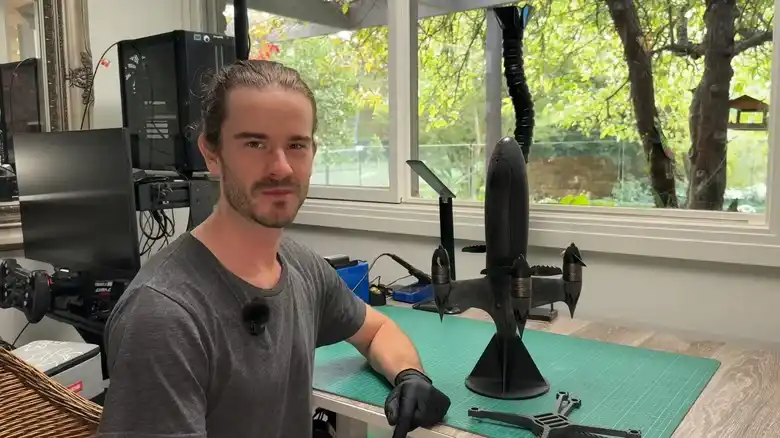
The Blackbird project also underscores a broader trend in drone development: small teams leveraging niche expertise and rapid iteration cycles can rival—or even surpass—traditional industrial and military laboratories. By combining creative engineering, material science, and meticulous testing, Kelly and Biggs exemplify how the intersection of passion and innovation can redefine what is possible in aviation. Their work also highlights a fundamental truth in drone technology: breakthroughs often come not from sheer funding but from daring to experiment beyond conventional norms.
Looking ahead, the duo is preparing for another run, this time aiming for official Guinness World Record recognition. If successful, the Blackbird will not only cement its place in history but also accelerate the adoption of carbon fiber high-pitch rotors in drones across the globe. For hobbyists, engineers, and commercial developers, this milestone is a tantalizing glimpse into the future of unmanned flight—faster, lighter, and more efficient than ever before.
In the landscape of drones, where artificial intelligence, robotics, and aerodynamics are converging at breakneck speed, the Blackbird is a vivid testament to the power of ingenuity. By harnessing advanced materials like carbon fiber and refining rotor design with painstaking precision, Kelly and Biggs have not only set a new benchmark for velocity but have also opened the door for a new era of electric flight that challenges the boundaries of both engineering and imagination.
The Blackbird’s flight is more than a record; it is a statement: the age of supersonic drones is no longer a concept—it is a reality, powered by carbon fiber, ingenuity, and the relentless pursuit of speed.