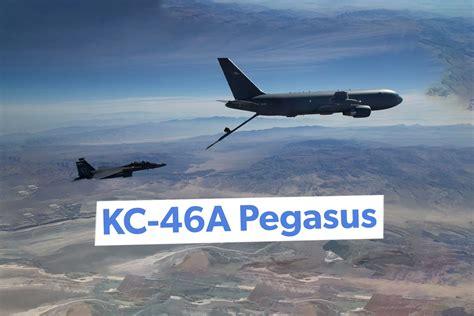
The KC-46 Pegasus was supposed to be the aircraft that finally moved the U.S. Air Force beyond the Cold War tanker era. Instead, it became one of the most complicated modernization programs in recent American military aviation. The Pegasus is newer, more versatile, and better equipped for a contested battlefield than the aging KC-135 Stratotanker, yet it arrived burdened by technical deficiencies, cost overruns, delayed fixes, and questions about whether its most important systems were ready for the missions they were designed to support.
That contradiction explains the KC-46’s unusual position today. The Air Force cannot easily abandon it because the tanker fleet it is replacing is approaching an operational and structural crisis. At the same time, the service cannot simply declare the Pegasus finished because several of its most consequential problems have taken years to resolve. The result is an aircraft that is simultaneously indispensable and deeply frustrating.
The underlying problem is larger than Boeing’s difficulties. The KC-46 sits at the center of America’s entire airpower architecture because fighters, bombers, surveillance aircraft, transports, and increasingly unmanned systems depend on tankers to extend their range. In a future conflict across the Indo-Pacific, the ability to move fuel through dangerous airspace could determine whether combat aircraft can actually reach and remain over their targets.
The KC-135’s Aging Fleet Created an Urgent Replacement Problem
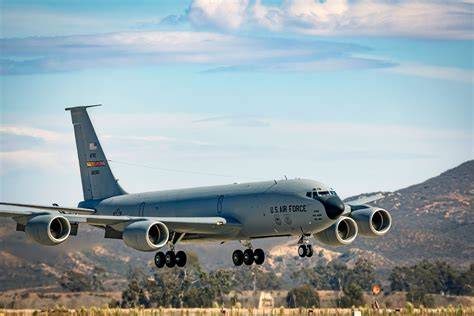
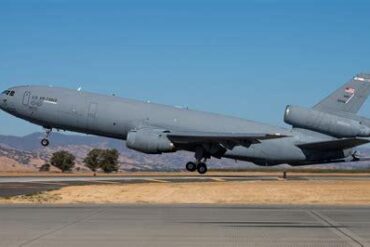
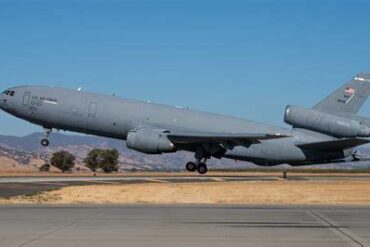
The most important reason the KC-46 cannot simply be canceled is brutally straightforward: the KC-135 is getting old. The Stratotanker entered service during the Eisenhower administration, meaning some aircraft have accumulated decades of operational use. For an aircraft fleet expected to support global military operations, that age creates increasingly difficult maintenance, structural, and availability challenges.
The KC-135 was an extraordinary machine for its time. It was designed during the Cold War around a straightforward but strategically vital concept: keep American combat aircraft airborne by carrying enormous quantities of fuel. Its rugged construction reflected an era when military planners expected aircraft to operate through a nuclear confrontation and continue performing their missions under extreme conditions.
But durability does not make an airframe immune to time. Even a famously robust aircraft eventually reaches a point where structural inspections, corrosion control, component replacement, and maintenance demands become increasingly expensive and operationally restrictive. The Air Force therefore faces a difficult choice: continue relying on aircraft approaching seven decades of service, or accelerate the introduction of a replacement that has itself experienced major development problems.
That is why the KC-46 program became essential before it became successful. The service did not have the luxury of waiting for a perfect tanker.
The Pegasus Was Designed to Be More Than a Flying Gas Station
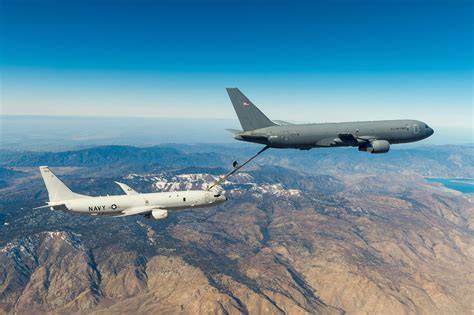
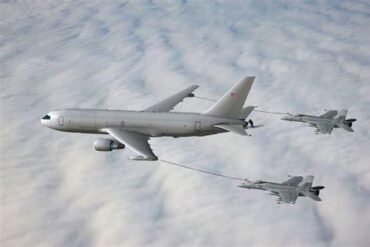
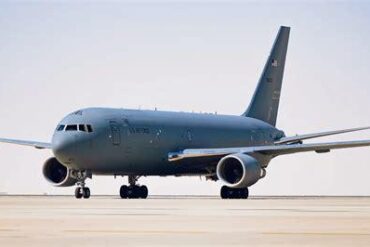
The KC-46 represents a fundamentally different philosophy from the KC-135. Rather than functioning primarily as a flying fuel depot, the Pegasus was designed as a multi-mission aircraft capable of aerial refueling, cargo transportation, passenger movement, and aeromedical evacuation.
Its Boeing 767-derived airframe provides a larger and more flexible internal environment. Cargo pallets can be moved through the aircraft using dedicated handling equipment, while its configuration can be adapted to different missions. According to the reference material, the Pegasus can be reconfigured for cargo, passenger, or aeromedical operations with relatively limited ground time.
That flexibility matters because military logistics rarely happen in neat categories. A tanker heading toward a theater may need to deliver fuel on one sortie, transport personnel on another, or support evacuation requirements during a crisis. A platform that combines several capabilities can therefore provide more utility per aircraft than a tanker designed almost exclusively around fuel.
The KC-46 also offers substantially greater passenger and cargo capacity than the KC-135. Its pallet capacity is significantly higher, and its medical evacuation potential is greater as well. In practical terms, that makes the Pegasus part tanker, part transport, and part airborne logistics platform.
The transformation is important because modern warfare is increasingly defined by logistics. A fighter may have advanced sensors and long-range weapons, but without fuel, maintenance, ammunition, and personnel, its technological advantages become irrelevant.
The Real Problem: Modernization Created New Technical Risks
The KC-46’s biggest controversy is not that it introduced new technology. The problem is that some of that technology proved considerably harder to mature than expected.
One of the most visible examples is the Remote Vision System, or RVS. Instead of giving the boom operator the traditional direct visual perspective associated with older tankers, the KC-46 uses cameras and displays to provide the operator with a remote view of the refueling boom and receiving aircraft.
The concept is compelling. Cameras can provide enhanced visibility, including infrared imagery that can support operations in darkness. A properly functioning digital system could potentially offer capabilities that are impossible with traditional windows and optical arrangements.
However, the original RVS experienced serious problems. Bright sunlight could degrade image quality, while the system could create distorted depth perception. During aerial refueling, where the boom operator must judge relative position and distance with extreme precision, such problems are not cosmetic inconveniences. They directly affect the safety of the refueling operation.
The solution, RVS 2.0, represents a much more sophisticated approach. The upgraded architecture uses higher-resolution imagery and advanced geometric processing, with LiDAR-based distance information intended to improve the operator’s understanding of three-dimensional space.
But the fact that such a fundamental system required years of development illustrates the broader KC-46 dilemma: the aircraft was technically ambitious, but ambition increased the number of things that could go wrong.
The Boom Became the KC-46’s Most Serious Operational Headache
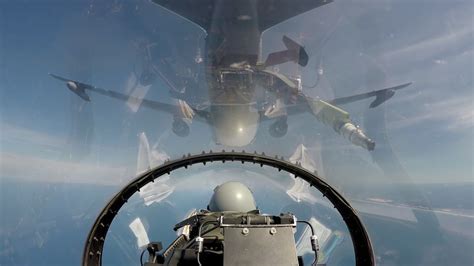
Perhaps the most consequential issue concerns the KC-46 aerial refueling boom itself. The boom is the aircraft’s defining piece of equipment, and problems with its movement can directly affect the aircraft being refueled.
The Pegasus uses a remotely operated, fly-by-wire boom. That architecture provides precise control and allows the operator to manage the system from inside the aircraft rather than physically manipulating a traditional boom station in the same way older tanker crews did.
Yet the boom has demonstrated excessive rigidity under certain conditions. This becomes particularly significant when refueling lighter aircraft. Older tankers such as the KC-135 have a boom with characteristics that provide greater flexibility when interacting with smaller receiving aircraft.
The KC-46’s boom can require greater force to collapse and retract. Under unfavorable circumstances, this has contributed to a condition known as nozzle binding, where the boom can become trapped in the receiving aircraft’s receptacle.
The potential consequences are serious. If the connection cannot separate cleanly, the boom may be subjected to abnormal forces. In reported incidents, the boom has moved violently enough to strike the KC-46’s own tail, producing substantial damage.
That is why a seemingly technical engineering characteristic became a strategic concern. A tanker does not merely protect itself; it must safely interact with aircraft ranging from fighters to bombers. A refueling system that works well only under ideal conditions is not enough for a global air force.
Boeing has been working on a Boom Telescope Actuator Redesign intended to reduce the force required to retract the boom. The objective is straightforward: provide more sensitive control and make the system safer across the Air Force’s diverse fleet of receiving aircraft.
The challenge is that these improvements arrive after aircraft have already entered operational service. The Pegasus is therefore being refined while simultaneously carrying out the mission it was created to perform.
Why the KC-46 Became Financially Painful for Boeing
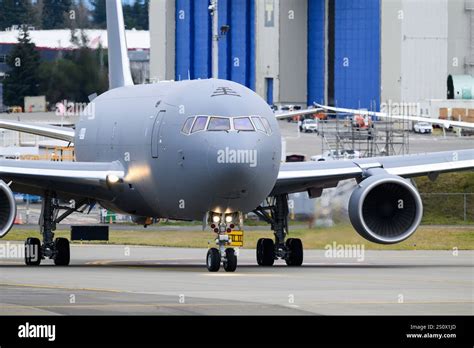
The KC-46 has not only been difficult for the Air Force. It has been financially punishing for Boeing.
The program’s fixed-price structure transferred significant financial risk to the manufacturer, particularly when development problems required redesigns, repairs, retrofits, and additional engineering work. Boeing has absorbed billions of dollars in charges, penalties, and write-offs associated with the program.
The reference material notes that Boeing disclosed a $565 million KC-46 loss in its fourth-quarter 2025 earnings, illustrating how the aircraft continues to affect the company’s financial performance even after entering production.
That situation is important because it demonstrates how defense procurement can become trapped between two competing realities. The government wants predictable costs and accountability, while the contractor must absorb unexpected expenses. When an aircraft is technically complicated and still immature, the result can be enormous financial pressure without providing either side an easy exit.
For Boeing, abandoning the program would make little strategic sense. For the Air Force, abandoning the aircraft would create an even larger capability gap.
The KC-46 Became More Important as the Stealth Tanker Idea Lost Momentum
The Pegasus might have faced a very different future if the Air Force had enough resources to develop a completely new stealth tanker.
The proposed Next Generation Air-refueling System, or NGAS, was envisioned as something much more ambitious. Instead of simply making a better conventional tanker, the concept sought to develop a platform with enough survivability to operate closer to heavily contested airspace alongside next-generation aircraft.
That requirement reflects a major change in American military planning. Future fighters and bombers are expected to penetrate increasingly sophisticated enemy air-defense networks. If tankers remain far behind the front line, they may struggle to provide enough fuel at the right locations. If they move closer, they become vulnerable.
A stealthier tanker could potentially solve part of that dilemma, particularly as aircraft such as the B-21 Raider and future sixth-generation fighters enter service.
But designing a stealth tanker from scratch would be extraordinarily expensive. The Air Force has already faced enormous pressure to modernize multiple parts of its force simultaneously. Nuclear modernization, long-range strike, air superiority, mobility, space systems, drones, and missile defense all compete for limited resources.
That financial reality helped elevate the KC-46 from troubled replacement program to strategic necessity.
Rather than waiting for an ideal stealth tanker, the Air Force increasingly has to make the Pegasus survivable enough for the missions it expects to perform.
Congress Is Now Part of the KC-46 Solution
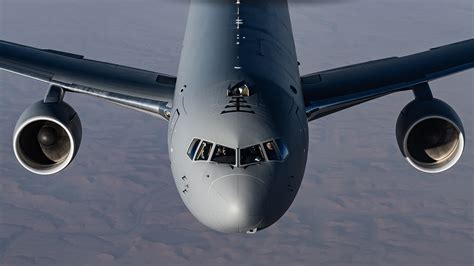
The controversy has become significant enough to attract sustained congressional intervention. Lawmakers have sought to prevent the Air Force from retiring too many KC-135 aircraft before the replacement fleet is sufficiently capable and available.
That creates an unusual procurement dynamic. Normally, introducing a replacement allows the military to retire the aircraft it replaces. With the KC-46, however, the old and new fleets may need to coexist longer than originally intended.
Congress has also pushed for a larger overall tanker force. The reference material describes proposals to increase the statutory minimum tanker fleet from 466 aircraft to 504 by 2027, reflecting concerns that America’s future operational requirements may demand more capacity rather than simply a one-for-one replacement.
At the same time, lawmakers have placed restrictions on additional KC-46 acquisitions until major deficiencies are addressed through credible corrective-action plans and milestones.
This is a classic example of procurement tension. The Air Force needs more tankers, but Congress does not want to purchase large numbers of aircraft with unresolved major deficiencies.
The result is pressure on both the military and Boeing to demonstrate that the Pegasus is moving from development problem to mature operational system.
The Numbers Reveal Why Cancellation Is Not Realistic
Despite its problems, the KC-46 production line continues to move forward. The Air Force accepted its 100th KC-46A in December 2025, while fleet plans have expanded substantially from earlier projections.
That growth is perhaps the clearest evidence that the Pegasus has become essential.
The original program envisioned fewer aircraft, but subsequent requirements increased the planned fleet. Additional aircraft announced during 2025 reinforced the direction toward a larger KC-46 force rather than abandoning the program in favor of waiting for a clean-sheet tanker.
This does not mean the Air Force considers every KC-46 problem solved. It means the strategic cost of waiting has become greater than the political and financial cost of continuing.
The KC-135 is not becoming younger. Every year spent waiting for a theoretically perfect replacement is another year in which the Air Force must maintain an aging fleet while preparing for increasingly demanding operational environments.
The KC-46’s Future Depends on Fixing, Not Replacing, the Aircraft
The most realistic future for the Pegasus is therefore neither triumph nor cancellation. It is continuous correction and incremental modernization.
RVS 2.0 must become dependable. The boom must operate safely across the full range of receiving aircraft. Defensive systems must continue improving as threats evolve. Communications and connectivity must keep pace with the requirements of a distributed force.
Most importantly, the Air Force must determine how the KC-46 can operate in a contested environment without exposing itself unnecessarily. A tanker does not need to behave like a fighter, but it cannot remain completely dependent on the assumption that enemy aircraft will never reach it.
That is particularly important in the Indo-Pacific, where distances are enormous and adversaries possess increasingly capable long-range weapons. The traditional model of positioning vulnerable support aircraft far from danger becomes harder to sustain when enemy missiles can threaten targets hundreds of miles away.
The KC-46 therefore represents a bridge between two eras. It is too conventional to be the ultimate answer to the contested tanker problem, yet too advanced and too necessary to be treated as merely an interim aircraft.
Why the KC-46 Pegasus Matters More Than Its Problems Suggest
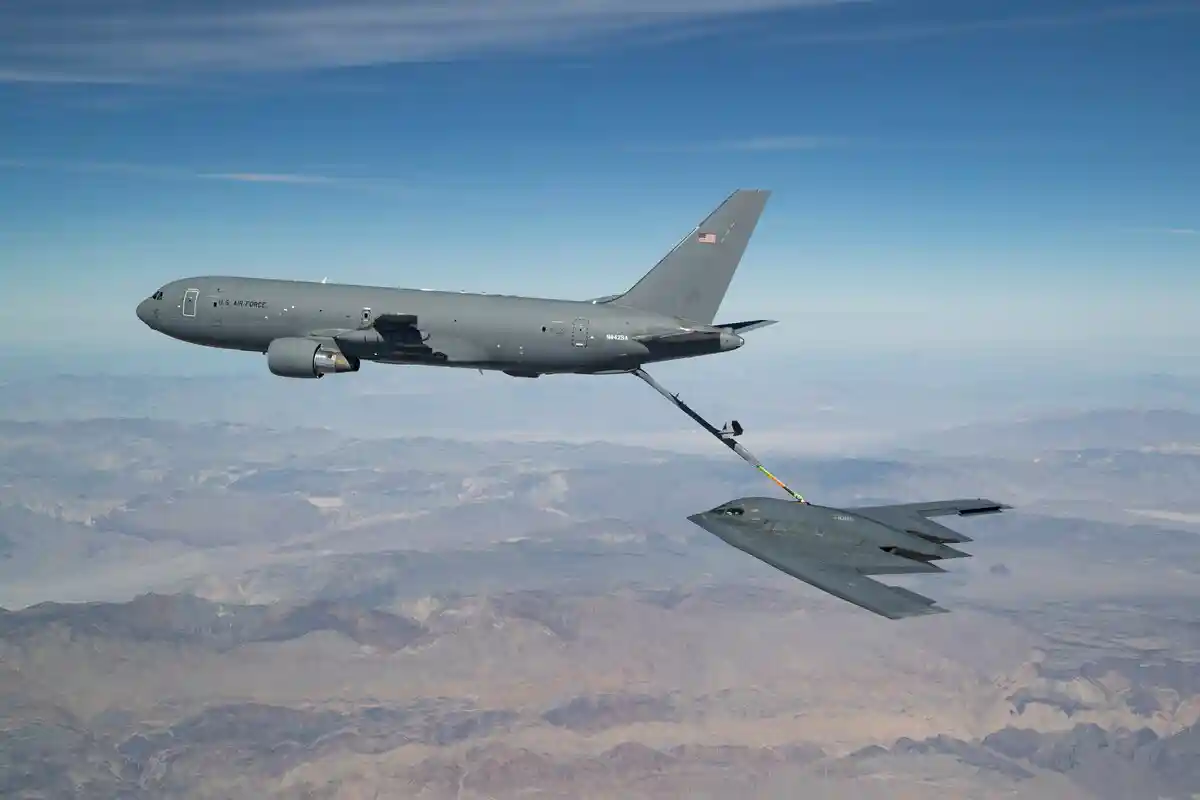
The real story of the KC-46 Pegasus is not that Boeing built a bad tanker. Nor is it that the Air Force somehow made a mistake by buying it. The deeper story is that the aircraft arrived at precisely the moment when the United States could least afford a troubled tanker transition.
The Pegasus has serious deficiencies. Its Remote Vision System took years to mature. Its boom has generated operational concerns. Boeing has absorbed enormous financial losses, while the Air Force has faced political pressure over whether it should continue purchasing aircraft before every major problem is resolved.
Yet the alternative is hardly comforting. The KC-135 fleet is aging rapidly, lacks the defensive and digital capabilities required for future high-threat environments, and cannot provide the flexibility of the Pegasus.
The KC-46 also offers capabilities that extend beyond refueling. It can move cargo, carry passengers, support aeromedical missions, operate with modern defensive systems, and provide fuel to the aircraft that form the backbone of American airpower.
That is why the Pegasus became both essential and deeply troubled.
Its troubled development does not erase its strategic value. Instead, it makes modernization more urgent. The Air Force needs to transform the KC-46 from a promising but imperfect replacement into a mature operational platform while simultaneously determining what comes next.
The ultimate irony is that the KC-46 may never be the perfect tanker envisioned by its designers. But perfection is no longer the requirement. The requirement is a tanker capable of keeping America’s fighters, bombers, transports, and future unmanned aircraft in the air when the next major conflict demands it.
And with the KC-135 fleet approaching the limits of what decades-old aircraft can reasonably provide, the United States no longer has the luxury of waiting for another aircraft to solve the problem. The Pegasus has inherited the burden of the future precisely because the past is running out of time.