For almost two decades, flying the Boeing 747 meant three people on the flight deck. The captain and first officer flew and navigated the aircraft, while a dedicated flight engineer sat behind them watching over one of the most complex systems packages ever installed in a commercial jetliner: four engines, a sprawling fuel system, multiple hydraulic circuits, electrical generators, and environmental controls. When the 747-400 appeared in the late 1980s, that arrangement ended. Boeing removed the third seat and placed the entire technical burden of the jumbo jet on two pilots supported by integrated digital systems. The change did not merely trim a salary line from airline budgets. It proved that the largest airliners in the world could be operated by a crew of two, and in doing so it reset the expectations that shaped every widebody that followed.
Three Flight Deck Crew Members On The Original Jumbo Jet
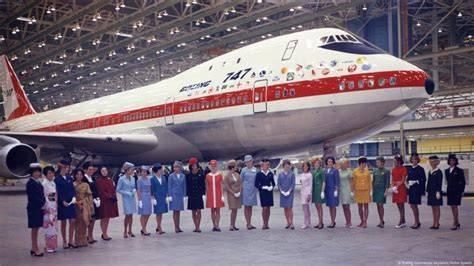
When Pan American World Airways launched the original Boeing 747 into commercial service on January 22, 1970, its flight deck was a product of late-1960s engineering philosophy. The aircraft was far more demanding than the jetliners before it. Four engines meant four sets of parameters to watch. The fuel system alone, spread across the wing and fuselage tanks of the world’s first twin-aisle jet, involved transfer sequences and crossfeed procedures that would overwhelm a pilot whose first duty was to fly the aircraft. Hydraulic, electrical, and pneumatic systems multiplied the number of gauges, switches, indicators, and circuit breakers that had to be scanned continuously. Boeing’s response was the same one it had applied to the 707 and that Douglas had applied to the DC-8: add a specialist to the flight deck.
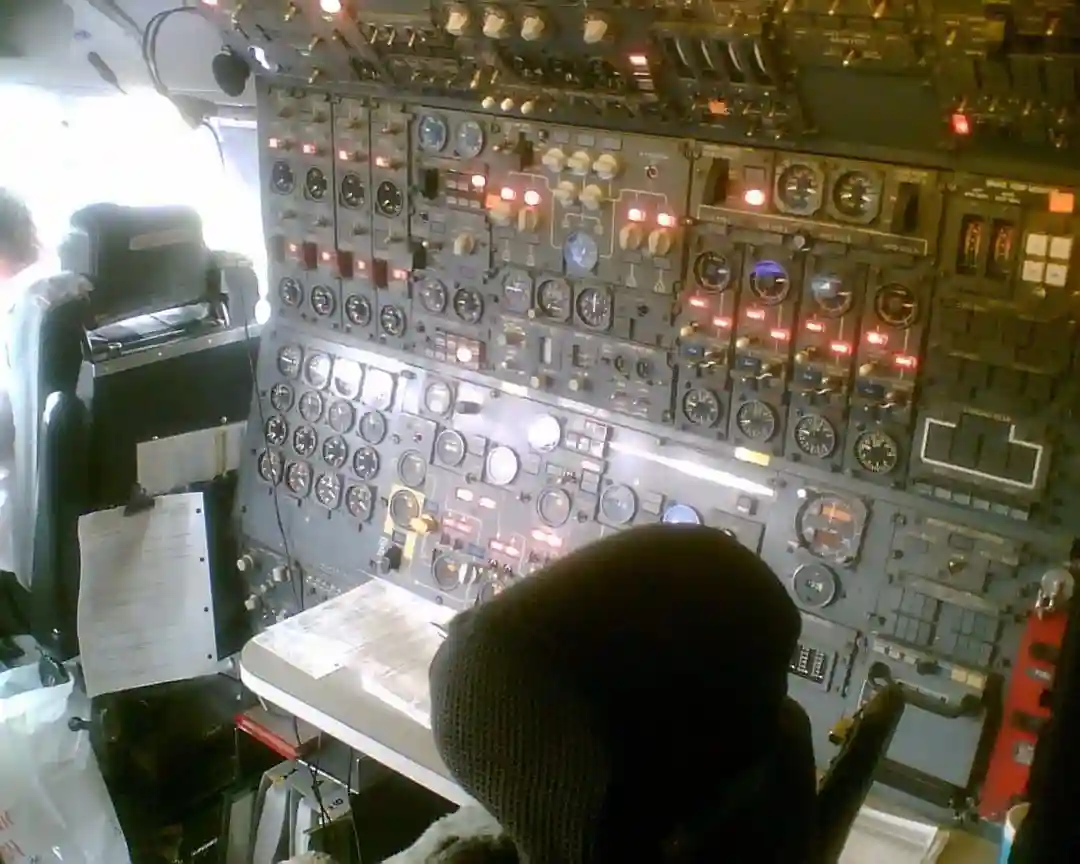
That specialist was the flight engineer, and the role was never a spare pilot. The position demanded separate technical training and a deep, almost encyclopedic understanding of the aircraft’s machinery. On most aircraft the flight engineer sat behind and slightly between the two pilots, facing a large aft-facing panel crowded with hundreds of instruments. While the captain and first officer concentrated on flight path, navigation, and radio communication, the flight engineer monitored engine performance, managed fuel transfers between tanks, checked generator loads, maintained hydraulic pressure, and controlled cabin pressurization. During departure and cruise on a four-engine jumbo, the workload of that station was relentless. In abnormal conditions it became the busiest seat on the aircraft.
Boeing retained the three-person arrangement through the 747-100, 747-200, and 747-300, the generations the company’s own historical overview groups together as the Classics. The 747-300, introduced in 1983, was still recognizable by its classic flight deck: stacks of analog gauges, dedicated warning lights for nearly every subsystem, and a flight engineer’s panel filled with rotary knobs and toggle switches. In total, the flight deck of the 747-300 carried approximately 971 lights, gauges, and switches. That number is the clearest measure of how much information the third crew member was expected to absorb, correlate, and act on.
The arrangement was not unique to the 747. Earlier four-engine jetliners such as the Boeing 707 and Douglas DC-8 also flew with three pilots, and the tradition survived well into the widebody era on the 747 and the McDonnell Douglas DC-10. Yet electronics were advancing faster than cockpits were changing. By the late 1970s, manufacturers had begun to ask whether a dedicated human monitor was still the best way to keep faith with a complex machine, or whether computers could watch more parameters, more consistently, and more cheaply than any person could. Boeing’s next two clean-sheet programs would answer that question.
How The Boeing 757 And 767 Prepared The Industry For Two-Pilot Operations
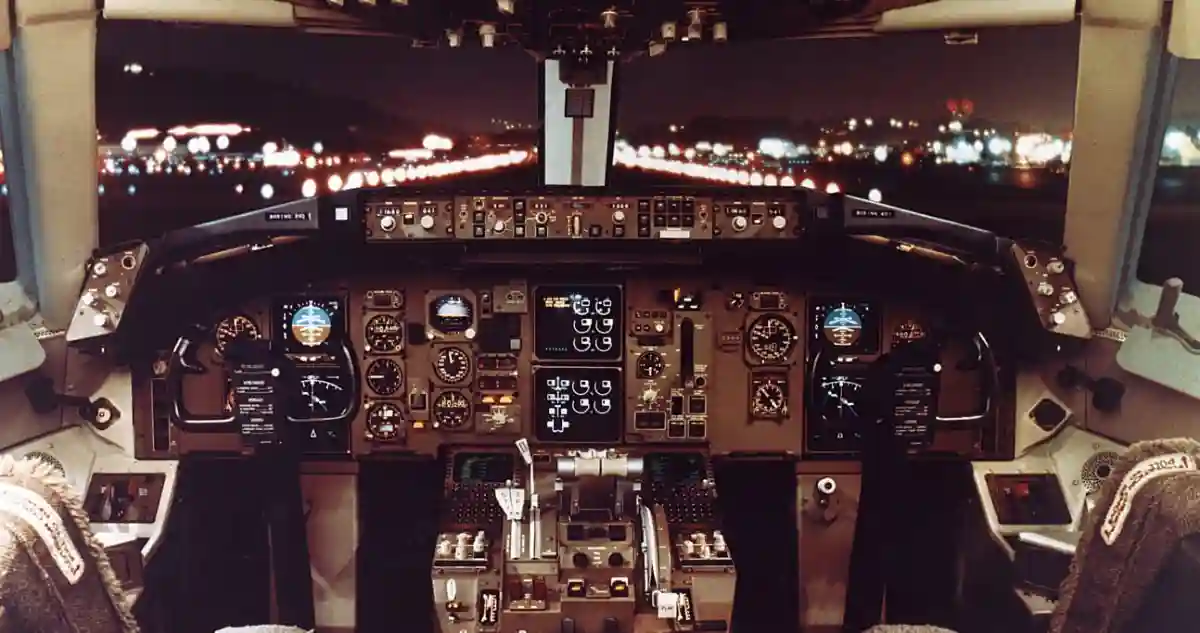
The path toward a two-pilot jumbo did not begin with the 747 at all. When Boeing developed the 757 and 767, both aircraft entered service in the early 1980s with digital avionics and electronic flight displays that replaced whole walls of conventional instruments. The 757 entered commercial service with Eastern Air Lines in January 1983, and the 767 followed later that year. Their integrated systems demonstrated that many functions once requiring dedicated monitoring could be handled through computerized equipment, with the remaining information presented in a far more digestible form. The flight decks of these aircraft were not simply tidier versions of the 727 and 747; they represented a different relationship between pilot and machine.
Regulation, not engineering, was the real barrier. Airlines and manufacturers faced skepticism from unions, regulators, and parts of the industry about whether two pilots could safely absorb the workload of a third crew member on a widebody. The turning point came with the 1981 Presidential Task Force on Aircraft Crew Complement, which examined whether advanced automation could safely take over the responsibilities traditionally assigned to flight engineers. Its findings supported two-pilot operations and laid the regulatory foundation for aircraft like the 767. NASA’s research into advanced-technology flight decks documented the same shift, and it identified the technology at its center: the Engine Indication and Crew Alerting System, or EICAS. EICAS consolidated engine parameters and system warnings onto electronic displays, prioritized alerts, and in effect acted as an electronic flight engineer.
The concept itself was older than most people assume. The 747-400 was not the first four-engine jet certified for two-pilot operation. That distinction belongs to the Lockheed JetStar, introduced in 1961, a business jet whose four engines and two-pilot flight deck proved the principle in miniature. The British Aerospace BAe 146, which first flew in 1981 and entered service in 1983, is recognized as the first commercial passenger quadjet certified for a two-pilot flight deck. What the 747-400 did was different in scale. It took a philosophy that had been proven on aircraft weighing tens of thousands of kilograms and applied it to a 180-tonne jumbo carrying hundreds of passengers across oceans. For that leap, Boeing needed far more than a new set of displays.
How Boeing Automated The Flight Engineer On The 747-400
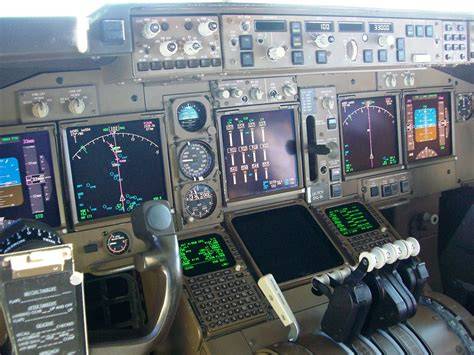
The 747-400’s flight deck was a complete redesign rather than a reshuffle of the Classic layout. Analog instrumentation gave way to a glass cockpit built around six cathode-ray tube displays, each roughly eight inches square. Two primary flight displays and two navigation displays presented the information the pilots needed to fly and navigate, while the two central displays carried engine parameters and aircraft systems data. Instead of hunting across a panel of individual gauges, the crew could read flight control, navigation, engine indication, and crew alerting information from a handful of screens. EICAS logic, refined on the 757 and 767, governed what was shown and when, and it decided which warnings deserved attention first.
The reduction in physical controls was dramatic. The integrated digital avionics cut the number of flight deck lights, gauges, and switches from approximately 971 on the 747-300 to just 365 on the 747-400, a decrease of more than 60 percent. That single figure captures the essence of the transition: information was no longer distributed across hardware but consolidated into software, where it could be filtered, prioritized, and summoned on demand. Flight management also changed, with computerized flight management systems handling navigation and performance calculations that earlier crews performed manually or delegated. The new architecture drew directly on technology introduced on the 757 and 767, and Boeing’s technical overview of the aircraft describes an integrated avionics package supplied in part by Rockwell Collins and Honeywell.
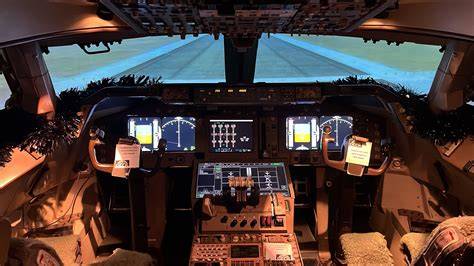
The redesigned flight deck entered commercial service with Northwest Airlines on February 9, 1989, carrying two pilots in place of three. What arrived that day was not simply a smaller crew but a redefined cockpit philosophy. The engineers who designed it had to answer a question that no display could answer on its own: what exactly had the flight engineer been doing, and could all of it be handed to computers without hollowing out the safety of the aircraft?
What Happened To The Flight Engineer’s Responsibilities
Boeing did not hand every flight engineer duty to the captain and first officer. It redesigned the aircraft’s systems so that computers could continuously monitor operating parameters and surface only the information that required human attention. EICAS sat at the center of that effort, consolidating engine indications and system alerts into electronic displays and communicating abnormal conditions to both pilots. The 747-400’s integrated systems also covered fuel distribution, electrical power, hydraulic systems, and environmental controls, each accessible through dedicated display pages. Alerts were organized so the crew could see what mattered immediately and defer what could wait, a form of prioritization no human monitor could apply with the same consistency across a ten-hour flight.
Crucially, automation replaced monitoring, not judgment. The captain and first officer remained responsible for interpreting warnings, diagnosing abnormal situations, and deciding how to respond. Computers could detect a hydraulic failure or a generator dropout, but they could not decide whether to divert, continue to a suitable airport, or burn fuel before landing. That division of labor was deliberate, and it changed the nature of piloting. Instead of scanning instruments, pilots supervised systems and made decisions. The new arrangement also created new human-factors challenges: pilots could become overly dependent on automation, could lose familiarity with raw data, or could be caught off guard when the automation itself failed or misbehaved. NASA’s research into advanced-technology aircraft examined these questions of workload, training, and crew interaction with computers closely, and its warnings shaped training standards for glass-cockpit aircraft.
The result was a redistribution of responsibility rather than the abolition of a function. The flight engineer’s monitoring duties migrated into integrated systems; the crew’s supervisory and decision-making duties expanded; and the training syllabus adapted to teach pilots how to manage the automation as well as the aircraft. The same logic reshaped the economics of long-haul flying, because a third specialist no longer had to be rostered for every sector.
Why The Two-Pilot 747-400 Became A Blueprint For Future Jumbo Jets
The commercial consequences were immediate for airlines. Removing the flight engineer from the 747-400 meant operators no longer needed to schedule a third specialist for every flight, which simplified crew rostering and trimmed recurring staffing costs on long-haul routes where extended duty periods already required careful planning. Just as importantly, the aircraft became operationally consistent with the 757 and 767 that many airlines already flew, letting carriers with mixed Boeing fleets standardize training, procedures, and cockpit philosophy across their fleets. The two-pilot jumbo was not an isolated experiment; it was a convergence of the industry around a single operating model.
Boeing built 694 examples of the 747-400, making it the most commercially successful passenger generation of the jumbo jet family. Its appeal rested on more than its cockpit. The aircraft introduced winglets, improved engines, greater range, and numerous aerodynamic and structural refinements, and those features drove much of its sales pitch. Yet the two-pilot flight deck was among its most consequential operational advances, because it turned a design assumption into an industry expectation. After the -400, the idea that a four-engine widebody needed a dedicated flight engineer was essentially finished in the mainline market.
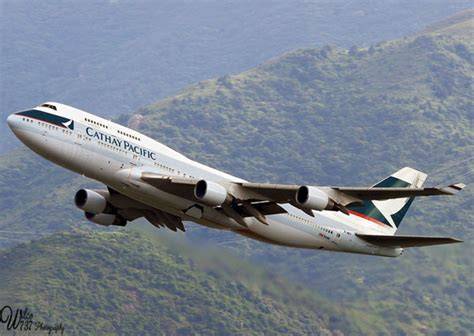
Boeing carried the philosophy forward with the 747-8, the final production generation of the jumbo jet, which retained a two-pilot flight deck while incorporating further advances in avionics and electronic displays. Its cockpit drew on technology from the 787 program, notably larger displays and a more modern interface, yet Boeing preserved enough commonality with the 747-400 to support a shared type rating after differences training. Pilots who had flown the -400 could transition to the -8 without starting over, and the operating logic of the family survived intact. The 747-8 therefore continued a transition that the -400 had begun rather than reversing it, and it confirmed that the two-pilot arrangement was a permanent feature of the jumbo’s design rather than a convenience of one variant.
The Boeing 747-400 Changed The Future Of Jumbo-Jet Operations
The Boeing 747-400 showed that technology could fundamentally change how airlines operate their largest aircraft, replacing extensive manual monitoring with integrated computer systems and electronic displays. It also established a new relationship between pilots and automation, one in which computers handle routine monitoring while flight crews retain control and accountability. The contrast with its immediate predecessor remains the cleanest illustration of that shift. The 747-300 required three flight deck crew members and nearly a thousand analog lights, gauges, and switches; the 747-400 flew with two pilots behind a glass cockpit of six displays and 365 controls. The 747-8 then carried the two-pilot configuration forward, confirming that Boeing treated the arrangement as integral to the modern jumbo rather than an optional feature.
Older aircraft had already proven that four engines did not automatically require three crew members. The Lockheed JetStar had done so in 1961 and the BAe 146 in 1983, but neither carried the weight of a jumbo jet operating transoceanic passenger services in the world’s most visible market. The 747-400 took the concept to an entirely different level and demonstrated that an aircraft’s size and engine count do not dictate its cockpit crew requirement. Its legacy rests on that demonstration. The most famous jetliner in the world, and the largest then flying in most fleets, was able to shed a flight deck position that had seemed inseparable from the very idea of the jumbo. Once the 747-400 made that leap, the industry never looked back, and every widebody that followed inherited a flight deck designed around two pilots and the computers that support them.