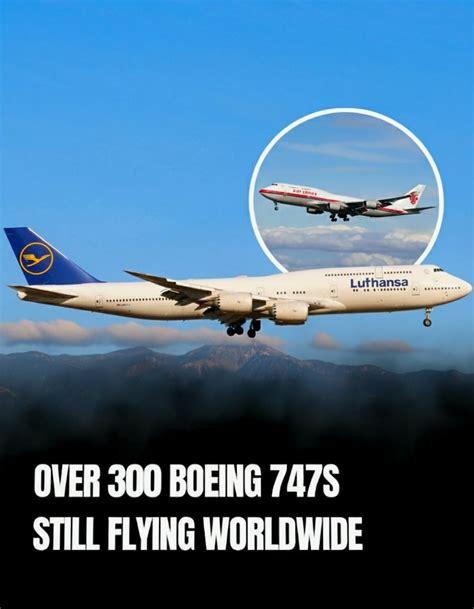
The story of the Boeing 747 is not just about an aircraft—it is about a machine that reshaped global transportation, redefined scale in aviation, and quietly became the backbone of international cargo logistics. For decades, the unmistakable hump-backed silhouette symbolized power, reach, and reliability. Yet, despite its dominance and enduring utility, the production of this legendary aircraft has officially come to an end. Understanding why requires a closer look at how the “Queen of the Skies” evolved from a passenger icon into the world’s most capable cargo workhorse, and why even such a titan could not escape the shifting tides of modern aviation.
The Final Chapter: Delivery of the Last Boeing 747-8F
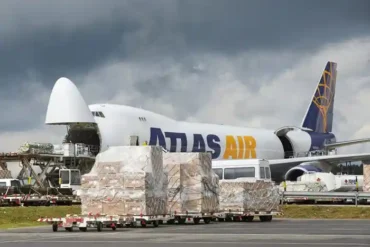
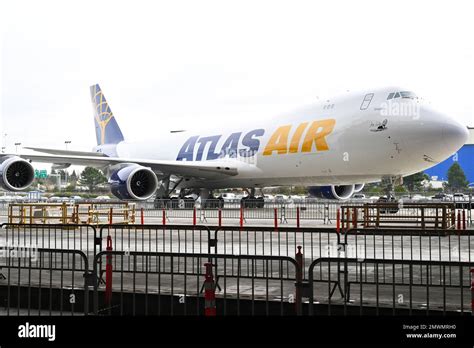
The curtain fell on January 31, 2023, when Atlas Air accepted delivery of the final Boeing 747 ever built—a 747-8 Freighter registered as N863GT. This moment marked the end of an extraordinary production run that spanned more than half a century and produced over 1,500 aircraft.
This final aircraft was not just another delivery; it represented the culmination of decades of engineering refinement. Built for Apex Logistics under a long-term agreement, the aircraft carried with it the legacy of a platform that had connected continents, supported global trade, and enabled logistics networks to operate at unprecedented scale.
Atlas Air’s deep connection to the 747 underscores its importance. From operating early converted freighters to flying advanced variants across over 800 airports in more than 170 countries, the airline’s history mirrors the aircraft’s transformation into a global cargo powerhouse.
From Passenger Giant to Cargo King
The Boeing 747 was originally conceived during the 1960s as a response to surging demand for long-haul travel. At the time, airlines needed aircraft capable of transporting hundreds of passengers efficiently between major hubs. The result was the world’s first widebody airliner, a revolutionary design that doubled passenger capacity compared to earlier jets like the Boeing 707.
However, as aviation evolved, so did the role of the 747. By the late 20th century, airlines began retiring older passenger variants in favor of more fuel-efficient aircraft. Instead of fading into obscurity, the 747 found a second life—one that arguably became even more impactful.
Its transformation into a cargo aircraft was not accidental. The 747 possessed several inherent advantages that made it uniquely suited for freight operations:
- A spacious fuselage capable of carrying massive payloads
- Exceptional range, allowing intercontinental cargo transport
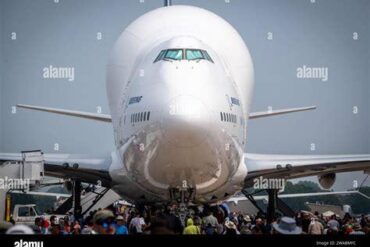
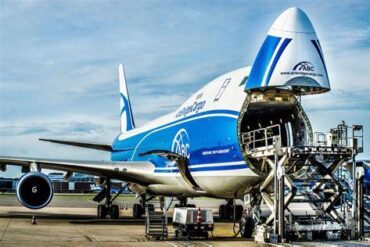
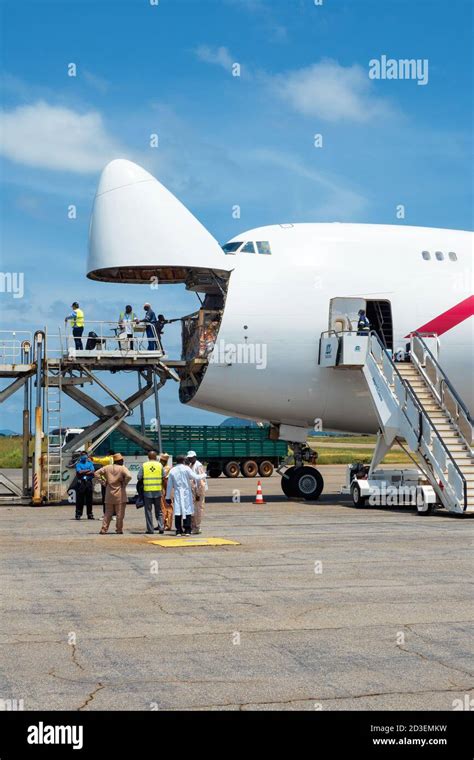
- A distinctive nose-loading door, enabling oversized cargo handling
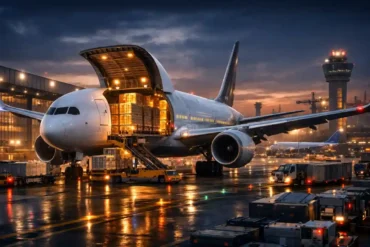
This nose-loading capability became a defining feature. It allowed operators to load cargo that simply could not fit into standard side cargo doors—think industrial machinery, aerospace components, and even entire helicopters.
As global trade expanded, the 747 became indispensable. Airlines such as UPS, Cargolux, and Atlas Air built entire logistics strategies around its capabilities, cementing its role as the backbone of the air cargo industry.
Engineering Excellence: What Made the 747 So Effective
The Boeing 747 was not just large—it was intelligently designed for performance and adaptability. Its widebody configuration, paired with a high-mounted cockpit and upper deck, created additional usable cargo space in freighter variants.
Under the surface, the aircraft featured powerful engineering innovations:
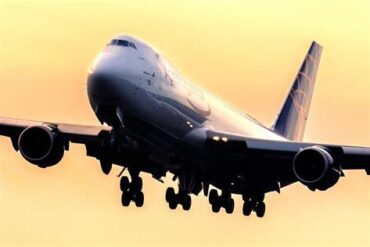
- Four high-thrust turbofan engines, delivering long-range capability
- A wingspan exceeding 224 feet, optimized for high-altitude efficiency
- Advanced high-lift devices, including triple-slotted flaps for improved takeoff performance
- A maximum takeoff weight nearing one million pounds in the 747-8
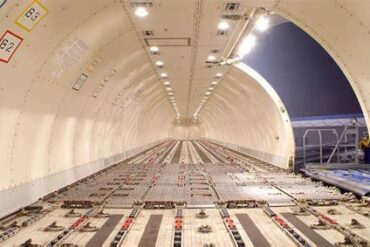
The freighter variants, particularly the 747-400F and 747-8F, introduced reinforced floors and advanced cargo handling systems. These upgrades allowed operators to maximize payload while maintaining reliability across long-haul routes.
Crucially, the aircraft’s design offered operational flexibility. It could serve major cargo hubs while also accessing secondary airports, making it invaluable in both established and emerging markets.

The Shift in Aviation Economics
Despite its strengths, the Boeing 747 faced an increasingly unforgiving economic reality in the 21st century. Aviation was changing—and changing fast.
The rise of twin-engine aircraft such as the Boeing 787 Dreamliner and Airbus A350 fundamentally altered the cost equation. These newer jets offered:
- Significantly lower fuel consumption
- Reduced maintenance requirements
- Greater route flexibility
Operating four engines, the 747 consumed more fuel and required more intensive upkeep. While this was acceptable in an era of cheaper fuel and high passenger demand, it became a liability as airlines prioritized efficiency and sustainability.
At the same time, the industry shifted away from the traditional hub-and-spoke model—for which the 747 was perfectly suited—toward point-to-point travel. Smaller, long-range aircraft made it possible to connect cities directly, reducing the need for ultra-large jets.
Even in cargo operations, where the 747 remained dominant, these economic pressures began to mount. Operators increasingly evaluated whether newer twin-engine freighters could deliver similar performance at lower cost.
Why Boeing Ended 747 Production
The decision to end production of the Boeing 747 was not sudden—it was the result of multiple converging forces that gradually eroded demand.
At its core, the issue was simple: fewer customers needed what the 747 offered. Airlines no longer required such high-capacity passenger aircraft, and while cargo operators still valued the platform, the market was not large enough to sustain continuous production.
Several key factors drove Boeing’s decision:
The first was declining orders. Over time, new purchases of the 747 slowed dramatically. Even loyal operators began to diversify their fleets with more efficient aircraft.
The second was rising operational costs. Fuel efficiency became a defining metric, and the 747 could not compete with modern twin-engine designs.
The third was technological evolution. Aircraft like the Boeing 777F and upcoming 777X offered comparable payload capabilities with better efficiency, effectively replacing the 747 in many roles.
Finally, there was the broader context of industry transformation. Environmental concerns, fluctuating fuel prices, and changing logistics strategies all contributed to a landscape where the 747 no longer fit as seamlessly as it once did.
The Golden Age: Origins of the Jumbo Jet
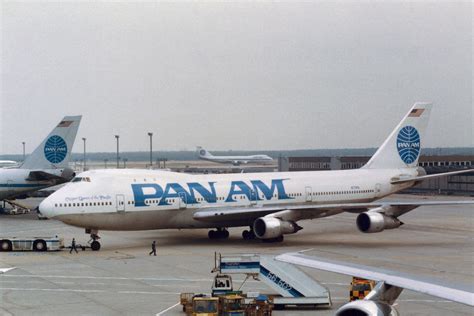
To fully understand the significance of the 747’s end, it is worth revisiting its beginning. In the mid-1960s, air travel was booming, and Pan Am’s Juan Trippe envisioned an aircraft that could carry more than twice the passengers of existing jets.
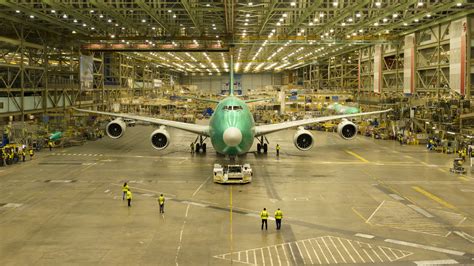
Boeing answered with an ambitious design that required building an entirely new manufacturing facility in Everett, Washington—a factory so विशाल it became the largest building by volume in the world.
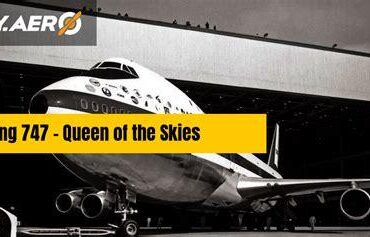
The first 747 rolled out in 1968 and took flight in 1969. By January 1970, it had entered commercial service, inaugurating a new era of mass air travel. Routes like New York to London suddenly became accessible to far more people, accelerating globalization.
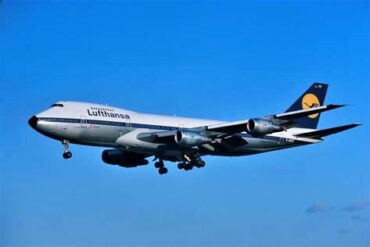
The aircraft quickly became the flagship of major airlines, including British Airways, Lufthansa, and Japan Airlines, and defined long-haul travel for generations.
A Second Life That Outlasted Its First
Ironically, the 747’s cargo career ultimately proved more enduring than its passenger role. As airlines phased out passenger variants, cargo operators eagerly absorbed them, extending their operational life by decades.
This second life was not merely a fallback—it was a transformation into something arguably more essential. The aircraft became a critical enabler of global supply chains, transporting everything from consumer goods to medical supplies.
During periods of global disruption, including spikes in e-commerce demand and supply chain bottlenecks, the 747 freighter demonstrated its unmatched value. Its ability to carry large volumes over long distances made it a stabilizing force in volatile markets.
Even today, long after production has ceased, hundreds of 747 freighters remain in active service. Their presence ensures that the aircraft’s legacy continues—not in passenger cabins, but in the invisible infrastructure that keeps the global economy moving.
What Replaces the Boeing 747?
No single aircraft truly replaces the Boeing 747, because no other aircraft combines its payload capacity, range, and nose-loading capability in quite the same way. However, several modern designs are stepping in to fill parts of its role.
The Boeing 777F has emerged as a leading successor, offering excellent efficiency and strong cargo capacity. Meanwhile, the forthcoming 777X freighter variant promises even greater performance.
Airbus, too, contributes with freighter versions of the A330 and A350, though these lack the 747’s unique front-loading feature.
Still, there is a subtle but important shift underway: rather than relying on a single ultra-capable aircraft, the industry is moving toward a diversified fleet strategy, using multiple aircraft types to achieve flexibility and efficiency.
The End of Production, Not the End of Influence
The Boeing 747 is no longer in production, but calling it obsolete would miss the point entirely. Its influence is embedded in modern aviation—from widebody aircraft design to global logistics networks.
It redefined what was possible in air travel, then quietly reinvented itself as the ultimate cargo aircraft, sustaining global trade for decades. Few machines in history have demonstrated such adaptability or longevity.
As newer aircraft take over its roles, the 747 remains a benchmark—a reminder of an era when aviation dared to think bigger, build bigger, and fly farther than ever before.