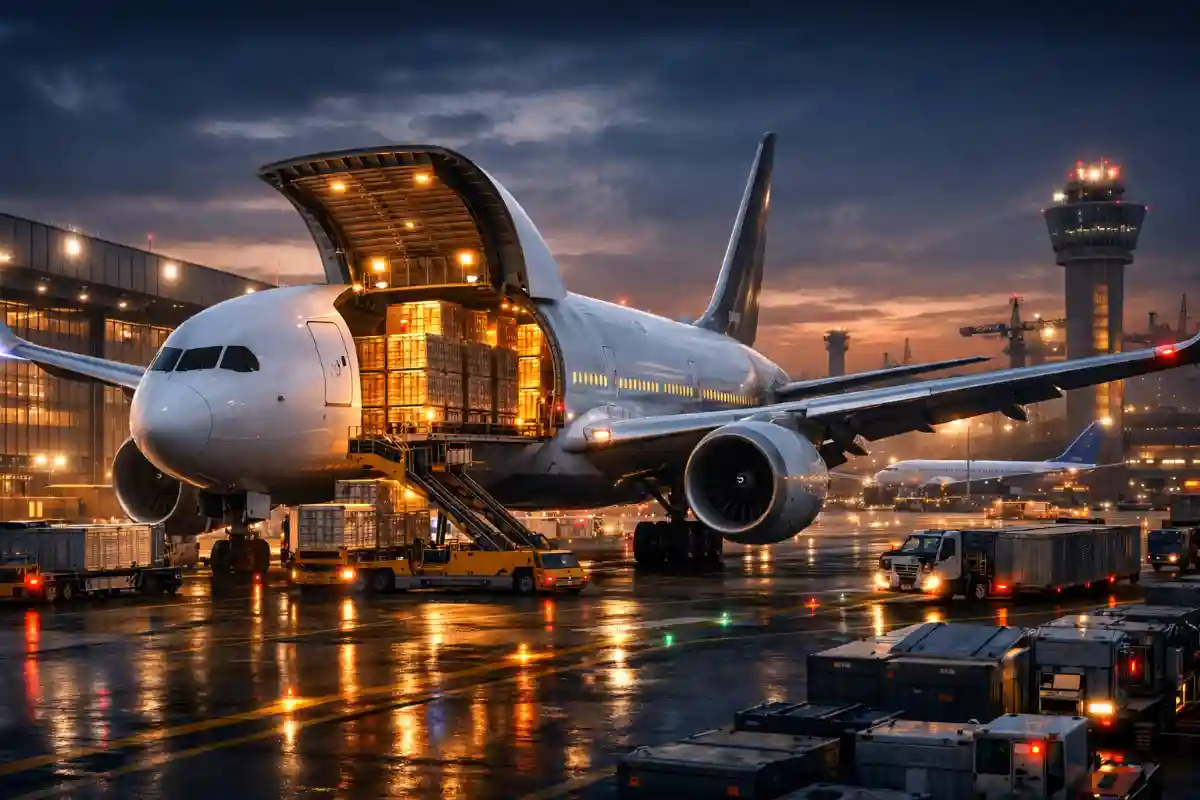
The global air cargo industry is approaching a structural inflection point that few aircraft manufacturers can afford to ignore. As legacy widebody freighters age out of compliance and production lines shut down, operators are searching for an aircraft that can deliver modern efficiency without the capital burden of an all-new platform. In that context, the question of whether Boeing could develop a 787 Converted Freighter, often referred to as the 787BCF, has evolved from idle speculation into a serious strategic debate with implications across manufacturing, logistics, and global trade.
At its core, the discussion is not about whether the Boeing 787 Dreamliner is capable of hauling cargo. The aircraft already does so daily in the belly holds of passenger fleets worldwide. The real issue is whether the Dreamliner can be transformed into a dedicated main-deck freighter in a way that makes technical, economic, and operational sense. With the Boeing 767-300F approaching its production sunset due to ICAO environmental rules, the industry is staring at a mid-size freighter vacuum that grows more urgent with every passing year.
Cargo airlines are caught between two extremes. On one end are narrowbody freighters that lack the range and volume needed for intercontinental express networks. On the other is the forthcoming Boeing 777-8F, a powerful but expensive aircraft optimized for heavy long-haul missions. The Dreamliner sits precisely between those poles, offering widebody capacity with dramatically lower fuel burn. That positioning makes the idea of a 787 freighter not just attractive, but strategically disruptive.
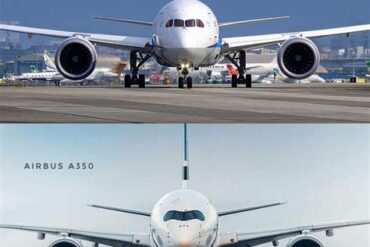
The timing of this debate is equally significant. Early-production 787-8 aircraft are now approaching the age at which previous-generation widebodies typically entered the conversion pipeline. At the same time, Airbus is aggressively marketing both the A330P2F as a converted solution and the A350F as a purpose-built composite freighter. Boeing’s response, or lack thereof, will shape the cargo market for decades.
Why the 787 Is the Natural Heir to the 767 Freighter
For more than three decades, the Boeing 767 has been the backbone of global express cargo networks. Its size, range, and operating economics made it ideal for overnight delivery systems built by FedEx, UPS, and DHL. However, regulatory pressure has finally caught up with the platform. New ICAO emissions and noise standards effectively end 767-300F production by 2027, forcing operators to plan replacements sooner rather than later.
The Boeing 787 offers a compelling theoretical successor. Compared to the 767, it delivers 20% to 25% lower fuel burn, longer range, and improved dispatch reliability. For cargo carriers operating thin-margin networks, those efficiency gains translate directly into competitiveness. Fuel remains the single largest variable cost in air freight, and even modest percentage improvements can reshape route economics.
Beyond fuel efficiency, the 787’s range opens new operational possibilities. A converted 787-8 or 787-9 could fly nonstop routes that currently require technical stops with 767 freighters. That capability is particularly attractive for time-sensitive e-commerce shipments connecting Asia, Europe, and North America. In a logistics environment where speed equals value, range is not a luxury but a revenue driver.
Yet this apparent logic masks a deeper complexity. The 767 was designed in an era when aluminum structures dominated aircraft manufacturing. The Dreamliner represents a generational leap, with more than half of its primary structure built from carbon-fiber-reinforced plastic. That difference fundamentally changes how a freighter conversion must be engineered.
The Composite Fuselage Problem No One Can Ignore
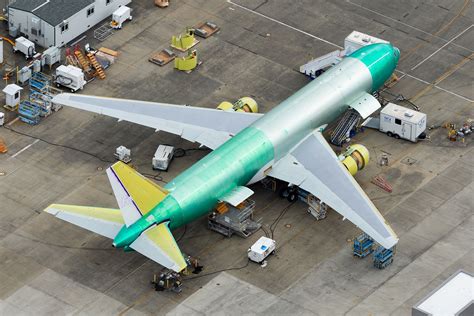
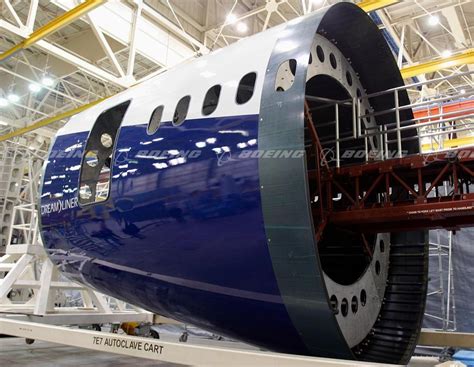
The most formidable obstacle to a 787BCF lies in the very technology that makes the aircraft so efficient. Unlike traditional aluminum fuselages, which are assembled from panels joined by rivets and frames, the 787 uses large one-piece composite barrels. These barrels distribute structural loads continuously along carefully oriented fiber paths, creating strength through continuity rather than segmentation.
Cutting a main-deck cargo door into such a structure is not a trivial modification. On an aluminum aircraft, engineers remove a section of skin and reinforce the opening with a metallic door surround that redistributes loads through known stress paths. The process is well understood, repeatable, and certified through decades of experience.
With composites, the challenge is entirely different. Interrupting the fiber layout risks creating localized stress concentrations that can lead to delamination, micro-cracking, or long-term fatigue. These failures may not manifest visibly, making them harder to detect and more dangerous in service. Any certified solution would require extensive testing, new bonding techniques, and likely a redesign of surrounding fuselage frames.
This is why, despite years of speculation, no third-party conversion house has yet launched a formal 787 program. The technical risk is simply too high without direct manufacturer involvement. Boeing, as the original designer, holds the data and expertise necessary to validate such structural changes. Without its blessing, a 787BCF remains largely theoretical.
Economics: When Engineering Meets Harsh Market Reality
Even if the structural challenges could be overcome, the economic equation remains unforgiving. Freighter conversions succeed only when the input aircraft is inexpensive enough to justify the modification cost while still delivering acceptable returns over a second life of 15 to 20 years. This balance is currently misaligned for the 787.
Early estimates place the cost of converting a Dreamliner at $30 million to $35 million per aircraft, significantly higher than legacy widebody conversions. At the same time, used 787-8s continue to command high prices in the secondary market. Passenger airlines are holding onto them longer because new aircraft deliveries remain constrained by production backlogs and supply-chain disruptions.
This scarcity of affordable “feedstock” aircraft undermines the traditional freighter conversion business model. Cargo operators cannot justify investing heavily in both acquisition and modification when alternatives like the A330P2F offer lower upfront costs, even if they burn more fuel. In cargo economics, capital discipline often outweighs technological elegance.
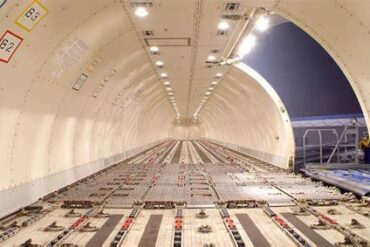
There is also the issue of payload versus volume. The 787 was optimized for passenger comfort, with lightweight floors and cabin structures. Converting it into a freighter requires reinforcing those systems to handle concentrated pallet loads, adding weight that erodes some of the aircraft’s efficiency advantage. If too much performance is sacrificed, the financial case collapses.
Operational Realities at Cargo Hubs
Beyond engineering and economics, the operational footprint of a 787 freighter introduces another layer of complexity. The Dreamliner’s wingspan places it in ICAO Code E, compared to the Code D classification of the 767. At major cargo hubs like Memphis and Louisville, ramp space is a finite resource designed around existing fleets.
A larger wingspan means fewer aircraft can be parked simultaneously, potentially disrupting tightly choreographed overnight operations. For integrators whose networks depend on precision and speed, such constraints matter. Any new aircraft must integrate seamlessly into existing infrastructure, or it risks becoming a bottleneck rather than a solution.
Maintenance considerations also weigh heavily. Cargo environments are rough by nature, with frequent ground handling incidents. Aluminum airframes show damage visibly, allowing quick inspections and repairs. Composite structures can hide internal damage beneath an intact surface, requiring advanced non-destructive testing to ensure airworthiness. That translates into longer downtimes and higher maintenance costs, factors cargo operators are keenly aware of.
Factory-Built 787F Versus Converted 787BCF
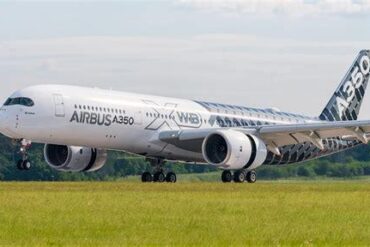
Given these challenges, many analysts believe the future of the Dreamliner as a freighter lies not in conversion but in a factory-built 787F. This approach would mirror Airbus’s strategy with the A350F, where the cargo door and reinforced structure are designed into the aircraft from the outset.
A production freighter allows engineers to optimize the fuselage layup around the cargo opening, preserving structural integrity while minimizing weight penalties. It also simplifies certification, as the aircraft is approved as a freighter from day one rather than undergoing supplemental type certification.
However, this path demands significant investment from Boeing at a time when the company is prioritizing financial stabilization. Executives have made it clear that ramping up passenger 787 production remains the immediate focus. Diverting engineering resources to a niche freighter variant carries opportunity costs that Boeing must carefully weigh.
Yet the strategic logic is compelling. A 787F would directly counter the A350F in the medium widebody segment while providing a natural replacement for the aging 767 fleet. It would also leverage the Dreamliner’s global support network, reducing entry barriers for operators already familiar with the platform.
Market Timing and the Role of Early 787s
Timing may ultimately determine whether a 787BCF ever materializes. As the earliest Dreamliners approach the end of their first passenger life, their market value will eventually soften. Some of the initial 787-8 aircraft, often criticized for weight inefficiencies, may become less attractive for passenger service, making them more viable conversion candidates.
If acquisition costs fall sufficiently and a certified composite door solution emerges, the economics could shift rapidly. In that scenario, a limited-run conversion program targeting a specific subset of aircraft becomes conceivable. Cargo operators focused on high-value, long-range routes would be the most likely customers.
Until then, the industry appears content to bridge the gap with existing solutions. The A330P2F and converted 777-300ERSF fleets are expanding, while the 777-8F promises unmatched payload capability at the top end. The Dreamliner remains in waiting, its potential undeniable but unrealized.
The Strategic Stakes for Boeing and Global Cargo
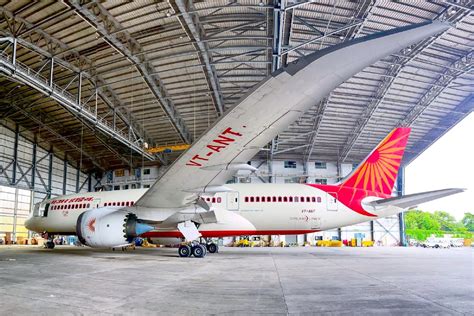
The decision surrounding a 787 freighter is about more than one aircraft type. It reflects how Boeing intends to compete in a cargo market that is growing more specialized and technologically demanding. Airbus has demonstrated a willingness to invest aggressively in freighter innovation, betting that global trade and e-commerce will sustain long-term demand.
For Boeing, the Dreamliner represents both an opportunity and a risk. Its composite architecture offers unmatched efficiency but complicates traditional conversion pathways. Choosing whether to adapt that platform for cargo will signal how the company balances innovation with pragmatism.
In the long run, the shift toward composite freighters appears inevitable. Environmental pressures, fuel costs, and performance expectations all favor advanced materials. The 787 could become a pioneer in that transition, but only if the economic and technical pieces align.
A Freighter Waiting for Its Moment
The idea of a Boeing 787 Converted Freighter sits at the intersection of necessity and hesitation. The need for a modern 767 replacement is real and growing. The Dreamliner’s capabilities align almost perfectly with that requirement. Yet the hurdles involved are unlike anything the conversion industry has faced before.
Whether the solution arrives as a converted 787BCF or a factory-built 787F, the outcome will redefine the mid-size widebody cargo segment. For now, the Dreamliner remains a passenger aircraft with untapped cargo potential, a sophisticated platform waiting for the market conditions that will finally allow it to evolve.
When that moment arrives, it will not simply mark the birth of another freighter. It will signal the beginning of a new era in cargo aviation, where composite structures, long-range efficiency, and precision economics converge. The question is no longer if the 787 could become a freighter, but when the industry will be ready to let it.