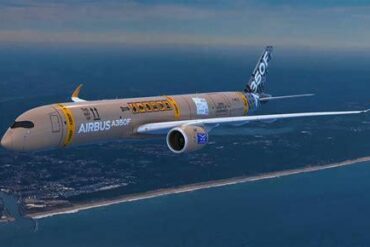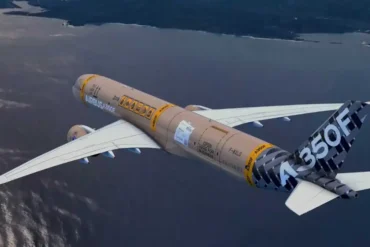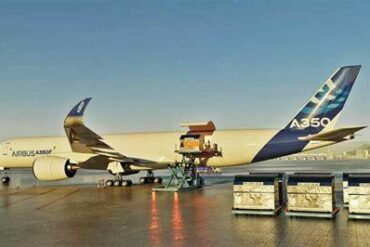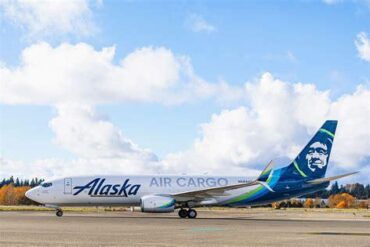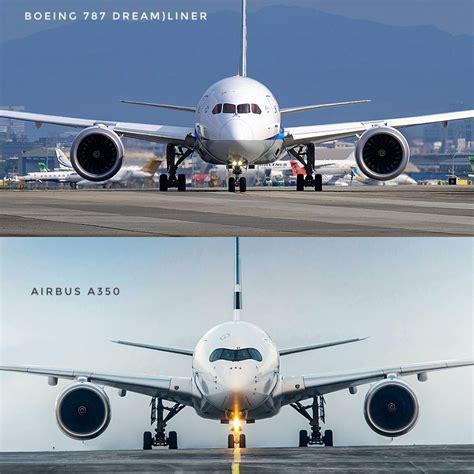
The modern air cargo market is undergoing a quiet but profound transformation. As global logistics networks evolve and aging freighter fleets approach retirement, aircraft manufacturers are making strategic bets on what comes next. Airbus has made its move decisively with the A350F—a purpose-built, next-generation freighter that signals confidence in long-haul cargo demand. Boeing, by contrast, has taken a more calculated approach. Despite possessing the highly advanced 787 Dreamliner platform, it has yet to launch a dedicated 787 freighter.
This absence is not an oversight. It is a reflection of economics, infrastructure realities, and a nuanced understanding of how cargo airlines actually operate. To understand why Boeing has refrained from building a 787 freighter, one must look beyond surface-level comparisons and examine the structural forces shaping the freight aviation industry.
The Dreamliner’s Technical Brilliance—and Its Strategic Limitation
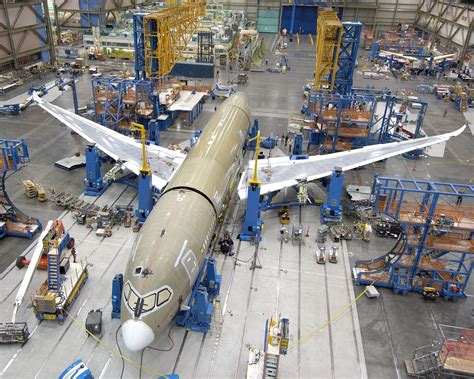
The Boeing 787 Dreamliner represents one of the most significant leaps in commercial aviation technology in decades. Built largely from carbon-fiber composites, the aircraft introduced unprecedented fuel efficiency, reduced maintenance requirements, and improved operational flexibility. Available in three variants—the 787-8, 787-9, and 787-10—the Dreamliner family spans a range of capacities and mission profiles.
Yet, these strengths do not automatically translate into cargo success. The 787 was optimized for passenger efficiency, where fuel burn per seat is a critical metric. Cargo airlines, however, operate under a different economic logic. Aircraft utilization patterns differ significantly, with freighters often flying fewer hours per day and prioritizing payload capacity and acquisition cost over marginal fuel savings.
In this context, the Dreamliner’s advanced design becomes a double-edged sword. Its efficiency is undeniable, but its high acquisition cost and complex structure make it less immediately attractive to cargo operators who value proven, lower-cost platforms.
Why the 767 Freighter Still Dominates Its Segment
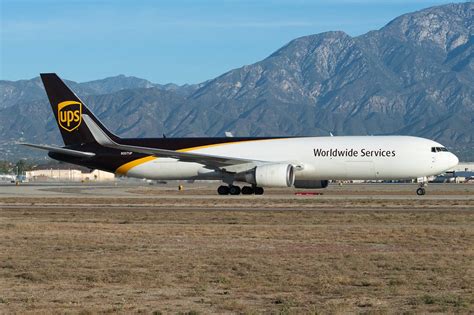
The continued success of the Boeing 767-300F is perhaps the most compelling reason why a 787 freighter has not materialized. Despite being an older design, the 767 freighter occupies a highly effective niche in the market. It is neither too large nor too small, offering a balance of payload capability, operational flexibility, and cost efficiency.
For major cargo carriers, the 767-300F has become a workhorse. Its production line has long since been amortized, meaning Boeing can produce it at relatively low cost while maintaining strong margins. For operators like FedEx and UPS, the aircraft’s reliability and compatibility with existing infrastructure make it an easy choice.
Replacing this aircraft with a 787 derivative would introduce complications. The Dreamliner’s larger wingspan, heavier structure, and higher price point would disrupt carefully optimized hub operations. Cargo facilities designed around the 767’s footprint would require costly modifications to accommodate a larger aircraft.
In a business where margins are tight and predictability is prized, such disruptions are not taken lightly.
The Narrow Market Window for a 787 Freighter
The global freighter market is far smaller than the passenger aircraft market, and it is segmented into distinct categories. At the lower end, aircraft like the 767-300F serve medium-capacity routes. At the upper end, large freighters like the Boeing 777F and the upcoming 777-8F dominate long-haul, high-volume operations.
A hypothetical 787 freighter would fall squarely between these categories. This positioning creates a problem: the market slice it would serve is both narrow and already partially covered. Airlines that need more capacity than a 767 often prefer to move directly to a 777F, maximizing payload and efficiency per flight.
Conversely, airlines that do not require the scale of a 777 are unlikely to pay a premium for a 787 when the 767 remains available and sufficient. The result is a gap that exists more in theory than in practical demand.
This is not a failure of the 787 platform—it is a reflection of how cargo demand clusters around specific operational thresholds.
Cargo Economics: Why Fuel Efficiency Isn’t Everything
Passenger airlines obsess over fuel efficiency because it directly impacts profitability on every flight. Cargo airlines, however, operate under a different set of priorities. While fuel costs remain important, they are not always the निर्णing factor in fleet decisions.
Freighters typically fly fewer cycles per day and may operate on shorter routes or less time-sensitive schedules. This reduces the relative impact of fuel savings compared to acquisition cost and payload capability. A more expensive aircraft must deliver disproportionately higher value to justify its price—a threshold the 787 freighter would struggle to meet in many scenarios.
Moreover, cargo airlines frequently rely on converted passenger aircraft, which offer a lower-cost alternative to new-build freighters. The availability of converted 767s and other widebodies further reduces the urgency for a new mid-sized freighter platform.
Infrastructure Constraints: The Hidden Barrier
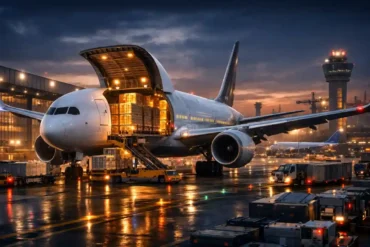
One of the most underestimated challenges in introducing a new freighter is ground infrastructure. Cargo hubs are meticulously designed environments where space efficiency is critical. Aircraft parking positions, loading equipment, and taxiway layouts are often optimized for specific aircraft types.
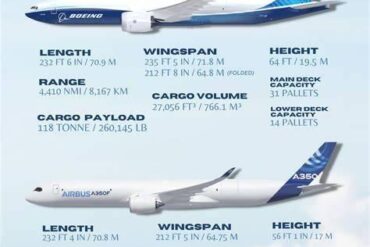
The Boeing 787’s wingspan exceeds that of the 767 by more than 40 feet. This seemingly simple difference has profound implications. It can reduce the number of aircraft that can be parked simultaneously at a hub, potentially lowering throughput and increasing operational complexity.
For operators managing hundreds of daily movements, such inefficiencies can outweigh the benefits of a newer aircraft. The inertia of existing infrastructure thus becomes a powerful force shaping fleet decisions.
The Dominance of the 777 Freighter Family
While the 767 anchors the lower end of the market, the Boeing 777 freighter family dominates the upper tier. The 777F has established itself as one of the most successful cargo aircraft ever built, offering exceptional payload capacity and long-range capability.
Its successor, the 777-8F, is poised to extend this dominance. With advanced engines and a redesigned wing, it promises improved efficiency while maintaining the ability to carry massive payloads over intercontinental distances. This aircraft is Boeing’s direct response to Airbus’s A350F.
In this context, the absence of a 787 freighter becomes more understandable. Boeing already covers the most lucrative segments of the cargo market with the 767 and 777 families. Introducing a 787 freighter would risk cannibalizing existing products without significantly expanding the overall market.
Why the A350F Fills a Different Strategic Role
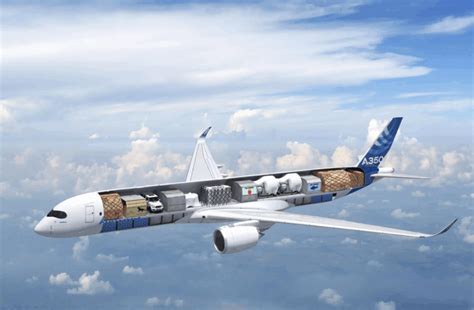
The Airbus A350F is often cited as a counterpoint to Boeing’s inaction. However, this comparison overlooks a critical distinction: the A350F is not targeting the same segment a 787 freighter would.
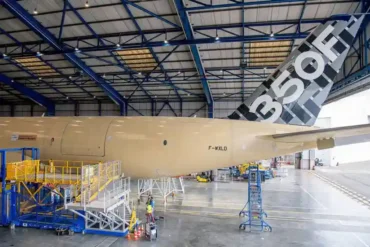
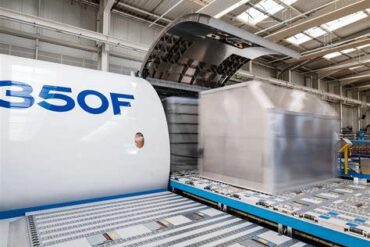
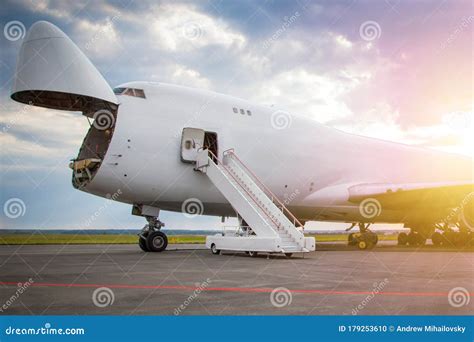
Instead, the A350F is positioned as a replacement for aging large freighters such as the Boeing 747-400F. Its size, payload capacity, and design features—including a massive main deck cargo door—are tailored for high-volume, long-haul operations.
This strategic positioning allows Airbus to enter a segment where demand is both clear and growing. The retirement of older 747 freighters creates a natural replacement cycle, providing a ready market for new aircraft.
Boeing, meanwhile, addresses this same segment with the 777-8F. The competitive dynamic thus plays out at the top end of the market, not in the mid-sized category where a 787 freighter would reside.
The Conversion Market: A Silent Competitor
Another factor suppressing demand for new mid-sized freighters is the robust conversion market. Passenger aircraft nearing the end of their service life can be converted into freighters at a fraction of the cost of a new-build aircraft.
The Boeing 767 and 777 have both benefited from this trend, with numerous passenger aircraft finding second lives as cargo carriers. This creates a steady supply of relatively modern freighters without requiring airlines to invest in new platforms.
For the 787, this pathway is less mature. The aircraft is still relatively young, and large-scale conversion programs have yet to reach full momentum. Until a significant pool of used 787s becomes available, the economics of a dedicated freighter variant remain less compelling.
The Timeline Factor: Why Patience Pays Off
Timing is everything in aerospace. Launching a new aircraft program too early can be just as risky as launching too late. Boeing appears to be waiting for several conditions to align before committing to a 787 freighter.
The planned end of 767-300F production around 2027 is a key milestone. Once this aircraft exits the market, a gap may emerge that the 787 could fill. At the same time, the global fleet of 767 freighters will continue to age, gradually increasing demand for replacements.
Additionally, as more 787s enter service and eventually retire from passenger use, the feasibility of conversion programs will improve. This could create a broader ecosystem supporting the Dreamliner as a cargo platform.
Engineering Preparedness: A Freighter in Waiting
Interestingly, the 787 may already be partially prepared for a freighter role. Reports suggest that certain design elements were implemented with a potential cargo variant in mind, including structural considerations for a large cargo door.
This indicates that Boeing has not dismissed the idea outright. Instead, it has adopted a wait-and-see approach, preserving the option to launch a 787 freighter when market conditions become favorable.
Such strategic patience is characteristic of an industry where development costs run into billions of dollars and program lifecycles span decades.
The Inevitable Question: Will a 787 Freighter Ever Launch?
The absence of a 787 freighter today does not preclude its existence tomorrow. In fact, the logic for such an aircraft may strengthen over time. As the 767 fades from production and the cargo market continues to evolve, the need for a modern mid-sized freighter could become more pronounced.
However, any future 787 freighter will need to overcome the same challenges that have delayed its launch: cost sensitivity, infrastructure constraints, and a limited addressable market. Success will depend on whether Boeing can align these factors in a way that creates compelling value for operators.
Conclusion: Strategy Over Symmetry
The contrast between Airbus launching the A350F and Boeing holding back on a 787 freighter is not a story of missed opportunity. It is a study in strategic alignment. Airbus identified a clear replacement cycle in the large freighter segment and moved decisively to capture it. Boeing, already dominant in that space, has focused on reinforcing its position with the 777-8F while maintaining the profitability of the 767.
A 787 freighter would undoubtedly be a technological marvel. But in aviation, brilliance alone is not enough. Timing, economics, and operational reality ultimately determine which aircraft take to the skies—and which remain ideas waiting for the right moment.