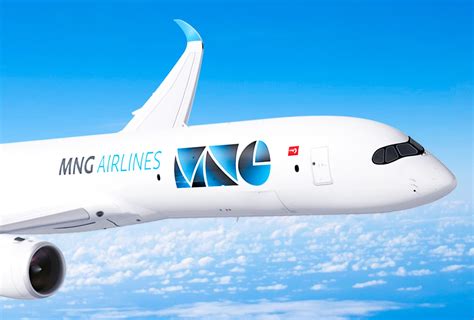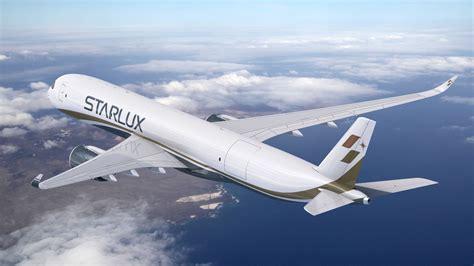
MNG Airlines has officially ignited a paradigm shift in the air cargo industry, announcing a transformative Airbus A350F acquisition that positions the Turkish carrier at the vanguard of 21st-century logistics. This strategic fleet upgrade, unveiled at the prestigious Paris Air Show 2025, marks not just a tactical move for operational enhancement but a bold step in redefining the airline’s role across critical global freight corridors—Europe, the Middle East, Asia, and a fast-growing presence in North America.
This move doesn’t simply add new jets to the hangar; it rewrites the blueprint of modern air freight operations. As the post-pandemic world demands resilient supply chains, reduced carbon footprints, and e-commerce-fueled responsiveness, MNG’s investment in the next-generation A350F freighter signals its intent to dominate the skies in a more agile, sustainable, and future-focused manner.
Airbus A350F: The Freighter at the Heart of the Revolution
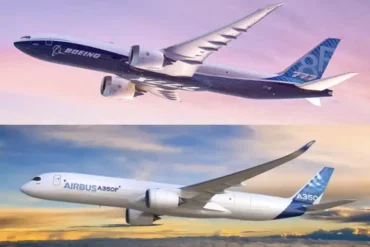
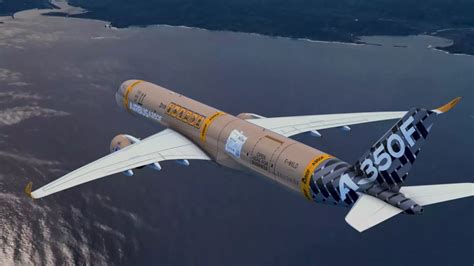
At the center of MNG Airlines’ transformation lies the Airbus A350F, a purpose-built cargo variant of the acclaimed A350 family. Designed with efficiency, payload capacity, and sustainability in mind, the A350F has already been touted as a freight carrier that addresses not just current needs—but the challenges of the coming decades.
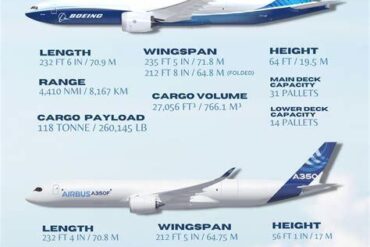
Capable of hauling up to 111 tonnes of cargo over 8,700 kilometers, the aircraft is equipped with Rolls-Royce Trent XWB-97 engines, engines renowned for their exceptional fuel efficiency and long-haul performance. This combination ensures a 40% reduction in fuel consumption and CO₂ emissions when compared to older freighters such as the Boeing 747-400F and MD-11F—figures that no modern carrier can afford to ignore.
The A350F’s fuselage, built with more than 70% advanced materials including carbon composites and titanium, enables the aircraft to be 46 tonnes lighter than its rivals. This substantial weight advantage not only improves fuel economy but also lowers airport landing fees and route costs, giving MNG a compelling financial edge on key trade routes.
Decarbonizing the Cargo Corridor: Why Sustainability Is Now Non-Negotiable
Environmental compliance is no longer an afterthought in aviation. With mounting global climate mandates and public scrutiny, sustainability has emerged as a commercial differentiator—especially in air cargo. The A350F already meets ICAO’s 2027 CO₂ emission standards, making it a forward-compliant aircraft in a sector facing aggressive decarbonization deadlines.
By 2030, Airbus plans to enable the A350F to run on 100% Sustainable Aviation Fuel (SAF). For MNG Airlines, aligning with this trajectory sends a potent message to regulators and industry stakeholders: the airline is not only a participant in the future of aviation—it is helping define it.
From supply chain partners seeking ESG-compliant carriers to international customers focused on greener logistics, this move places MNG squarely at the intersection of operational efficiency and climate-conscious commerce.
Strategic Impact: MNG’s Expanding Reach Across Trade Hotspots
The implications of MNG’s fleet renewal stretch far beyond fuel metrics. Strategically located at the confluence of Europe and Asia, Turkey is uniquely positioned as a logistics superhub, and MNG Airlines is seizing this geographic advantage. With A350Fs in its arsenal, the airline gains the range, reliability, and regulatory headroom to expand high-frequency service across the most dynamic and demanding routes.
From Istanbul to Frankfurt, Doha to New York, and Singapore to Toronto, MNG will be able to respond with faster turnarounds, optimized capacity, and reduced transit times—capabilities especially critical in an era of time-sensitive e-commerce fulfillment, cold-chain pharmaceuticals, and luxury goods logistics.
Moreover, these aircraft are designed to operate seamlessly in both hub-and-spoke and point-to-point configurations. This enables MNG to fine-tune its logistics network to meet fluctuating demand—whether responding to seasonal retail surges or geopolitical disruptions.
Airports and Infrastructure: Preparing for the A350F Era
Major cargo airports across continents are now evolving to accommodate next-generation freighters like the A350F. With its larger main deck cargo door, optimized floor strength, and superior turnaround features, the aircraft is already being integrated into airport masterplans from Doha to Chicago.
MNG’s fleet addition will accelerate this infrastructure evolution in key Turkish and European hubs. Not only will ground operations become faster and more sustainable, but the airline also stands to gain priority access to green infrastructure incentives and carbon-credit benefits offered by environmentally progressive airport authorities.
The Domino Effect: Regional and Global Industry Reaction
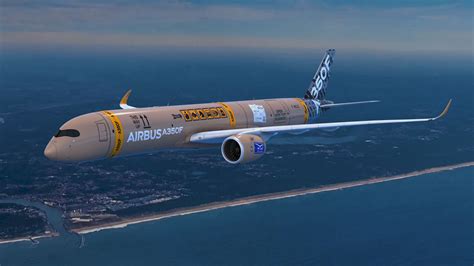
MNG’s announcement has sent competitive tremors across the regional air freight industry. In markets like the Middle East and Central Asia, where cargo demand is exploding, rival carriers are now under intense pressure to modernize their fleets or risk obsolescence. The A350F has quickly emerged as the new benchmark for modern air cargo operations.
This isn’t just about fleet age—it’s about strategic relevance. Freight forwarders, logistics companies, and global e-commerce platforms are already reassessing partnerships, favoring airlines that can guarantee lower emissions, higher reliability, and advanced digital cargo handling capabilities.
Economic Impact and National Aviation Strategy for Turkey
For Turkey, MNG’s leap forward is emblematic of a broader national aviation strategy focused on technological advancement, trade facilitation, and green infrastructure. As the country continues to invest in its airport networks and MRO (Maintenance, Repair & Overhaul) sectors, MNG’s fleet transformation offers long-term dividends in workforce development, foreign investment, and bilateral aerospace cooperation—especially with European giants like Airbus.
The move also feeds directly into Turkey’s ambitions to lead in sectors like medical tourism, high-value agriculture, and fashion exports—all of which rely on agile, high-capacity air cargo networks. The ripple effects will be felt from Anatolia’s farms to the runways of JFK and Changi.
Resilience in a Volatile World: A350F as a Risk Management Tool
In a world increasingly defined by **disruption—be it pandemics, conflicts, or climate events—**the ability to pivot rapidly is a competitive necessity. The A350F’s payload flexibility, fuel autonomy, and reduced maintenance needs make it ideally suited for a volatile logistics landscape.
Whether operating emergency ad-hoc charters during crises or adjusting capacity for cross-border e-commerce spikes, MNG’s new aircraft provide the modularity and responsiveness that older freighters simply cannot match.
From MoU to Market: When the Rubber Meets the Runway
The MoU signed at the Paris Air Show isn’t a ceremonial gesture—it’s a contractual precursor to a fundamental operational overhaul. Once deliveries begin, MNG Airlines will start to phase out older freighters and recalibrate its route planning, aircraft rotation, and cargo handling systems around the A350F’s advanced design.
Internally, this will trigger retraining programs, systems upgrades, and possibly even digital twin modeling for predictive maintenance and performance tracking. Externally, customers can expect enhanced tracking visibility, improved delivery timelines, and greater reliability in perishables and time-sensitive goods transport.
Conclusion: MNG Airlines Charts a Bold Flightpath Toward the Future
The A350F isn’t just another aircraft—it’s a declaration of strategic intent, an emblem of technological leadership, and a milestone for Turkish aviation. As global commerce tilts toward faster, greener, and more intelligent air cargo systems, MNG Airlines is emerging as a leader that doesn’t just respond to change—it commands it.
By embedding sustainability, efficiency, and adaptability into its fleet architecture, MNG is building more than an airline. It’s creating a future-ready logistics platform capable of powering global economies and connecting industries with unprecedented speed and responsibility.
The sky may be the limit—but with the Airbus A350F, MNG Airlines is proving that even the skies can be reimagined.