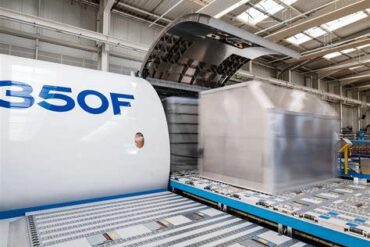
Airbus has taken a decisive step in reshaping the future of air cargo with the completion of the largest main deck cargo door ever built in commercial aviation. Designed specifically for the upcoming A350F freighter, this engineering milestone signals far more than a structural upgrade—it represents a strategic push into a market long dominated by Boeing’s widebody cargo aircraft.
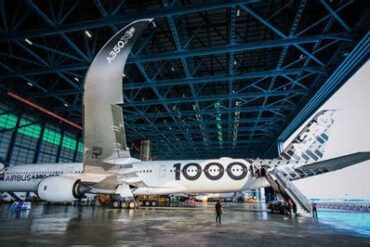
The newly manufactured cargo door has already been integrated into the fuselage of Airbus’ test aircraft, with ground testing scheduled imminently and flight trials expected to begin later this year. These developments place the A350F firmly on track for a planned entry into service in 2027, a timeline closely watched by airlines and logistics giants worldwide.
A Cargo Door That Changes the Rules of Freight Loading
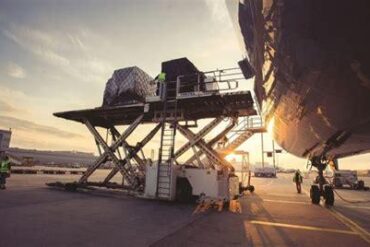
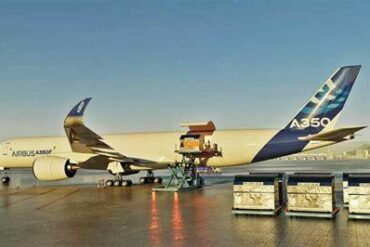
At first glance, a cargo door might seem like a minor component. In reality, it defines the operational efficiency of an entire freighter aircraft. Airbus’ new design pushes those boundaries dramatically. Measuring 14.76 feet (4.5 meters) in width and 14.1 feet (4.3 meters) in height, the door delivers a total loading area of 208.1 square feet (19.35 square meters)—a figure that eclipses every existing competitor.
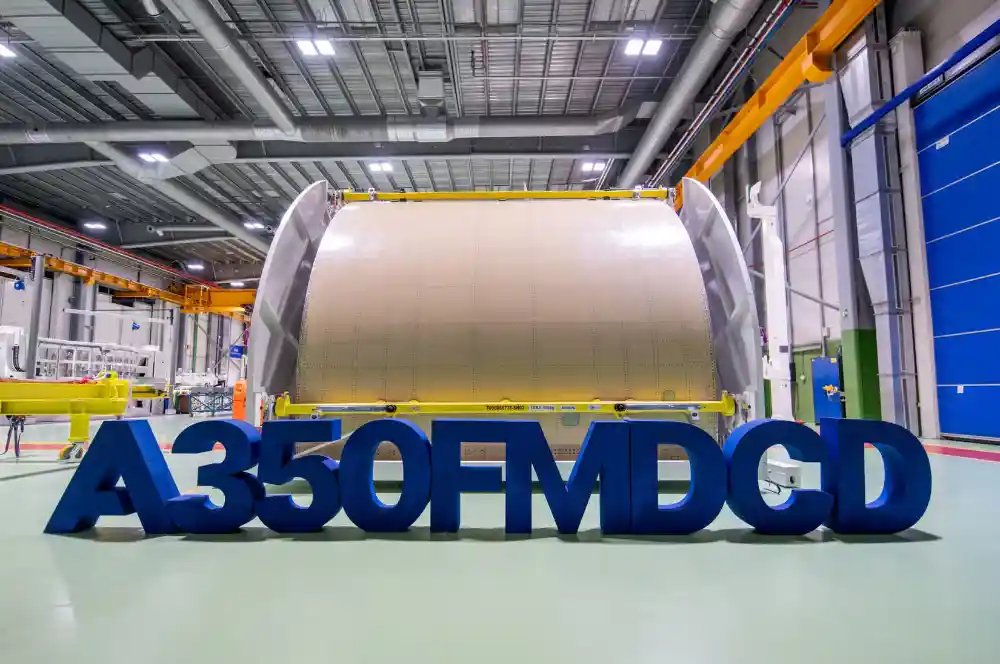
To put that into perspective, the Boeing 777F, a benchmark in long-haul cargo operations, offers a door area of just over 121 square feet, while the Boeing 767F falls below 100 square feet. Even the iconic nose-loading capability of the Boeing 747 freighter is now effectively outmatched in usable access space.
This increase is not merely about size—it’s about transforming logistics workflows. Larger cargo doors allow operators to load bulkier, pre-assembled cargo units without the need for disassembly. That eliminates time-consuming handling steps, reduces the risk of damage, and significantly shortens turnaround times on the ground.
Operational Impact: Faster Turnarounds, Lower Costs
The implications of this design ripple across the entire cargo ecosystem. Airlines operate on tight schedules where minutes on the ground translate directly into cost. By enabling faster loading and unloading cycles, the A350F’s oversized door enhances aircraft utilization rates and improves fleet productivity.
Ground crews benefit from simplified handling procedures, while logistics planners gain greater flexibility in cargo configuration. Oversized freight—such as industrial machinery, aerospace components, or e-commerce bulk shipments—can now be processed with fewer constraints and less fragmentation.
In practical terms, this means:
- Reduced turnaround time at busy cargo hubs
- Improved safety through fewer handling steps
- Greater compatibility with modern freight containers and pallets
The result is an aircraft designed not just for capacity, but for speed, adaptability, and reliability in real-world operations.
Strategic Positioning in a Boeing-Dominated Market
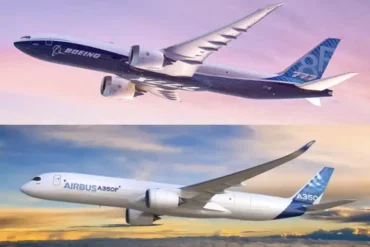
Airbus’ move is as much strategic as it is technological. The global freighter market has historically leaned heavily toward Boeing platforms, particularly the 777F and 747F series. With the A350F, Airbus is clearly aiming to break that dominance by offering a next-generation alternative built on a proven passenger aircraft platform.
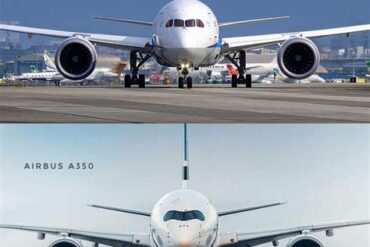
The A350 platform itself brings a major advantage: commonality. Airlines already operating passenger variants can integrate the freighter with minimal additional training or infrastructure changes. This reduces entry barriers and accelerates adoption.
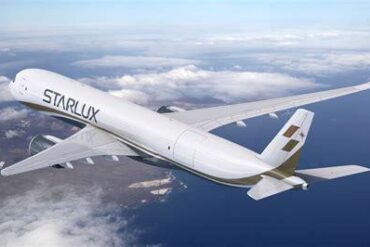
The market response has been swift. As of March, Airbus has secured over 100 orders from 14 global customers, underscoring strong confidence in the aircraft’s capabilities. Among these, Atlas Air leads with a commitment for 20 aircraft, followed by notable operators such as Starlux Airlines, Etihad Airways, and leasing firm AviLease.
Performance Meets Efficiency: The A350F Advantage
Beyond its cargo door, the A350F is engineered for high performance and operational efficiency. Airbus targets a range of 4,700 nautical miles (8,700 kilometers) with a maximum payload of 111 tons, placing it squarely in the long-haul heavy cargo segment.
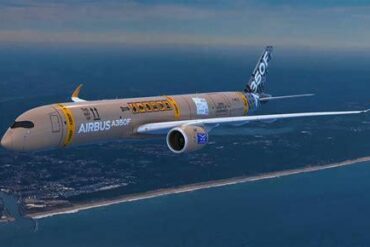
What truly differentiates the aircraft, however, is its construction. More than 70% of the airframe is built from advanced composite materials, significantly reducing weight while enhancing durability. This translates directly into lower fuel consumption and reduced emissions, a critical factor as the aviation industry faces increasing environmental scrutiny.
Powering the aircraft is the Rolls-Royce Trent XWB-97 engine, widely regarded as one of the most efficient large turbofan engines in service. Its integration ensures that the A350F delivers competitive operating costs, a key determinant for cargo operators managing thin margins.
Development Progress and the Road to 2027
Airbus has maintained steady momentum in the A350F program. Throughout 2025, major components—including wings, fuselage sections, and stabilizers—have been manufactured and delivered to the Toulouse final assembly line. The integration of the cargo door marks one of the final structural milestones before comprehensive testing begins.
Two test aircraft are currently being prepared to support flight testing and certification campaigns spanning 2026 and 2027. If timelines hold, the first delivery is expected to go to CMA CGM Air Cargo, positioning the operator at the forefront of next-generation freight aviation.
The pace of development suggests a program that is both methodical and highly coordinated, minimizing risk while maintaining forward momentum.
A Defining Shift in Air Cargo Design
The introduction of the largest cargo door in aviation history is more than an engineering headline—it is a clear signal that Airbus is redefining how freight aircraft are designed and utilized. By focusing on practical efficiency, scalability, and operator needs, the A350F positions itself as a transformative force in global logistics.
As air cargo demand continues to evolve—driven by e-commerce growth, supply chain restructuring, and high-value shipments—the importance of faster, more flexible aircraft becomes impossible to ignore. Airbus has recognized this shift and responded with a design that doesn’t just compete—it raises the bar.
The A350F is not simply entering the market. It is arriving with the tools to reshape it.