Founded in 2003, Air China Cargo has emerged as a leading cargo airline in Asia, serving as the logistical backbone of China’s growing export economy. As a wholly dedicated freight division under Air China, it has evolved through strategic partnerships, intelligent fleet expansion, and aggressive international outreach, becoming a pivotal player in the global air cargo network.
Backed by Air China (51%) and Cathay Pacific (49%), Air China Cargo operates as a joint venture rooted in precision, reliability, and scale. Its headquarters in the Tianzhu Airport Industrial Zone in Beijing’s Shunyi District places it at the heart of China’s aviation infrastructure.
Today, with a fleet of 20 dedicated freighter aircraft, Air China Cargo connects 26 destinations across Asia, Europe, and North America, offering consistent, long-haul services that sustain international supply chains.
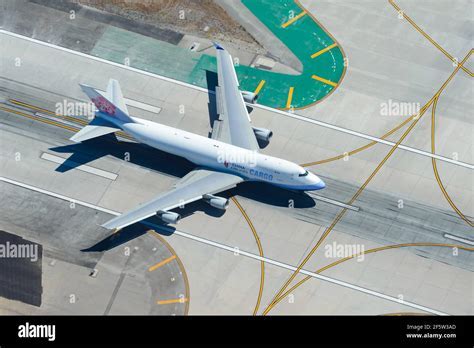
Strategic Origins and the Consolidation Era
The creation of Air China Cargo in 2003 coincided with China’s rapid economic growth and escalating trade volumes. The airline was conceived to serve as a specialized air freight operator, distinct from Air China’s passenger operations. In 2011, a major structural transformation occurred when Cathay Pacific and Air China merged their cargo businesses, a move that solidified Air China Cargo’s presence in Asia and gave it access to wider markets and collaborative networks.
This merger brought Cathay Pacific’s cargo experience and Air China’s logistical command over mainland China, resulting in a symbiotic blend of East Asian aviation dominance. With around 4,000 employees by 2013, the airline quickly scaled operations from domestic shipments to transcontinental routes.
IPO and Financial Milestone: 2024’s Landmark Listing
A major leap occurred on 30 December 2024, when Air China Cargo went public through an initial public offering (IPO) on the Shenzhen Stock Exchange. This event not only raised significant capital but also marked the largest IPO in the Chinese A-share market for 2024. The public offering signified investor confidence in air freight as a lucrative sector amidst ongoing global e-commerce and cross-border logistics expansion.
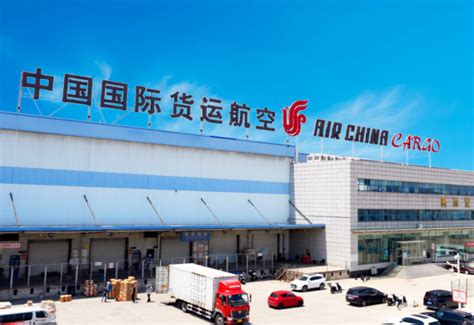
Operational Network: A Strategic Spread of Global Hubs
Air China Cargo operates from three major hubs: Beijing Capital International Airport, Shanghai Pudong International Airport, and Guangzhou. These locations are chosen for their proximity to major manufacturing zones, financial centers, and global trade routes.
Asia-Pacific Coverage
In Asia, the airline’s core operations span major Chinese metropolises including Chengdu, Chongqing, Shanghai Hongqiao, Tianjin, and Zhengzhou. Beyond the mainland, Air China Cargo connects with Taipei, Tokyo, Osaka, and Hong Kong, strengthening intra-Asia freight capability.
European Destinations
In Europe, Air China Cargo maintains routes to Liège, Copenhagen, Frankfurt, Munich, Amsterdam, Paris, Zaragoza, Stockholm, and Novosibirsk. These cities are key logistics hubs, enabling direct access to Western and Northern Europe’s cargo ecosystems.
North American Reach
In the U.S., services extend to Anchorage, Chicago, Dallas, Los Angeles, and New York (JFK)—major freight corridors for Chinese exports including electronics, apparel, and pharmaceuticals.
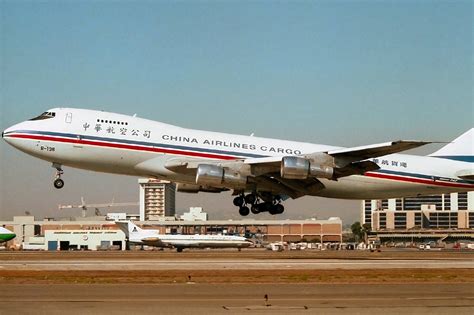
Fleet Modernization: From Soviet Designs to Widebody Giants
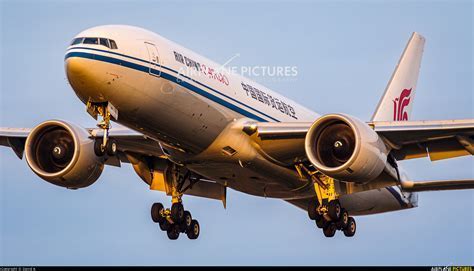
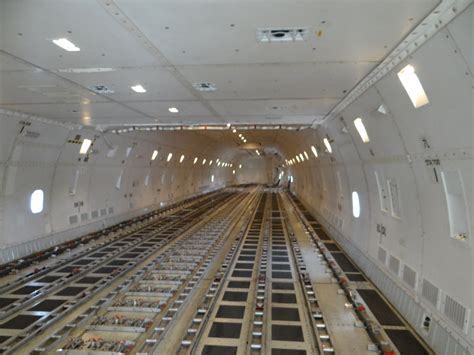
Air China Cargo’s current fleet is optimized for long-haul, high-volume cargo transport. As of April 2025, its fleet includes:
- 12 Boeing 777F: Long-range, high-efficiency aircraft for trans-Pacific and intercontinental hauls.
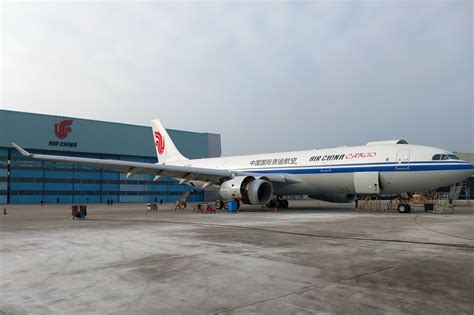
- 5 Airbus A330-200/P2F: Converted from passenger aircraft, these provide regional flexibility and fuel efficiency.
- 3 Boeing 747-400F: Legacy giants still deployed on high-capacity routes.
An additional 4 aircraft (1 Boeing 777F and 3 A330-200/P2F) are on order, showcasing ongoing investments in fleet sustainability and modern technology.
Retired Fleet and Evolution
Historically, the airline operated Soviet-designed Tupolev Tu-204-120CE, which was later converted into a tanker. The retirement of Boeing 747-200F/SF, 757-200PCF, and 747-400BCF/BDSF aircraft reflects the shift from older, fuel-heavy jets to next-generation freighters.
Technological Backbone and Cargo Services
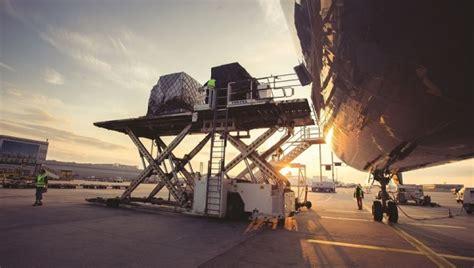
Air China Cargo has focused heavily on digital integration and freight management systems, using advanced tracking, cold-chain solutions, and airside logistics infrastructure. Cargo types include:
- General cargo: textiles, consumer electronics
- Temperature-sensitive goods: pharmaceuticals, perishables
- Valuables and high-security shipments
- Oversized and dangerous goods
Modern warehouses in Beijing and Shanghai are equipped with automated sorting systems, X-ray scanning, and customs pre-clearance protocols, enabling faster throughput and security compliance.
Joint Ventures and Industry Integration
The synergy with Cathay Pacific extends beyond ownership. It enables code-sharing on cargo routes, joint scheduling, and shared ground services in Hong Kong and Shanghai. The airline is also part of an integrated logistics ecosystem with partners including:
- Beijing Capital International Airport Company
- CITIC Pacific
- Air China Logistics Group
These partnerships provide access to multi-modal shipping, inland ports, and bonded logistics zones.
Challenges and Strategic Outlook
Despite its strength, Air China Cargo faces global challenges: fluctuating fuel prices, airspace restrictions, and increased competition from FedEx, DHL Aviation, and SF Airlines. However, its strong domestic market position and growing emphasis on green aviation position it well for the future.
The acquisition of converted Airbus A330s is part of the airline’s carbon emission reduction strategy, transitioning away from older models with heavier fuel consumption.
Moreover, the IPO funds are likely to be allocated towards expanding digital services, improving cold chain capacity, and enhancing last-mile delivery integration.
Conclusion: A Freight Titan in the Sky
Air China Cargo’s journey from a specialized domestic operator to a globally integrated logistics powerhouse reflects both China’s economic ascent and the strategic foresight of its aviation leaders. As global trade continues to demand faster, more reliable air transport, Air China Cargo is poised to remain at the forefront, pushing technological innovation and strengthening China’s logistical dominance in the skies.