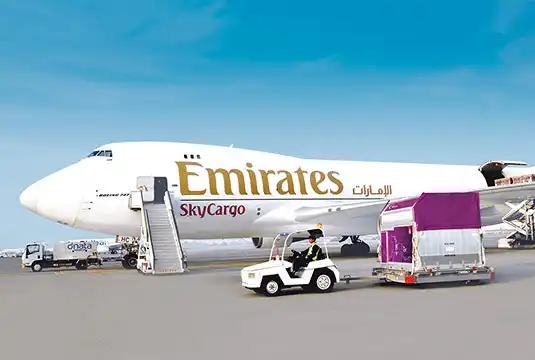
Emirates SkyCargo stands as one of the world’s most strategically positioned and technologically advanced air freight carriers, rooted in Dubai’s evolution into a global logistics nexus. Operating as the cargo division of Emirates, the airline has built a reputation for reliability, scale, and an unrelenting focus on premium cargo transport solutions. Over nearly four decades, its network, infrastructure, and fleet strategy have shaped a freight ecosystem capable of supporting global trade flows across continents. By combining dedicated freighter operations with extensive belly-hold capacity across the Emirates passenger network, we connect producers, manufacturers, and markets with seamless speed and consistency. This integrated model has become a defining advantage, enabling high-priority shipments to bypass congestion, shorten transit times, and access 87 dedicated cargo destinations with reach into an additional 61 passenger-served routes.
The origins of Emirates SkyCargo trace back to October 1985, the same moment Emirates itself took flight. From day one, the cargo division was established as a standalone operational unit responsible for managing the holds of all passenger aircraft and operating its own leased freighters. The clarity of its mandate—building a freight platform capable of elevating Dubai into a global trading hub—allowed the young carrier to scale quickly. In its first year, the division moved more than 10,000 tonnes of freight, signaling Dubai’s potential as a re-export and logistics powerhouse.
Through the late 1980s and 1990s, Emirates SkyCargo expanded both its route map and reputation. Awards accumulated rapidly, including Best Cargo Airline to the Middle East for an unprecedented 20 consecutive years, reflecting the consistency of service and strong relationships built with shippers worldwide. Key partnerships also accelerated its ascent. The 1993 agreement with EC International opened a significant avenue for U.S.-origin shipments destined for the Middle East, Europe, and Asia, solidifying the carrier’s role in major east-west trade lanes. The addition of Amsterdam in 1997 marked a critical expansion into Europe’s logistics heartland, a move that contributed to cargo accounting for 16% of the Emirates Group’s revenue.
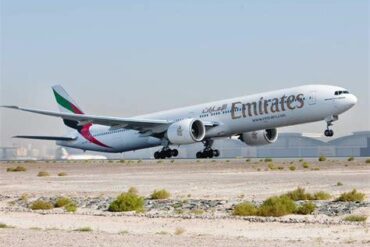
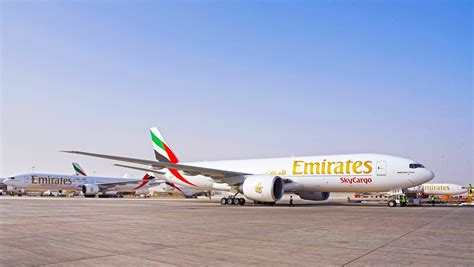
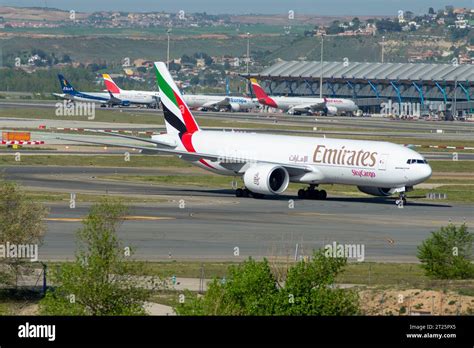
The 2000s represented an era of technological advancement and infrastructure transformation. Fleet modernization began with the introduction of Boeing 747-400F aircraft, enabling larger payloads and enhanced range across global routes. In September 2004, new services to Johannesburg and Lahore further tightened the airline’s grip on vital trade corridors. In 2005, the announcement of eight Boeing 777Fs at the Dubai Airshow marked a turning point. The 777F, with its efficiency, reliability, and long-range capability, would become the backbone of the Emirates SkyCargo fleet for decades.
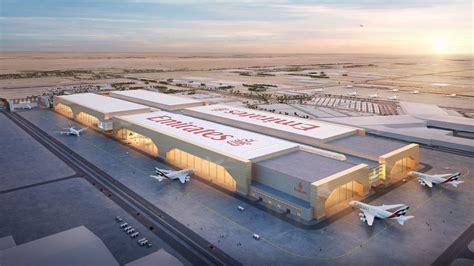
By 2008, the carrier opened its Cargo Mega Terminal, an immense 43,600-square-meter complex engineered to process 1.2 million tonnes of cargo annually. This infrastructure leap expanded Dubai International Airport’s total throughput capacity to 1.6 million tonnes per year, cementing Dubai’s emergence as one of the world’s most sophisticated air logistics hubs. Cargo volumes climbed steadily, with Emirates SkyCargo handling 1.4 million tonnes of freight during the 2008–09 financial year. Even amid global economic turbulence, its revenue contribution remained substantial, generating 19% of the Emirates Group’s total revenue.
Fleet strategy took a more focused direction in the 2010s. Orders for the Boeing 747-8F were gradually withdrawn, and the airline concentrated on the superior economics of the Boeing 777F. By 2012, the 747-8F program had been fully exited, allowing the carrier to streamline operations around a single high-performance freighter type. Infrastructure growth continued, with a new SkyCargo terminal at Dubai World Central (Al Maktoum International Airport) breaking ground in 2013. This facility would later become the primary hub for dedicated freighter operations, freeing up capacity at Dubai International Airport and aligning with the city’s long-term aviation masterplan.
Emirates SkyCargo was also an early advocate for wildlife conservation in air transport. In 2015, we became the largest air freight carrier to prohibit the carriage of lion, tiger, rhino, and elephant hunting trophies, regardless of legality. This policy strengthened the airline’s position as a responsible stakeholder in global logistics and aligned with emerging international conservation priorities.
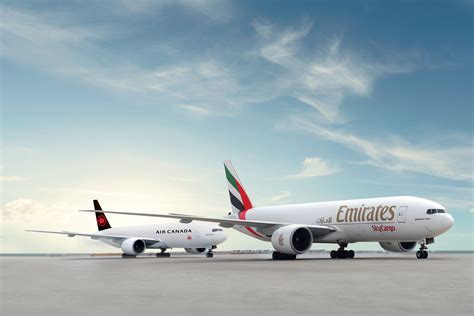
The COVID-19 pandemic triggered the most radical operational pivot in the company’s history. Global demand for air cargo surged as supply chains fractured and the world relied on essential freight movement. Emirates SkyCargo responded with fleet innovation: in June 2020, fourteen Boeing 777-300ER passenger aircraft were stripped of their economy-class seats to expand cargo capacity. At the same time, the airline introduced the world’s first A380 mini-freighters, repurposing the world’s largest passenger aircraft into high-volume cargo transporters. Each A380 provided close to 50 tonnes of belly-hold space, enabling the movement of medical equipment, pharmaceuticals, food shipments, and e-commerce goods when the global supply chain needed them most.
The 2020s also saw renewed investment in future fleet growth. Orders placed in 2021, 2022, and 2024 for additional Boeing 777F aircraft—including the airline’s first direct-purchase freighters from Boeing—signaled long-term commitment to expanding dedicated cargo operations. In 2025, Emirates SkyCargo’s fleet consisted of eleven Boeing 777Fs alongside additional 747-400F aircraft leased through partner carriers to provide short-term supplemental capacity. As part of future planning, ten Boeing 777-300ER/SF (special freighter conversions) were ordered to further modernize capacity between 2025 and 2026.
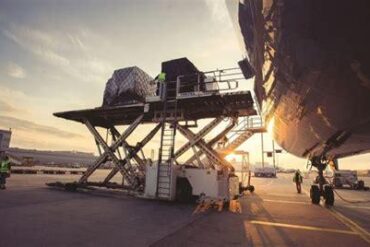
Today, Emirates SkyCargo operates 26 dedicated freighter routes and leverages belly-hold capacity across 61 additional passenger destinations. This combined network touches every major economic region, enabling goods ranging from electronics and perishables to pharmaceuticals and high-value industrial components to reach global markets at speed. The strategic hub at Al Maktoum International Airport continues to evolve, with expanded cold-chain facilities, automated handling systems, and temperature-controlled environments designed specifically for medical and life-science freight.
Emirates SkyCargo’s modern fleet provides flexibility for diverse cargo types. The Boeing 777F, its flagship freighter, carries up to 102 tonnes of payload and offers unmatched long-range capability, ideal for connecting transcontinental markets without intermediate stops. The wet-leased Boeing 747-400F units supplement operations during peak seasons, supporting the transport of oversized industrial equipment, automotive components, and heavy-lift consignments. Former aircraft such as the Airbus A310-300F and various 747-400F variants played significant roles in earlier decades, supporting the carrier’s transition into the fully modernized cargo operator it is today.
The airline’s safety record has generally been strong, though it experienced a serious incident on 20 October 2025 when a Boeing 747-400BDSF operating Flight 9788 crash-landed at Hong Kong International Airport. After veering off Runway 07L, the aircraft breached the perimeter fence and collided with an airport patrol vehicle, resulting in the tragic loss of two lives. All four crew members survived, and the incident prompted renewed reviews of freighter operations, emergency coordination, and runway safety procedures.
Looking ahead, Emirates SkyCargo is positioned to remain a defining force in global air logistics. Its extensive investment in fleet modernization, digital cargo management, environmental initiatives, and multimodal infrastructure reinforces Dubai’s role at the heart of international trade. As e-commerce, pharma logistics, and high-value supply chains continue to grow, the carrier’s model—combining capacity, network density, and operational precision—remains a powerful platform for global commerce. The ability to adapt, innovate, and leverage advanced aircraft will continue shaping the next chapter of air freight, ensuring that Emirates SkyCargo remains synonymous with reliability, scale, and world-class cargo performance.