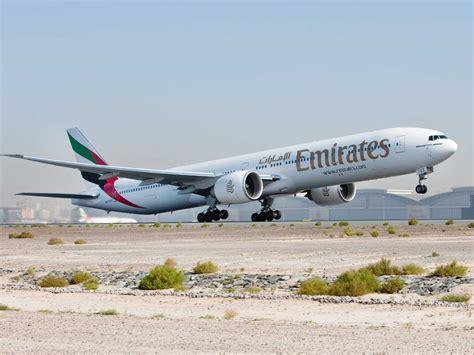
Emirates, the largest airline in the Middle East, has evolved from a modest startup in 1985 to a towering emblem of aviation excellence. Operating out of its hub in Dubai International Airport’s Terminal 3, Emirates commands global respect for its expansive fleet, operational efficiency, and award-winning service. With more than 3,600 weekly flights to over 150 destinations across 80 countries, it continues to set benchmarks in passenger experience, cargo logistics, and global connectivity.
A Bold Genesis: The Vision Behind Emirates
Emirates was born from the ambitions of His Highness Sheikh Ahmed bin Saeed Al Maktoum, who launched the airline with a modest US$10 million and two wet-leased aircraft. The inaugural flight departed on 25 October 1985, charting a path from Dubai to Karachi and Mumbai. This marked the beginning of a rapid global expansion that saw Emirates add Colombo, Dhaka, Amman, and Cairo by 1986.
The airline’s first owned aircraft, an Airbus A310-304, joined the fleet in July 1987, ushering in a new phase of self-sufficiency and strategic growth. The acquisition of Heathrow slots in 1991 symbolized its growing ambition to challenge entrenched legacy carriers on global routes.
Architects of Expansion: Fleet Strategy and Innovation
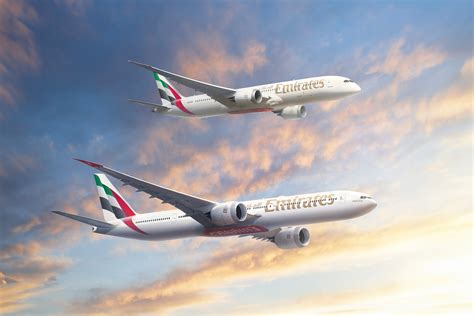
Today, Emirates operates a formidable wide-body fleet of 252 passenger aircraft and 12 freighters, comprising 116 Airbus A380s, 133 Boeing 777s, three A350-900s, and a single Airbus A319 for VIP charter through Emirates Executive. Notably, Emirates phased out narrow-body aircraft in 1995, doubling down on high-capacity, long-haul strategy.
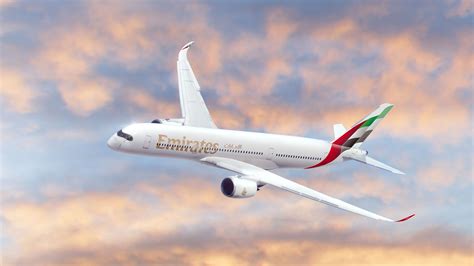
The carrier’s commitment to future readiness is underscored by its massive aircraft orders: 205 Boeing 777X, 35 Dreamliner 787s, and 65 Airbus A350-900s, including new A350-900ULR variants for ultra-long-haul services. The first A350-900 entered service in November 2024, debuting on the Edinburgh route in January 2025.
Dubai as the Nexus: The Hub-and-Spoke Business Model
Emirates’ operational model leverages Dubai’s geographic location as a nexus between East and West. This hub-and-spoke strategy circumvents traditional hubs in Europe and North America, allowing Emirates to connect underserved city pairs and dominate long-haul traffic flows.
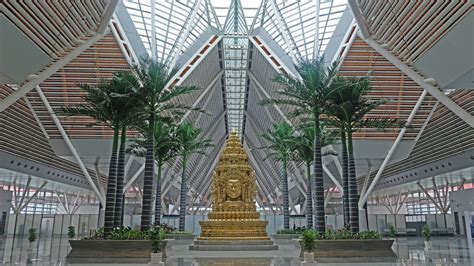
In April 2024, Emirates confirmed that it would relocate its hub to the new Al Maktoum International Airport upon its expansion completion, signaling a future of even greater capacity and passenger volume.
Commercial Independence and Financial Growth
Despite being wholly owned by the Investment Corporation of Dubai, Emirates operates without government interference or subsidy, maintaining unbroken annual growth of over 20%—excluding its second year. Between 1999 and 2024, it paid out AED 14.6 billion in dividends on an initial capital of US$90 million.
From FY1998 to FY2025, turnover exploded from AED 4.0 billion to AED 127 billion, while net profit surged from AED 260 million to AED 19 billion. Passenger numbers grew to 53.6 million annually, load factor to 78.9%, and cargo volume ballooned to 2.34 million tonnes, propelled by Emirates SkyCargo.
In-Flight Services: Where Luxury Meets Innovation
Emirates is synonymous with premium travel experiences. Its in-flight product is stratified across four cabin classes:
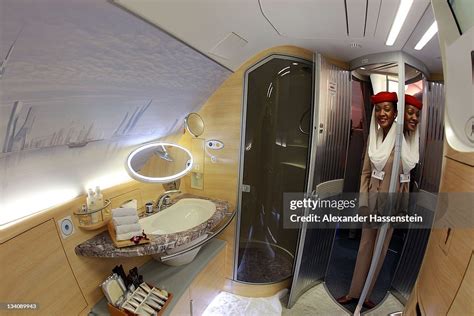
- First Class: Private suites with floor-to-ceiling or partial doors, fully flat beds, minibars, and 23″–32″ HD ICE screens. A380s offer a shower spa and an onboard lounge.
- Business Class: Lie-flat seats, ICE on 23″ screens, and access to the A380 onboard bar.
- Premium Economy: Introduced in 2020 across 22 A380s, with 40-inch pitch Recaro seats and extensive retrofitting investment of US$2 billion.
- Economy Class: Offers 31–34-inch seat pitch and the same ICE entertainment system with over 3,000 channels.
Catering is managed by Emirates Flight Catering, offering halal-certified menus and supplemented by a US$40 million hydroponic farm joint venture, ensuring fresh produce onboard.
In-Flight Entertainment: Pioneers of the Skies
Launched in 2003, Emirates’ ICE (Information, Communication, Entertainment) system has won numerous accolades for its depth and variety. Key upgrades include ICE Digital Widescreen (2007), the eX3 platform (2015), and the latest Thales Avant-based redesign in 2025, offering full device integration, live television, and streaming capabilities.
Global Network and Destinations
As of August 2024, Emirates served 137 cities in 77 countries, maintaining a dynamic network of over 3,000 weekly flights. Recent milestones include:
- A fifth weekly service to Antananarivo from December 2024
- Resumed flights to Adelaide from October 2024
- New launches to Shenzhen, Da Nang, and Siem Reap in March 2025
The airline’s independent strategy—not aligned with Oneworld, SkyTeam, or Star Alliance—has not hindered its connectivity, thanks to extensive codeshare and interline partnerships, including with regional railways.
Brand Identity and Evolution
Emirates’ branding has undergone significant evolution. The slogan transitioned from “So be good to yourself, Fly Emirates” in the 1990s to the now globally recognized “Fly Better.” Uniform redesigns in 2008 and a new livery introduced in 2023 feature a modern interpretation of the UAE flag, bold red wingtips, and elegant Arabic calligraphy, underlining its commitment to both heritage and innovation.
Sponsorship and Global Reach
Emirates’ sponsorship strategy enhances global visibility across multiple sports:
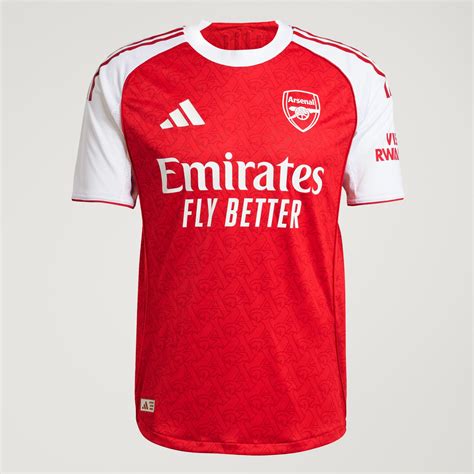
- Football: Shirt sponsors for Arsenal (2006–2028), AC Milan, Real Madrid, Benfica, and others. Naming rights for Emirates Stadium and title sponsor of the FA Cup.
- Cricket: Long-time partners of Cricket Australia and the International Cricket Council.
- Basketball: Official airline of the NBA, including the Emirates NBA Cup beginning in 2024.
- Other Sports: Includes sailing, rugby, and tennis.
Sustainability and Environmental Commitment
Emirates has committed to responsible aviation by achieving a fleet-wide fuel burn of under 4L per 100 passenger-km. In 2023, the airline pledged US$200 million over three years to research fossil fuel reduction technologies, rather than relying on unscalable offset programs. Fleet renewal and next-gen aircraft integration are central to this strategy.
Human Capital and Operational Strength
By March 2020, Emirates Group employed 105,730 staff, with the airline division accounting for 59,519 employees, including 21,789 cabin crew and 4,313 flight deck crew. Employee loyalty is nurtured through generous profit-sharing bonuses, amounting to 24 weeks’ pay in 2023 and 20 weeks in 2024.
The operational culture is marked by professionalism, efficiency, and a strong safety record. Training is rigorous, and internal mobility offers staff opportunities to advance in one of the most respected names in aviation.
Cargo Logistics: Emirates SkyCargo
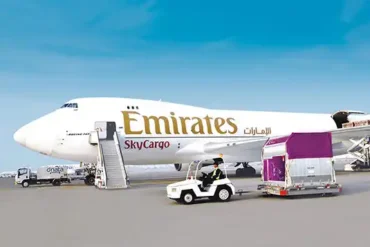
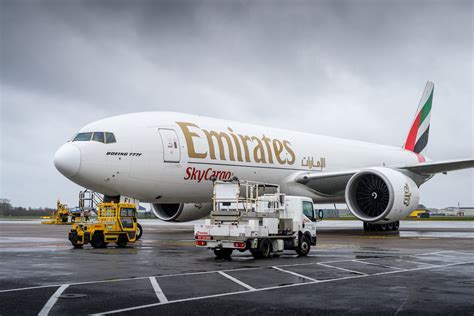
Launched concurrently with passenger services in October 1985, Emirates SkyCargo has become a global freight leader. Key milestones include the introduction of Boeing 747 freighters in 2001, conversion of passenger aircraft to preighters during COVID-19, and a 2022 order for five new 777 freighters to bolster its high-yield network.
Conclusion: The Sky is Not the Limit
What began as a bold experiment in 1985 has grown into an aviation empire. Emirates combines operational discipline, financial prudence, branding excellence, and luxury service to continually reshape global aviation. With its upcoming move to Al Maktoum International Airport, a next-generation fleet, and industry-leading innovation, Emirates is not merely flying better—it’s flying into the future.