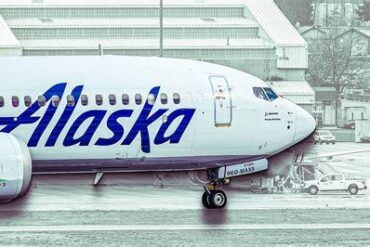
Alaska Airlines spent decades building its reputation around efficient West Coast connectivity, strong customer loyalty, and a point-to-point network that emphasized convenience over sprawling mega-hubs. That strategy helped the airline thrive against much larger competitors. But the acquisition of Hawaiian Airlines has dramatically changed the equation. Suddenly, Alaska is no longer simply a regional powerhouse with deep roots in the Pacific Northwest. It now possesses widebody aircraft, long-haul capabilities, and direct access to transpacific growth opportunities that were previously out of reach.
The merger has accelerated a strategic shift that had quietly been building for years: Alaska Airlines is moving decisively toward hub-based operations, with Seattle-Tacoma International Airport emerging as the centerpiece of its global ambitions. The transformation is not merely about adding more flights. It represents a complete redesign of how Alaska intends to compete against Delta Air Lines, United Airlines, and American Airlines in the international aviation market.
For travelers, the shift means more direct flights, stronger connectivity, upgraded lounges, and expanded international options. For competitors, it signals the rise of a far more aggressive Alaska Air Group with the scale and infrastructure to dominate the Pacific Northwest for decades.
By absorbing Hawaiian Airlines into its broader network strategy, Alaska Airlines has fundamentally changed its future trajectory.
The Hawaiian Airlines Acquisition Changed Everything
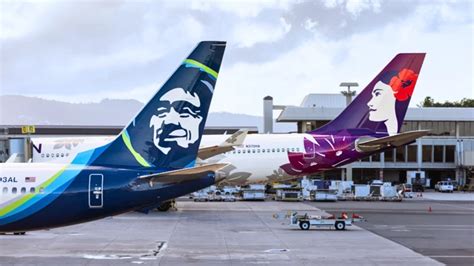
The merger between Alaska Airlines and Hawaiian Airlines instantly reshaped the competitive landscape of American aviation. Alaska Air Group became the fifth-largest airline group in the United States almost overnight, while also gaining assets that fundamentally altered its operational possibilities.
Before the acquisition, Alaska Airlines lacked one major ingredient required for true global expansion: a widebody fleet. Its network strength depended heavily on Boeing 737 aircraft connecting West Coast cities with domestic destinations, Mexico, and select international markets. Hawaiian Airlines brought something entirely different to the table — Airbus A330s, Boeing 787 Dreamliners, long-haul operational expertise, and an established Asia-Pacific presence.
That combination allowed Alaska Airlines to move beyond its historical limitations.
The merger also solved strategic problems for both carriers simultaneously. Hawaiian Airlines had struggled financially amid increasing competition from Southwest Airlines in the Hawaii market. Alaska Airlines, meanwhile, needed a stronger international strategy to defend its position against Delta’s aggressive expansion in Seattle.
Together, the airlines created a network with enormous geographic reach. Alaska dominates travel flows throughout the Pacific Northwest and Alaska itself, while Hawaiian contributes deep expertise in transpacific flying and island operations. The result is a hybrid airline group capable of funneling passengers from dozens of North American cities into long-haul international routes.
That type of connectivity is the foundation of hub-based airline economics.
Why Seattle Is Becoming Alaska Airlines’ Primary Global Hub
Seattle-Tacoma International Airport has quietly evolved into one of the most strategically valuable airports in North America. Its geographic location provides natural advantages for flights connecting the United States with Asia and parts of Europe. Flight times are shorter than many competing West Coast gateways, and the airport sits directly within Alaska Airlines’ strongest customer base.
For years, Delta Air Lines recognized Seattle’s potential and invested aggressively to turn SEA into a transpacific hub. The carrier launched nonstop services to cities including Tokyo, Seoul, Taipei, Shanghai, Paris, Amsterdam, and London Heathrow. Alaska Airlines initially focused on defending its domestic market share rather than directly challenging Delta on international routes.
That restraint has now disappeared.
Using Hawaiian Airlines’ long-haul aircraft, Alaska Airlines has started building a global route network centered around Seattle. New flights to Seoul Incheon, Tokyo, and Rome Fiumicino demonstrate the carrier’s willingness to compete directly with larger international operators.
The long-term vision extends far beyond those initial destinations. Industry analysts increasingly expect Alaska Air Group to pursue routes such as Bangkok, Manila, Delhi, Ho Chi Minh City, and additional European capitals.
Seattle’s location makes those routes highly attractive. Flights between Asia and Seattle benefit from favorable routing across the Pacific, while European services can capitalize on strong business demand generated by the city’s booming technology sector. Companies like Amazon and Microsoft generate premium-cabin traffic that airlines aggressively pursue because of its profitability.

Equally important is Alaska’s domestic feed network. The airline already controls a massive share of traffic throughout the Pacific Northwest and maintains extensive West Coast operations. Passengers from smaller cities can connect through Seattle onto long-haul international flights, increasing load factors and improving profitability.
That is precisely how successful hub systems operate.
The Shift Away From Pure Point-to-Point Flying
Historically, Alaska Airlines built much of its reputation on efficient point-to-point operations. Travelers appreciated direct routes that bypassed congested mega-hubs. The strategy allowed Alaska to maximize aircraft utilization while maintaining strong operational reliability.
However, international aviation operates under different economic realities.
Long-haul routes require substantial passenger volumes, especially in premium cabins. Airlines rarely succeed internationally without strong connecting traffic supporting their flights. Hub systems solve that problem by consolidating travelers from multiple smaller markets into one central gateway.
The Hawaiian Airlines merger gives Alaska the ability to embrace this model fully.
Instead of focusing primarily on isolated city pairs, Alaska is increasingly organizing its network around coordinated connectivity flows. Flights arriving into Seattle from cities such as Portland, Boise, Spokane, Anchorage, San Diego, Sacramento, and San Francisco can now feed directly into international departures.
The strategy mirrors the operational frameworks used by Delta in Atlanta, United in Chicago and San Francisco, and American Airlines in Dallas-Fort Worth.
Hub-based operations also create scheduling flexibility. Airlines can optimize departure banks, improve aircraft utilization, and maximize passenger connections within narrow time windows. That generates higher revenue opportunities while making routes more sustainable.
For Alaska Airlines, the transition represents a significant cultural shift. But it is also a logical evolution for an airline that suddenly possesses long-haul aircraft and global ambitions.
Widebody Aircraft Are Expanding Alaska’s Reach
The introduction of widebody aircraft into Alaska Air Group’s operations is perhaps the most visible symbol of the airline’s transformation.
Hawaiian Airlines’ Airbus A330 fleet immediately expanded capacity on several important routes. One of the most notable examples is the Seattle-to-Anchorage corridor, where widebody deployment during peak summer travel periods dramatically increased available seats.
The move may seem unusual at first glance. Widebody aircraft are traditionally associated with international flying, not domestic routes to Alaska. But the decision highlights Alaska Airlines’ growing focus on maximizing hub efficiency and capacity management.
By using larger aircraft on high-demand routes, Alaska can move more passengers through Seattle while freeing narrowbody aircraft for additional network growth elsewhere.
The same strategy applies to Hawaii services. Since the merger, capacity between Seattle and Honolulu has increased significantly, with several daily flights now operated by widebody aircraft. Portland, San Diego, Sacramento, and San Francisco have also seen expanded Hawaii connectivity.
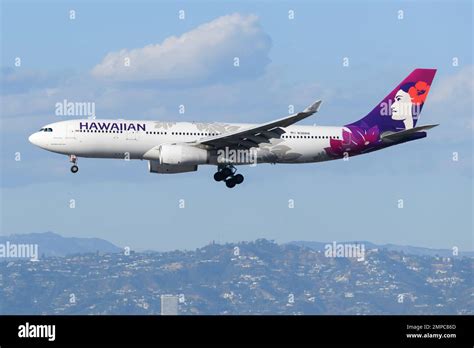
Widebody aircraft deliver additional strategic advantages beyond seat count. Premium cabins become more competitive, cargo capacity improves substantially, and passenger comfort increases on longer flights.
These factors matter enormously in international competition.
Business travelers comparing airlines on transpacific routes expect lie-flat seats, upgraded lounges, premium dining, and modern onboard amenities. Widebody aircraft enable Alaska Air Group to compete in that environment credibly for the first time.
Anchorage Remains Central to Alaska Airlines’ Identity
Despite its growing global ambitions, Alaska Airlines is not abandoning the market that built its brand. Instead, the carrier is reinforcing its commitment to Anchorage and the broader state of Alaska through major infrastructure investments.
The expansion of the Anchorage lounge illustrates this strategy clearly. The redesigned facility now accommodates far more travelers while delivering upgraded passenger experiences that align with Alaska’s broader premium ambitions.
The investment forms part of the airline’s broader Great Land Investment Plan, which includes more than $60 million in projects throughout Alaska over several years.
Maintaining dominance in Alaska remains strategically essential for several reasons. First, it preserves the airline’s historical identity and customer loyalty. Second, the region provides strong feeder traffic into Seattle’s expanding hub network. Third, it creates a competitive moat against rival carriers seeking greater access to the state.
Anchorage also plays an operational role in the airline’s Pacific strategy. Cargo flows, seasonal demand patterns, and tourism traffic all contribute to Alaska Air Group’s broader network economics.
Rather than replacing its traditional strengths, Alaska Airlines is integrating them into a larger global framework.
Premium Lounges and Passenger Experience Investments
Modern airline competition extends far beyond aircraft and routes. Passenger experience increasingly determines customer loyalty, especially among premium travelers.
Alaska Airlines understands this reality and has launched significant lounge expansion projects across its network.
One of the most ambitious developments is the future premium lounge at Honolulu International Airport. Scheduled as part of a long-term redevelopment strategy, the facility will combine elements of both Alaska Airlines and Hawaiian Airlines branding while dramatically increasing available space.
The new lounge is expected to be five times larger than the current facility, featuring expansive runway views, upgraded dining, premium seating zones, and design elements inspired by Hawaiian hospitality traditions.
Seattle is also slated for a new international lounge, reinforcing the airport’s role as Alaska’s primary global gateway.

These investments matter because hub-based strategies depend heavily on attracting connecting passengers who may spend several hours within an airport ecosystem. Comfortable lounges, streamlined connections, and premium services help airlines secure high-value customers willing to pay for convenience and comfort.
Delta, United, and American have invested billions into premium infrastructure over the past decade. Alaska Airlines is now entering that same competitive arena.
Alaska Airlines and Delta Are Entering a New Competitive Era
Perhaps the most fascinating aspect of Alaska Airlines’ transformation is its intensifying rivalry with Delta Air Lines in Seattle.
Delta spent years building Seattle into a major transpacific gateway. The airline expanded aggressively, launched numerous international routes, and invested heavily in airport infrastructure. Alaska Airlines initially cooperated with Delta through partnership agreements before relations deteriorated as competitive tensions escalated.
Now the rivalry is entering an entirely different phase.
Alaska Airlines possesses one crucial advantage: local dominance. The airline maintains significantly stronger customer loyalty throughout the Pacific Northwest and operates a far larger domestic network feeding Seattle. That local strength provides the foundation necessary for sustained hub development.
Delta, however, retains enormous international experience, operational scale, and premium brand recognition.
The competition between the two carriers will likely reshape Seattle aviation over the next decade. Additional long-haul announcements from both airlines appear inevitable as they battle for international passengers, corporate contracts, and connecting traffic.
For consumers, the rivalry brings substantial benefits. Increased competition typically produces more destinations, improved products, and better pricing options.
For Alaska Airlines, the challenge is proving that its transition into a hub-based global airline can succeed against one of the most experienced international operators in the world.
Alaska Airlines Is Building for the Long Term
The shift toward hub-based operations is not a temporary experiment. It is a long-term strategic redesign intended to position Alaska Airlines for decades of future growth.
The airline understands that remaining a primarily regional carrier would eventually limit its competitive ceiling. By integrating Hawaiian Airlines, expanding international service, deploying widebody aircraft, and transforming Seattle into a global hub, Alaska Air Group is creating an entirely new identity.
Its strategy combines several powerful advantages simultaneously:
- Dominant Pacific Northwest market share
- Strong customer loyalty
- Expanding international reach
- Improved premium products
- Efficient West Coast connectivity
- Access to long-haul aircraft
- Growing Asia-Pacific opportunities
The transformation will not happen overnight. Building successful international hubs requires years of careful scheduling, infrastructure investment, route experimentation, and brand development.
But the direction is now unmistakable.
Alaska Airlines is evolving from a respected regional powerhouse into a serious global competitor centered around Seattle. The airline’s future increasingly depends not on isolated point-to-point flying, but on a sophisticated hub system capable of feeding passengers seamlessly across North America, Hawaii, Asia, and Europe.
For Seattle travelers, the changes are already becoming visible. For the broader aviation industry, they may represent the beginning of a major power shift on the West Coast.