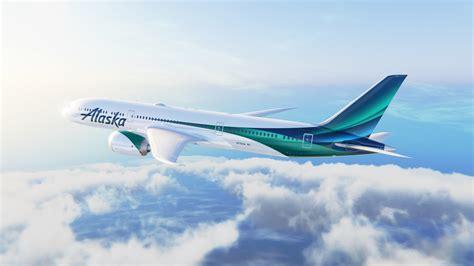
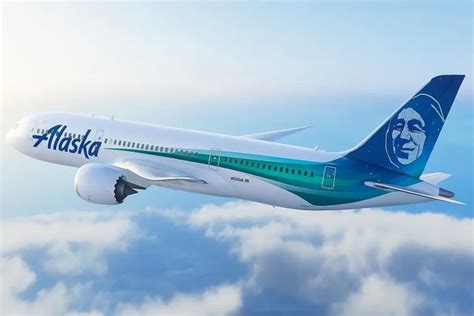
Alaska Airlines is no longer thinking small. With the confirmed order of five Boeing 787-10 Dreamliners, the Seattle-based carrier is quietly but decisively signaling a new phase in its evolution—from a dominant West Coast airline into a globally connected long-haul competitor. Seattle-Tacoma International Airport is the chessboard, the 787-10 is the queen, and the question now gripping the aviation world is simple: where could Alaska Airlines realistically fly this aircraft?
The answer lies at the intersection of range, demand, economics, and strategy. The 787-10 is not about flying farther than anyone else. It is about flying denser, smarter, and more profitably on routes that can sustain widebody capacity year-round.
Alaska already has a foothold in long-haul flying. Routes to Tokyo Narita and Seoul Incheon, operated via Hawaiian Airlines Airbus A330s, have quietly validated Seattle’s transpacific potential beyond Delta’s shadow. The upcoming launches of London Heathrow and Rome Fiumicino using the 787-9 mark the airline’s first fully branded leap into long-haul international service. The 787-10 now widens that runway.
Why the Boeing 787-10 Changes Alaska Airlines’ Strategy
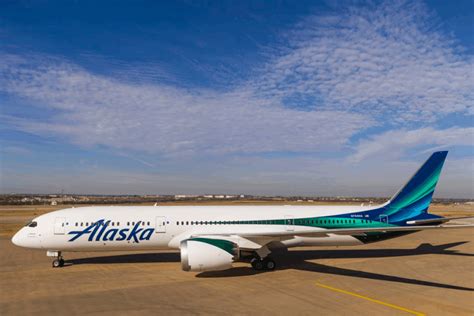
The Boeing 787-10 is the largest Dreamliner variant, optimized for high-demand long-haul routes under roughly 6,300 nautical miles. With seating potential approaching 330–336 passengers, it delivers superior per-seat economics compared to the 787-9, at the cost of reduced range.
That trade-off matters. Alaska is not chasing ultra-long-haul prestige routes. It is building a Seattle-centric hub model, feeding widebody flights with its powerful domestic network across the Pacific Northwest, California, Alaska, and the Mountain West. The 787-10 thrives in precisely this environment—routes with strong local demand, robust cargo flows, and alliance connectivity through oneworld partners.
The aircraft’s appeal is also operational. Commonality with the 787-9 simplifies pilot training, maintenance, and scheduling while allowing Alaska to right-size capacity by route and season.
Seattle as a Transpacific Powerhouse
Asia is where the 787-10 makes the most immediate sense. Seattle–Tokyo Narita and Seattle–Seoul Incheon already demonstrate consistent demand, and both sit comfortably within the 787-10’s performance envelope. Upsizing these routes from the A330 or 787-9 would allow Alaska to maximize yields during peak seasons while improving cargo capacity—an increasingly valuable revenue stream on Pacific routes.
Beyond Japan and South Korea, Southeast Asia emerges as a compelling next frontier. Manila, Bangkok, and Ho Chi Minh City align well with the 787-10’s range limits and offer a mix of VFR traffic, tourism demand, and cargo opportunities. Seattle’s growing Asian diaspora and tech-driven business ties strengthen the case further.
China presents a more complex picture. Shanghai and Hong Kong are technically viable from a range perspective, but geopolitical uncertainty and bilateral constraints make these longer-term bets rather than immediate launches.
Europe: Where Density Beats Distance
Across the Atlantic, the 787-10 is almost tailor-made for Europe’s busiest city pairs. London Heathrow, already announced with the 787-9, is the most obvious candidate for an upgrade. Heathrow’s slot constraints reward larger aircraft, and the route’s combination of business traffic, leisure demand, and cargo makes it an ideal 787-10 deployment.
Rome, by contrast, remains better suited to the smaller 787-9. Its seasonal nature and lower premium demand align with a more flexible capacity profile.
Other European cities quietly fit the 787-10’s strengths. Amsterdam, Paris, and Dublin offer strong oneworld connectivity and high year-round demand from the Pacific Northwest. Madrid adds Latin American connectivity through partners, while remaining well within operational limits.
Where the 787-10 Probably Won’t Fly
Not every long-haul dream fits the 787-10’s physics. Ultra-long routes such as Seattle–Delhi or deeper parts of Southeast Asia stretch the aircraft’s range margins, especially westbound against jet streams. These missions favor the 787-9, which Alaska already has in its fleet plan.
Similarly, thinner experimental markets are unlikely to see the -10. Alaska’s approach so far has been measured, data-driven, and capacity-disciplined. The 787-10 will be deployed where it can fly full, often, and profitably.
The Hawaiian Airlines Effect
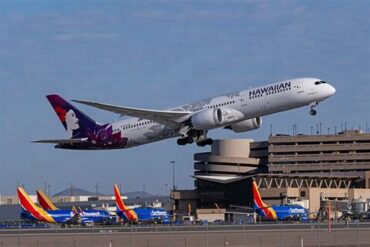
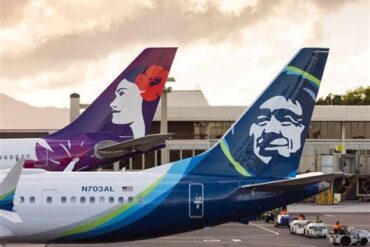
The acquisition of Hawaiian Airlines accelerated Alaska’s widebody timeline dramatically. Transferred 787-9s provided immediate operational experience, international crew pipelines, and long-haul credibility. The 787-10 builds directly on that foundation, allowing Alaska to scale up without reinventing its operation.
This synergy also strengthens Alaska’s ability to balance Pacific and Atlantic growth. While Hawaiian’s legacy focuses westward, Alaska’s Seattle hub now bridges both oceans—something few U.S. airlines outside the Big Three can claim.
A Calculated Global Expansion
The Boeing 787-10 is not about flashy route announcements. It is about consolidation, optimization, and dominance on core long-haul lanes. Expect Alaska Airlines to use the aircraft to deepen presence on proven routes before cautiously opening new ones that meet strict economic criteria.
Seattle’s geography, Alaska’s domestic feed, and the efficiency of the 787-10 together create a powerful equation. As additional Dreamliners arrive through the second half of the decade, Alaska Airlines is positioning itself not as a niche long-haul operator, but as a serious transpacific and transatlantic contender.
From Seattle to the world, the map is expanding—and the 787-10 is the pen drawing it.