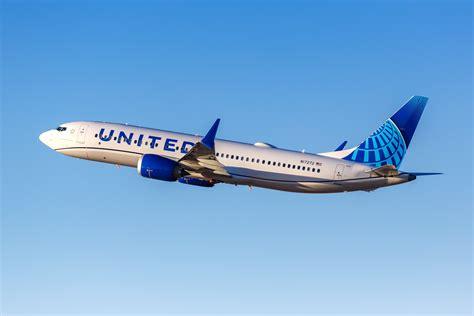
The Boeing 737 MAX has long been framed as a short-haul specialist—an aircraft built to shuttle passengers between dense domestic city pairs with relentless efficiency. Yet in 2026, United Airlines is pushing this narrowbody far beyond its stereotypical operating envelope. On select missions exceeding 3,000 miles, the MAX is no longer merely a regional workhorse; it becomes a strategic scalpel, carving long, thin routes that would be economically fragile with larger widebodies.
This operational evolution reflects a broader recalibration in airline network planning. Instead of relying solely on high-capacity aircraft to open international or leisure markets, United is deploying the MAX where demand is substantial but not voluminous. The result is a portfolio of routes that balance range capability, fuel efficiency, and right-sized capacity with remarkable precision.
By examining the airline’s eight longest Boeing 737 MAX sectors, a portrait emerges—one shaped by geography, seasonality, and the economics of modern narrowbody flight at the edge of its range performance.
A Modern Narrowbody Built for Range and Precision
The 737 MAX family represents one of the most commercially significant upgrades in Boeing’s single-aisle lineage. Built with advanced aerodynamics, next-generation CFM LEAP engines, and optimized winglets, the aircraft delivers lower fuel burn and extended range compared to earlier 737 variants.
For United Airlines, this translates into fleet simplification and mission flexibility. Older 737 Next Generation aircraft are gradually replaced by MAX jets capable of flying longer sectors without sacrificing cost efficiency. The aircraft feeds major hubs—including Newark, Houston, Washington Dulles, and San Francisco—before stretching outward to secondary long-haul markets.
Crucially, the MAX thrives in environments where frequency and cost discipline outweigh raw seat count. It can profitably operate routes that would struggle to fill a widebody while still offering passengers nonstop connectivity.
The Eight Longest United Airlines Boeing 737 MAX Routes
Cirium scheduling data reveals the eight longest MAX routes in United’s 2026 network, each exceeding the 3,000-mile threshold. Together, they illustrate how far the narrowbody has been pushed operationally.
- Newark (EWR) – Anchorage (ANC): 3,369 miles
- Washington Dulles (IAD) – Anchorage (ANC): 3,356 miles
- San Francisco (SFO) – Panama City (PTY): 3,320 miles
- Newark (EWR) – Santiago de Compostela (SCQ): 3,310 miles
- Houston (IAH) – Anchorage (ANC): 3,265 miles
- Newark (EWR) – Glasgow (GLA): 3,229 miles
- Newark (EWR) – Madeira (FNC): 3,178 miles
- San Francisco (SFO) – San José, Costa Rica (SJO): 3,039 miles
These sectors span domestic extremes, transatlantic leisure markets, and deep Latin American connections—demonstrating the MAX’s geographic versatility.

Anchorage: The Ultimate Domestic Range Test
Three of the eight longest routes converge on Ted Stevens Anchorage International Airport, underlining Alaska’s unique position in United’s network. Flights from Newark, Washington Dulles, and Houston all exceed 3,250 miles—distances that rival transcontinental and even transoceanic sectors.
Operating these missions with a narrowbody demands meticulous planning. Payload management, weather considerations, and fuel reserves all shape operational performance. Yet demand for Alaska—driven by tourism, seasonal labor flows, and cargo connectivity—makes these flights commercially attractive.
Anchorage routes reveal how the MAX enables long domestic flying that would otherwise require larger, costlier aircraft.
Transatlantic Narrowbody Expansion
Perhaps the most strategically revealing routes are those crossing the Atlantic. Newark to Glasgow, Santiago de Compostela, and Madeira represent classic “long-and-thin” markets—destinations with strong seasonal demand but limited year-round volume.
The economics are compelling. A widebody introduces excess seats and higher trip costs, raising financial risk. The MAX, by contrast, offers:
- Lower operating cost per trip
- Right-sized passenger capacity
- Nonstop viability on secondary city pairs
For travelers, this means direct access to destinations previously requiring connections through European megahubs.

Latin America: Long, Leisure-Driven Sectors
United’s West Coast hubs also push the MAX deep into Latin America. The San Francisco–Panama City and San Francisco–San José routes stretch the aircraft across equatorial and tropical corridors exceeding 3,000 miles.
These missions blend business and leisure demand. Panama City functions as a commercial gateway to Central and South America, while Costa Rica draws high-yield eco-tourism traffic.
Despite similar distances, operational patterns differ. San José sees high annual frequency, reflecting consistent demand. Panama City, by contrast, often appears seasonally—demonstrating how United flexes capacity in response to market cycles.
Frequency vs Distance: Understanding Utilization Strategy
Distance alone does not define network importance. Frequency reveals commercial confidence.
San José’s roughly 340 annual MAX flights make it the busiest among the longest routes. Glasgow also maintains steady service, with around 170 MAX operations scheduled.
Panama City tells a different story. MAX deployment there is concentrated in peak demand windows—particularly January—when leisure travel surges. Outside these periods, aircraft assignment may shift to better-performing markets.
This variability underscores the MAX’s role as a flexible network instrument rather than a fixed long-haul platform.
Network Experimentation and Route Volatility
Several of these long sectors are relatively new additions. That matters.
United is effectively running live experiments—testing demand elasticity, seasonal profitability, and competitive response. Narrowbody long-haul allows the airline to:
- Launch routes with lower financial exposure
- Adjust schedules quickly
- Pause underperforming services without major losses
This modular expansion strategy reflects post-pandemic planning realities, where airlines prioritize agility over sheer scale.
Economics at the Edge of Narrowbody Range
Flying a single-aisle jet over 3,000 miles is not trivial. Airlines must balance multiple performance variables:
Fuel reserves increase weight, reducing payload flexibility. Headwinds can extend flight time. Diversion planning becomes more complex over oceanic or remote regions.
Yet the MAX’s efficiency offsets many constraints. Its fuel burn advantage and aerodynamic refinements enable airlines to operate near-widebody distances at narrowbody cost levels—a powerful economic equation.
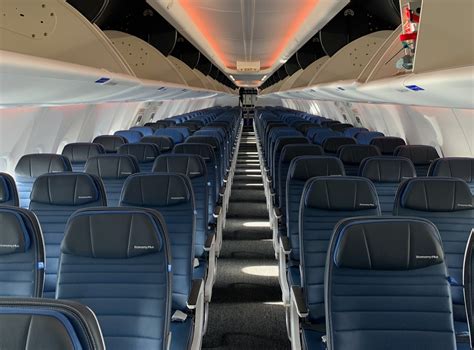
From a passenger perspective, cabin experience differs from widebody travel, but improved interiors, quieter engines, and modern inflight connectivity mitigate the gap.
Strategic Implications for United Airlines
United’s longest 737 MAX routes reveal a carrier leaning into precision network design. Rather than blanket markets with large aircraft, it deploys capacity surgically—matching supply with measured demand.
Anchorage flights showcase domestic endurance. Transatlantic services unlock secondary Europe. Latin American sectors reinforce West Coast connectivity. Frequency patterns reveal where confidence is highest and where experimentation continues.
Taken together, these missions transform the MAX from a short-haul shuttle into a long-range strategic enabler.
The broader implication is industry-wide. As narrowbody range continues to expand, airlines gain tools to redraw route maps—opening cities once considered economically unreachable without connections or widebody scale. The sky, as it turns out, grows larger not only through bigger aircraft, but through smarter deployment of smaller ones.