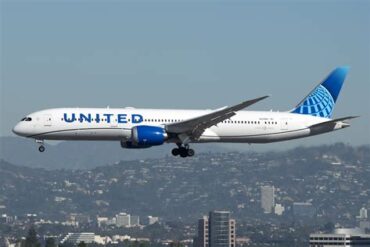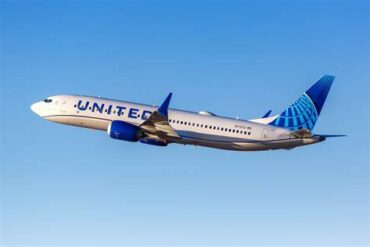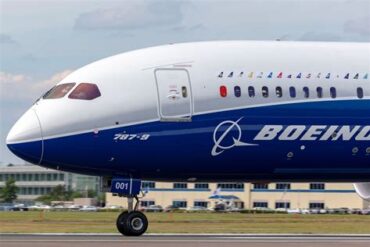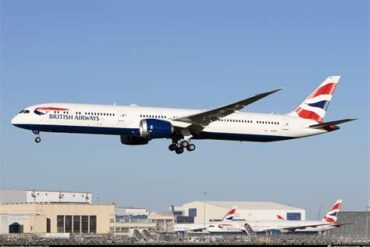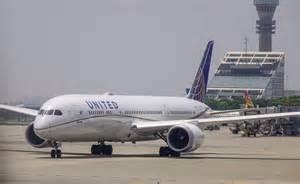
United Airlines has spent the last decade quietly building one of the most formidable ultra-long-haul networks in commercial aviation, and by 2026 that strategy crystallizes around a single aircraft type: the Boeing 787-9 Dreamliner. This variant, often overshadowed in headlines by the Airbus A350-1000 or experimental ultra-long-range projects, has become the practical workhorse of endurance flying. It is the aircraft United relies on when distances stretch beyond the comfortable margins of traditional long-haul operations and into the realm where route economics, crew endurance, payload limits, and premium demand must align with near-mathematical precision.
The 787-9 occupies a unique sweet spot. It has meaningfully more range and payload flexibility than the 787-8, without the range penalties imposed by the stretched 787-10. For United, that balance translates into routes exceeding 7,000 nautical miles that still make commercial sense. In 2026, these missions are not experimental novelties. They are core pillars of United’s international network, flown with confidence, consistency, and increasingly refined cabin products aimed at travelers who spend nearly a full day inside a single aircraft.
United’s dominance in this niche is no accident. With 221 Boeing 787s ordered, including 132 787-9s, the airline is the world’s largest Dreamliner customer and the largest operator of the 787-9 variant specifically. This scale allows United to plan routes others hesitate to touch, absorbing operational risk while leveraging advanced analytics, seasonal demand shifts, and hub geography to maximize aircraft utilization.
The Boeing 787-9 As United’s Ultra-Long-Haul Backbone
The modern era of ultra-long-haul flying is defined by efficiency rather than brute force. Older four-engine aircraft once conquered distance through redundancy and thrust. The 787-9 does it through aerodynamic refinement, composite structures, and engines optimized for long cruise efficiency. United’s entire active 787 fleet is powered by the GE GEnx-1B, an engine known for stable fuel burn over extended sectors and relatively predictable maintenance cycles, both critical for flights pushing 16 to 18 hours.
In operational terms, United’s 787-9 fleet is far more geographically flexible than its other Dreamliner variants. While the 787-8 is largely anchored to Chicago and Washington-Dulles, and the 787-10 is concentrated at Chicago and Newark, the 787-9 radiates outward from Denver, Houston, Los Angeles, Newark, San Francisco, and Washington-Dulles. This dispersion is not cosmetic. It allows United to connect secondary or nontraditional city pairs directly, bypassing the classic coastal-hub dependency that defines most U.S. international flying.
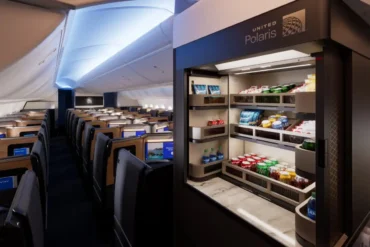
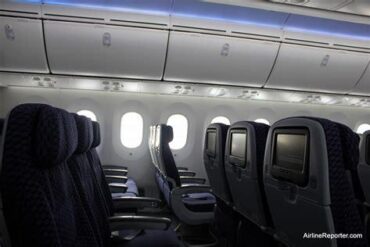
Cabin configuration plays an equally important role. United’s current 787-9 layout seats 257 passengers across Polaris business class, Premium Plus, and Economy, striking a balance between revenue density and comfort on extremely long sectors. Beginning with the next batch of deliveries, the new 78L configuration shifts that balance decisively toward premium demand, reducing total seats to 222 while significantly expanding Polaris and Premium Plus capacity. This is a clear signal: United expects its longest routes to be driven by high-yield traffic rather than sheer volume.
Houston To Sydney: United’s Longest Nonstop Route
United’s longest nonstop flight in 2026 is also one of the most unconventional. The route between Houston George Bush Intercontinental Airport and Sydney Kingsford Smith Airport spans approximately 7,470 nautical miles, placing it firmly among the longest regularly scheduled flights in the world. On paper, Houston seems like an unlikely gateway to Australia. In practice, it is a strategic masterstroke.
Houston is United’s strongest Latin American hub, with dense north-south connectivity that feeds traffic efficiently into a single daily Sydney departure. The route operates seasonally, aligning with northern-hemisphere winter when aircraft availability increases and demand patterns shift. Flight times are typically blocked at just over 17.5 hours, though actual airborne time often falls closer to 16.5 hours depending on winds.
What makes this route remarkable is not just its length, but its economics. By pairing strong premium demand with improved winter aircraft utilization, United transforms what would otherwise be idle long-haul capacity into a flagship intercontinental service. The 787-9’s range allows this mission without severe payload restrictions, a threshold that earlier aircraft simply could not cross consistently.
San Francisco To Singapore: A Year-Round Marathon
If Houston–Sydney is United’s boldest seasonal play, San Francisco to Singapore is its most relentless endurance test. Measuring roughly 7,340 nautical miles, this route operates year-round and regularly posts block times approaching 17 hours and 40 minutes, making it one of the longest scheduled flights on Earth by time rather than distance.
San Francisco’s geographic advantage as the closest major U.S. hub to Asia makes this route viable, but viability does not mean simplicity. Weather patterns over the Pacific, congestion in Southeast Asian airspace, and crew duty limitations all conspire to make consistency a challenge. The 787-9’s operational reliability and lower fatigue-inducing cabin environment, including higher humidity and lower cabin altitude, become more than marketing features on flights of this duration.
From a network perspective, this route cements United’s presence in Southeast Asia without relying on intermediate stops or fifth-freedom segments. It is a statement of intent: nonstop connectivity, even when the margins are thin and the operational demands are extreme.
San Francisco To Adelaide: Precision Over Scale
United’s third-longest 787-9 route is also one of its most intriguing. Launched in December 2025, San Francisco to Adelaide spans approximately 7,051 nautical miles and operates seasonally, typically three times per week. Adelaide is not a mega-hub. It lacks direct European connections and does not command the name recognition of Sydney or Melbourne. That is precisely why the route works.
This service targets premium leisure travelers seeking direct access to South Australia’s wine regions, festivals, and coastal destinations. It also benefits from local airport incentives and a deliberate scarcity model, where limited frequencies support higher yields. The 787-9’s right-sized capacity ensures the route remains profitable without requiring mass-market demand.
Adelaide becomes United’s fourth Australian destination, reinforcing the airline’s strategy of depth over breadth. Rather than saturating a single city with multiple daily flights, United spreads its presence across distinct markets, each tailored to specific demand profiles.
South Africa: Altitude, Heat, And Endurance
Ultra-long-haul flying is not only about distance. It is also about conditions, and nowhere is that clearer than United’s Boeing 787-9 routes to South Africa. Flights to Johannesburg and Cape Town routinely exceed 6,800 nautical miles, placing them among the airline’s longest missions even before environmental factors are considered.
Johannesburg’s 5,558-foot elevation introduces unique challenges. High altitude reduces engine thrust and wing lift, particularly during hot daytime conditions. United mitigates these constraints by scheduling nighttime departures, when temperatures drop and performance margins improve. The Newark–Johannesburg route, launched in 2021, measures approximately 6,943 nautical miles and operates up to daily year-round.

Cape Town adds another layer of complexity. United serves the city from Newark and Washington-Dulles, with distances ranging from 6,793 to 6,886 nautical miles. These routes demonstrate the 787-9’s ability to replace larger aircraft such as the 777-200ER while offering superior fuel efficiency and lower trip costs. In an era of volatile fuel prices, that efficiency is not optional. It is decisive.
Australia And Oceania: The Dreamliner Advantage
United’s dominance across the Pacific is anchored by San Francisco, its strongest transpacific hub and the mainland U.S. city with the highest sustained demand for Asia-Pacific travel. While United still deploys the Boeing 777 extensively from San Francisco, the 787-9 increasingly handles the longest and most specialized routes, particularly to Australia and New Zealand.
Beyond Houston–Sydney and San Francisco–Adelaide, the 787-9 operates Los Angeles to Melbourne, San Francisco to Melbourne, and Los Angeles to Sydney, with distances clustering between 6,800 and 6,900 nautical miles. Los Angeles, notably, relies exclusively on the 787 family for long-haul flying, making the 787-9 the backbone of its Australian services.
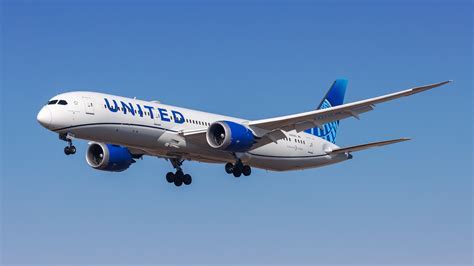
This deployment strategy reflects a nuanced understanding of hub economics. San Francisco absorbs higher-density demand and supports larger aircraft, while Los Angeles leverages the 787-9’s flexibility to sustain long routes with balanced premium and leisure traffic.
Asia From Newark: Stretching The Atlantic-Pacific Divide
While San Francisco dominates United’s Asia strategy, Newark Liberty International Airport plays a unique role. From Newark, the 787-9 bridges the gap between the U.S. East Coast and Asia, operating routes that push the aircraft’s range without the geographic advantage of a West Coast departure.
The longest of these is Newark to Delhi, measuring approximately 6,364 nautical miles. This route underscores the 787-9’s versatility, connecting two global business centers nonstop while bypassing traditional European gateways. Newark also supports 787-9 flights to Seoul, Tokyo-Haneda, and Tokyo-Narita, each approaching or exceeding 5,800 nautical miles.
These services are strategically significant. They allow United to maintain a competitive presence in Asia from its Atlantic hub, feeding premium traffic from across the northeastern United States into nonstop long-haul flights that would be impractical with larger, less efficient aircraft.
Why The 787-9 Wins The Long Game
The common thread across United’s longest routes is not ambition alone, but discipline. The 787-9 succeeds because it aligns range, capacity, and economics in a way few other aircraft can. It enables routes that are long enough to command premium fares, yet efficient enough to withstand seasonal swings and fuel price volatility.
By 2026, United is no longer experimenting with ultra-long-haul flying. It is executing a mature strategy built on data, fleet commonality, and a deep understanding of global demand patterns. The 787-9 is not merely a tool in that strategy. It is the foundation.
As airlines worldwide grapple with the realities of long-distance flying in a cost-sensitive, sustainability-focused era, United’s 787-9 network stands as a case study in how to push the boundaries of distance without pushing the boundaries of viability.