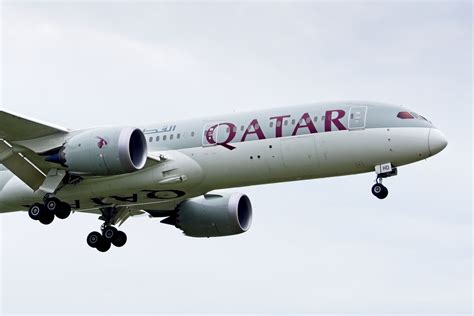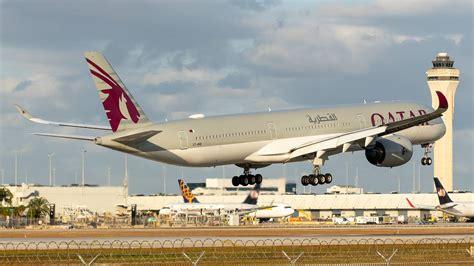
Qatar Airways continues to shape the global aviation landscape with its advanced fleet strategy and commitment to excellence. In 2025, one of the key players in its long-haul operations is the Boeing 787-9 Dreamliner, a state-of-the-art aircraft recognized for its efficiency, passenger comfort, and remarkable range. With a growing network spanning six continents, Qatar Airways has meticulously deployed the 787-9 on some of its longest and most critical nonstop routes, optimizing operational costs while maintaining its world-class service standards.
The Role of the Boeing 787-9 in Qatar Airways’ Strategic Fleet
The Boeing 787-9 Dreamliner serves as a cornerstone of Qatar Airways’ modern fleet, offering an ideal blend of range and fuel efficiency. With a range capability of 7,565 nautical miles (14,010 kilometers) and a seating capacity of 311 passengers—including 30 in business class and 281 in economy—the aircraft is perfectly suited for long-haul routes with medium-to-high demand.
Qatar Airways operates 23 Boeing 787-9 aircraft as of 2025, strategically deploying them across global routes that demand operational flexibility. This is made possible through dynamic fleet management, which allows Qatar Airways to interchange the 787-9 with its smaller sibling, the 787-8, based on demand and operational requirements.
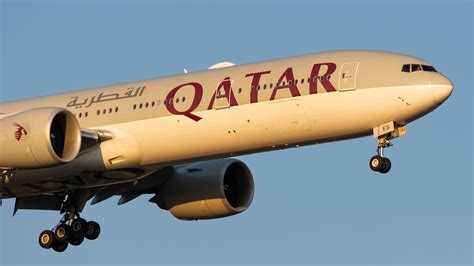
Qatar Airways’ Top 10 Longest Nonstop 787-9 Routes in 2025
The utilization of the Boeing 787-9 on Qatar Airways’ longest routes illustrates the aircraft’s significance in connecting Doha with key global cities. These long-range missions are not only a test of the aircraft’s endurance but also a reflection of Qatar Airways’ robust international strategy.
1. Doha (DOH) to Johannesburg (JNB), South Africa
The longest nonstop 787-9 route in 2025 is the journey to Johannesburg, covering 3,864 miles (6,218 kilometers). This crucial link connects the Middle East with Southern Africa, supporting both business and tourism sectors while tapping into a steadily growing market.
2. Doha (DOH) to Ho Chi Minh City (SGN), Vietnam
With a distance of 3,729 miles (6,001 kilometers), the route to Ho Chi Minh City represents a vital connection between Qatar and Southeast Asia. This corridor caters to high business travel demand and strong diaspora movement, making it a prime candidate for 787-9 deployment.
3. Doha (DOH) to Dublin (DUB), Ireland
The flight to Dublin, spanning 3,527 miles (5,576 kilometers), further cements Qatar Airways’ position in the competitive trans-European market. It offers an essential link between Ireland and the Middle East, with further connections to Asia and Oceania via Doha.
4. Doha (DOH) to Edinburgh (EDI), Scotland
Covering 3,450 miles (5,552 kilometers), the Edinburgh route serves both leisure and corporate travelers. As Scotland’s gateway to the Middle East and beyond, the 787-9 brings enhanced comfort to a market once limited by narrowbody aircraft.
5. Doha (DOH) to Lagos (LOS), Nigeria
The flight to Lagos, Nigeria’s economic powerhouse, covers 3,436 miles (5,529 kilometers). This route supports a diverse traveler profile—ranging from oil and gas executives to diaspora communities—and is an important bridge between West Africa and the Gulf.
6. Doha (DOH) to Hanoi (HAN), Vietnam
Hanoi, the Vietnamese capital, lies 3,435 miles (5,528 kilometers) from Doha. The city’s growing middle class and increasing international business connections make this an ideal market for 787-9 operations.
7. Doha (DOH) to Manchester (MAN), England
This 3,365-mile (5,415-kilometer) route plays a vital role in linking Northern England with global markets via Doha. Business traffic, student flows, and VFR (visiting friends and relatives) passengers underpin the route’s demand structure.
8. Doha (DOH) to Madrid (MAD), Spain
The capital of Spain lies 3,317 miles (5,338 kilometers) away from Doha. As a leisure-heavy route with strong year-round demand, deploying the 787-9 provides Qatar Airways the range and capacity flexibility it needs.
9. Doha (DOH) to Bangkok (BKK), Thailand
Bangkok is one of the most popular destinations in Southeast Asia. The 3,284-mile (5,285-kilometer) route is a high-volume corridor, and while it also sees larger aircraft like the Airbus A350, the 787-9 frequently appears during shoulder seasons and off-peak periods.
10. Doha (DOH) to London Gatwick (LGW), England
The London Gatwick service, at 3,244 miles (5,220 kilometers), complements Qatar Airways’ multiple London-area services. The 787-9 provides a cost-efficient way to meet competitive pressures in a market shared with other Gulf carriers.
Dynamic Fleet Management and Operational Flexibility
Qatar Airways excels in dynamic fleet management, where operational agility meets technical excellence. The interchangeability between the 787-8 and 787-9 subtypes enables Qatar Airways to respond swiftly to fluctuations in passenger demand without incurring major cost penalties.
The operational commonality of the 787 variants allows for:
- Cross-crew utilization, reducing pilot reassignment costs.
- Unified maintenance schedules, streamlining engineering workflows.
- Consistent passenger experience, preserving brand standards.
This agile deployment strategy reduces the complexity associated with other aircraft families—such as swapping between a Boeing 787 and an Airbus A350—and enables Qatar Airways to maintain high levels of service consistency.
Passenger Comfort on the 787-9 Dreamliner
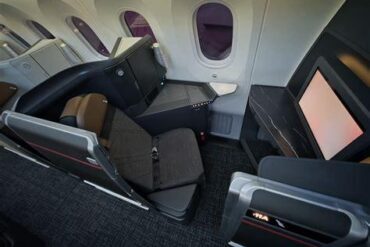
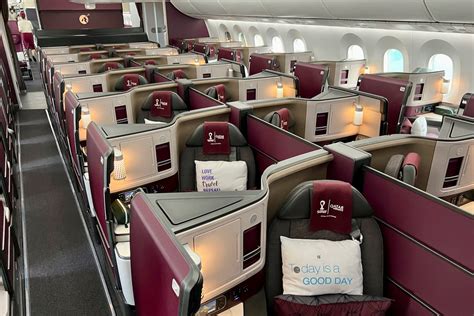
While the Qsuite—Qatar Airways’ flagship business class product—is not featured on the 787-9, the onboard offering remains exemplary. Business class seats recline into full-flat beds with generous pitch and privacy, while economy passengers benefit from ergonomic seating, ambient lighting, and large windows for a calmer flying experience.
Each seat is equipped with a high-definition in-flight entertainment system, mood lighting tailored to reduce jetlag, and a modern cabin pressurization system. These features contribute to one of the most comfortable long-haul experiences available on any airline today.
Growth of the Dreamliner Fleet and Future Outlook
Qatar Airways is not slowing down its Dreamliner expansion. As of 2025, the airline operates 56 Boeing 787s—split between 32 787-8s and 23 787-9s. However, its recent order of over 130 additional Boeing 787s—including the larger 787-10—signals a strategic pivot toward long-range flexibility and efficiency.
This expansion aligns with broader fleet modernization efforts and global growth strategies. The 787-10 will introduce a new dimension to Qatar Airways’ route planning, providing higher capacity with similar range performance for trunk routes with dense demand profiles.
In conjunction with phasing out older A330s and refining its widebody roster, Qatar Airways is future-proofing its long-haul strategy with a unified, efficient, and flexible fleet.
Doha as a Global Superhub
No discussion of Qatar Airways’ route strategy is complete without highlighting Doha’s Hamad International Airport (DOH). Recognized globally for its architecture and passenger amenities, the airport acts as the nexus of the airline’s global network.
In 2025, Doha continues to hold titles such as:
- Best Airport in the Middle East (11 consecutive years)
- World’s Best Airport Shopping
- Previous winner of World’s Best Airport
Its design prioritizes seamless connectivity, minimizing layover times, and enhancing the premium travel experience, whether flying in economy or business.
Conclusion: The 787-9’s Critical Role in Qatar Airways’ Global Strategy
Qatar Airways’ deployment of the Boeing 787-9 Dreamliner on its longest nonstop routes underscores the airline’s commitment to combining efficiency, comfort, and global reach. From connecting economic hubs in Africa and Asia to serving key European capitals, the 787-9 enables Qatar Airways to operate at optimal load factors with minimal cost inefficiencies.
As the Dreamliner fleet expands and evolves with the addition of the 787-10, the airline’s ability to match aircraft to market dynamics will only improve. Supported by Doha’s world-class hub and the airline’s Skytrax-winning service, Qatar Airways remains firmly positioned as a leader in premium long-haul travel for years to come.