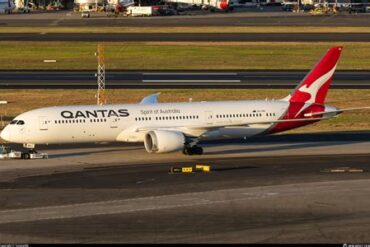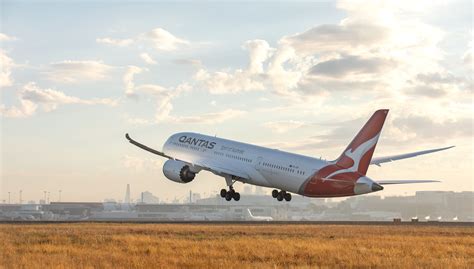
Qantas continues to redefine ultra-long-haul travel in 2025 with its strategic deployment of the Boeing 787-9 Dreamliner—an aircraft that now sits at the heart of its global network strategy. Designed for efficiency, passenger comfort, and long-range flexibility, the Dreamliner allows the Australian flag carrier to bridge distant markets with nonstop service, all while keeping operational risk and cost tightly managed.
The Strategic Importance of Long-Haul Operations in Qantas’ Global Network
Australia’s geographic isolation makes long-haul flying a necessity rather than a luxury. Qantas has developed its international network around a few primary gateways—Sydney, Melbourne, and Perth—each playing a unique role. Sydney and Melbourne act as the airline’s major intercontinental hubs, while Perth serves as the critical Western outpost, enabling efficient routing into Europe.
Unlike sprawling hub-and-spoke models used by Gulf carriers, Qantas opts for a more selective and pragmatic approach: fewer city pairs, higher frequency on proven routes, and a sharp focus on premium demand and alliance connectivity. Qantas leverages the Dreamliner’s range and capacity sweet spot to unlock direct access to global cities without needing to flood the market with unnecessary seat supply.
The Boeing 787-9 Dreamliner: Backbone of Long, Thin Routes
The Boeing 787-9 was engineered to offer incredible stage length with high fuel efficiency and superior passenger experience. Qantas configures its 787-9s with 236 seats across Business, Premium Economy, and Economy, making it ideal for premium-heavy routes that lack the volume for larger aircraft like the Airbus A380. Its high-bypass turbofan engines, ETOPS certification, and composite airframe all contribute to cost-efficient, ultra-long-haul operations.
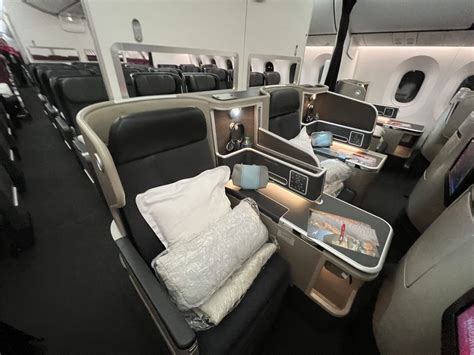
Inside the cabin, passengers enjoy larger windows, lower cabin altitude, quieter engines, and improved air quality. These features are especially important on flights exceeding 15 hours, where comfort can make or break a traveler’s experience.
Route Analysis: Qantas’ Top Five Longest Dreamliner Flights in 2025
Our in-depth analysis of 2025 schedule data reveals five primary city pairs where Qantas deploys the 787-9 Dreamliner on its longest routes. These routes don’t just break records—they also underscore the careful precision with which Qantas aligns aircraft type to route economics.
1. Perth (PER) – London Heathrow (LHR)
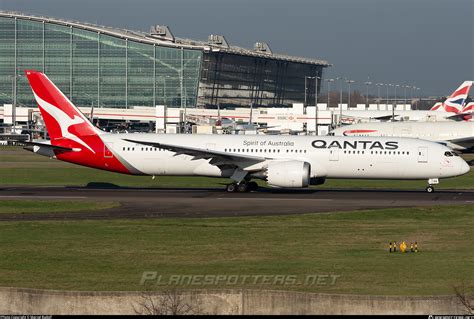
At 8,988 miles (14,465 km), this is the crown jewel of Qantas’ long-haul network. Operating 62 times per month, it is both the longest and busiest Dreamliner route. London remains a vital business and tourism link, and this nonstop option shaves hours off the traditional Kangaroo Route via Asia or the Middle East.
2. Dallas/Fort Worth (DFW) – Melbourne (MEL)
Only 15 miles shorter than the PER-LHR route, this 8,973-mile (14,441 km) flight is a testament to Qantas’ strong alliance ties with American Airlines. It provides deep connectivity into the central and eastern U.S., offering 48 flights per month and catering to premium and corporate traffic.
3. Paris Charles de Gaulle (CDG) – Perth (PER)
This newer entrant to Qantas’ ultra-long-haul portfolio reflects growing demand between Europe and Western Australia. At 8,847 miles (14,238 km) and 27 monthly flights, it complements the London service and leverages France’s growing outbound tourism interest in Australia.
4. Auckland (AKL) – New York John F. Kennedy (JFK)
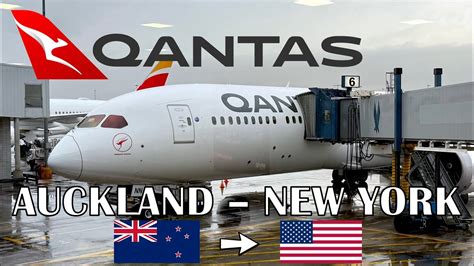
Technically operated by Qantas’ joint venture partner, Air New Zealand, this 8,813-mile route is also served in part by Qantas’ own metal through code-shared capacity and interline traffic. It exemplifies Australasia’s east coast ambitions to connect directly with the U.S. East Coast.
5. Dallas/Fort Worth (DFW) – Sydney (SYD)
At 8,569 miles (13,790 km), this route rounds out the top five and supports transpacific business and leisure demand, as well as important cargo operations. Qantas operates this flight around 30 times per month, maintaining essential connectivity between Texas and Australia’s largest city.
Beyond the Top Five: Other Notable Long-Haul Routes
While the marquee ultra-long routes grab headlines, Qantas operates several other important long-distance Dreamliner services. These include:
- Los Angeles (LAX) – Melbourne (MEL): ~7,920 miles, running 46 times monthly.
- Sydney (SYD) – Santiago (SCL): ~7,061 miles, offering direct South America access.
- Perth (PER) – Sydney (SYD): ~2,041 miles, a shorter hop primarily used for aircraft repositioning and connectivity.
These routes reflect how Qantas maximizes Dreamliner utility, not just for ultra-long-hauls but also for intra-network flexibility. This broad deployment highlights the aircraft’s exceptional versatility.
Operational Realities: What Makes These Routes Work
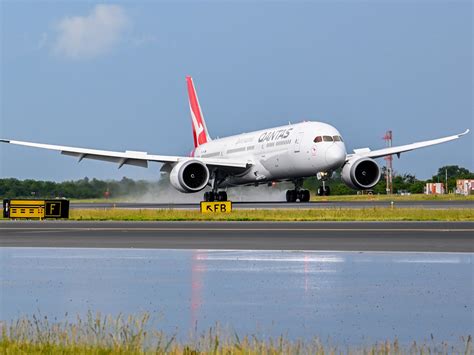
Ultra-long-haul flights introduce an intricate web of operational challenges. These include headwinds, ETOPS requirements, fuel margins, crew rotation limitations, and maintenance scheduling. The 787-9’s advanced systems help mitigate these pressures, but each flight must still be carefully balanced for fuel, payload, and cargo.
Moreover, these flights cater heavily to premium traffic. With business and premium economy cabins offering higher margins, profitability is less about seat count and more about yield per available seat mile (YASM). On a 17-hour flight, a single unsold business class seat can have a disproportionate impact on revenue.
These routes also benefit from strategic time-slot alignment. Arrivals in the U.S. and Europe are often timed to sync with onward banked departures, ensuring Qantas customers can connect seamlessly through major partner hubs like Heathrow, DFW, and LAX.
Why the 787-9 Works So Well for Qantas
Qantas has intentionally kept its Dreamliner fleet focused on long, thin routes with high yields, avoiding the temptation to use it for regional overcapacity. The result is an aircraft that is used surgically, not generically. The 787-9 makes Perth–London viable. It makes DFW–Melbourne profitable. It opens up Paris and New York in ways that would be operationally or economically unfeasible with older aircraft.
Its cabin features are tailored for journeys where comfort translates directly into brand loyalty. Business travelers value the lie-flat seats, while leisure passengers appreciate the better humidity and air pressure. This makes the 787-9 not just a tool of logistics, but one of customer retention.
Looking Ahead: The Future Beyond 2025
Qantas is not standing still. Its ambitious Project Sunrise initiative is set to take flight, aiming to connect Sydney directly with London and New York nonstop. These routes will push past even the current longest 787-9 flights, likely requiring the Airbus A350-1000ULR—but the operational knowledge gained from the Dreamliner network will be key in this transition.
In the meantime, the 787-9 continues to support Qantas’ global aspirations, especially as demand returns and premium traffic stabilizes post-pandemic. The aircraft will remain essential for markets where daily frequency is viable but requires a precise balance of cost, demand, and network alignment.
Final Thoughts: A Perfect Fit Between Aircraft and Ambition
Qantas’ deployment of the Boeing 787-9 Dreamliner is not just a matter of fleet logistics—it is a masterclass in aligning aeronautical engineering with commercial vision. The aircraft’s capabilities map directly to Australia’s geographical challenges, providing a lifeline to Europe, North America, and South America with unparalleled efficiency.
As we look deeper into Qantas’ 2025 network, it becomes clear that the airline has optimized every nautical mile, ensuring that each ultra-long-haul sector delivers on profitability, reliability, and passenger experience. With routes as long as Perth–London and as operationally demanding as Dallas–Melbourne, the 787-9 is not merely an aircraft—it is a strategic enabler of Qantas’ global presence.
In a world increasingly connected by direct, nonstop services, Qantas and the Dreamliner are charting the course forward, one long-haul at a time.