American Airlines continues to push the boundaries of global connectivity, operating some of the most impressive ultra-long-haul flights in commercial aviation. In Q1 2026, the carrier’s network includes ten of its longest-distance flights, many surpassing the 7,000-mile mark and clocking in at over 15 hours of continuous flight time. These routes are not just logistical feats—they’re strategic links between the United States and high-demand international markets, particularly in the Asia-Pacific region.
The Rise of Ultra-Long-Haul Routes in American’s Global Strategy
The evolution of aircraft technology—especially the capabilities of the Boeing 787-9 Dreamliner and Boeing 777-300ER—has empowered American Airlines to explore markets once considered unreachable. The airline has embraced this capability, solidifying its place in the global ultra-long-haul segment. At the forefront of this expansion is the airline’s new Dallas/Fort Worth to Brisbane route, launched in October 2024.
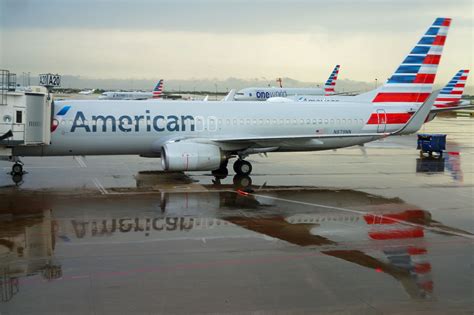
This 8,299-mile journey has earned the title of American’s longest route to date. Operating once daily during the Northern Hemisphere winter, it serves as the airline’s second connection to Australia, highlighting the growing U.S.-Australia travel corridor. Brisbane’s addition follows the success of the Los Angeles to Sydney route, which American operates year-round with a Boeing 777-300ER.
Strategic Connectivity with the Asia-Pacific Region
While Australia plays a key role in American’s long-haul focus, the Asia-Pacific region is equally crucial. The carrier’s seasonal Dallas/Fort Worth to Auckland service at 7,439 miles underlines American’s commitment to the New Zealand market, another vital leisure and business destination.
Meanwhile, American’s Dallas/Fort Worth to Shanghai and New York JFK to Delhi routes demonstrate the airline’s intent to maintain strong East Asian and South Asian connections. Both routes are operated daily with the Boeing 787-9, providing vital links between U.S. economic hubs and major global cities.

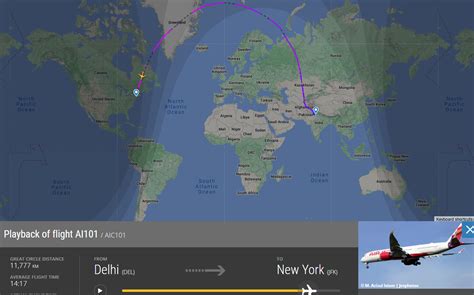
In the case of Delhi, the route from New York JFK spans 7,317 miles and caters to the ever-growing demand for transcontinental VFR (visiting friends and relatives) traffic as well as increasing business travel. Shanghai, still a top global financial hub despite geopolitical complexity, remains a core component of American’s Asia strategy.
Australia Drives a Resurgence in Transpacific Demand
Australia has emerged as a major growth driver for ultra-long-haul travel. Following the pandemic, travel demand between the U.S. and Australia rebounded faster than many other markets. By 2024, over 711,000 short-term U.S. travelers arrived in Australia, making it the country’s third-largest international visitor source.
American Airlines capitalized on this trend by not only expanding Brisbane access but also launching additional services like Los Angeles to Brisbane, a three-times-weekly route that adds further strength to its Pacific offering. Though less frequent than others, this service still covers 7,161 miles and remains a critical seasonal addition to American’s portfolio.
American Airlines’ Complete Top 10 Longest Routes: Q1 2026 Overview
Let’s explore American’s ten longest scheduled routes for Q1 2026. These span across Asia, Oceania, and the Middle East, representing a wide geographical footprint:
| Rank | Route | Distance miles | Frequency | Aircraft |
|---|---|---|---|---|
| 1 | Dallas/Fort Worth to Brisbane | 8,299 | Daily | Boeing 787-9 |
| 2 | Los Angeles to Sydney | 7,487 | Year-round | Boeing 777-300ER |
| 3 | Dallas/Fort Worth to Auckland | 7,439 | Daily seasonal | Boeing 787-9 |
| 4 | Dallas/Fort Worth to Shanghai | 7,351 | Year-round | Boeing 787-9 |
| 5 | New York JFK to Delhi | 7,317 | Year-round | Boeing 787-9 |
| 6 | Los Angeles to Brisbane | 7,161 | Three times weekly | Boeing 787-9 |
| 7 | Dallas/Fort Worth to Seoul Incheon | 6,842 | Year-round | Boeing 777-200ER |
| 8 | Philadelphia to Doha | 6,798 | Year-round | Boeing 787-9 |
| 9 | New York JFK to Tokyo Haneda | 6,773 | Year-round | Boeing 787-9 |
| 10 | Los Angeles to Auckland | 6,504 | Daily seasonal until March 3 | Boeing 777-200ER |
Each of these routes is meticulously timed and engineered to capture seasonal trends, business cycles, and shifting passenger flows, leveraging American’s deep domestic network to feed into these high-yield international flights.
How American Stacks Up Against United and Delta
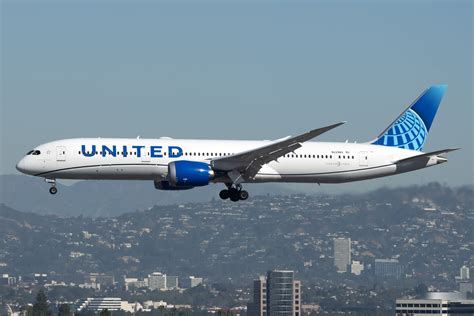
Despite American’s impressive global reach, United Airlines continues to lead the U.S. market in terms of distance. Its Houston to Sydney service spans 8,587 miles, currently the longest route operated by a U.S. carrier. United has also doubled down on its Pacific presence with the San Francisco to Singapore and Adelaide services, the latter debuting in December 2025.
Delta, meanwhile, has carved its long-haul niche through Africa and Oceania. Its Atlanta to Johannesburg and Atlanta to Cape Town routes exceed 8,000 miles, and it continues to bolster its LAX–Australia portfolio. Notably, Delta launched Los Angeles to Brisbane flights in 2024, matching American’s transpacific ambitions.
Nonetheless, American Airlines remains competitive with a focused and diversified strategy, combining Pacific, South Asian, and Middle Eastern markets. The inclusion of Philadelphia–Doha and JFK–Tokyo Haneda illustrates its broader ambition to connect east and west hemispheres through strategic partnerships and hub optimization.
Aircraft Efficiency and Operational Complexity
Operating ultra-long-haul flights requires precision in fleet planning, fuel efficiency, and crew management. American Airlines’ reliance on the Boeing 787-9 for the majority of its longest flights is no coincidence. The Dreamliner’s range, fuel economy, and lower cabin altitude make it ideal for these 13+ hour missions.
Routes like DFW–Brisbane and JFK–Delhi also showcase the airline’s ability to manage complex international operations, including ETOPS (Extended-range Twin-engine Operational Performance Standards) compliance, weather routing, and optimized takeoff/landing slots.
Moreover, American’s long-haul scheduling is tailored for seamless intercontinental transfers. Flights often depart late evening and arrive in the early morning or mid-morning local time, minimizing layovers and enhancing traveler convenience. This timing alignment is critical for maintaining customer loyalty and operational efficiency across time zones.
Looking Ahead: A Continued Push for Global Reach
As Q1 2026 unfolds, American Airlines’ top ten longest routes are more than mileage statistics—they represent a deliberate push to expand international presence, grow transpacific and trans-Eurasian capacity, and meet the surge in demand for premium long-haul travel. Whether it’s tapping into the U.S.–Australia boom, sustaining critical Asia links, or leveraging global alliances to reach the Middle East, the airline is well-positioned to play a central role in shaping the next chapter of global air travel.
While it may not yet surpass United in terms of longest single-route distance, American’s multi-pronged, strategic approach continues to deliver competitive and expansive connectivity—especially in the Pacific Rim and Indo-Pacific corridors, which are set to drive international growth for years to come.