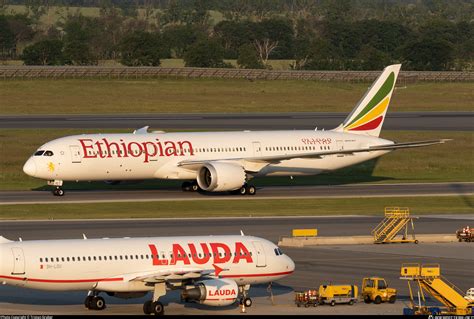
Ethiopian Airlines continues to strengthen its position as Africa’s dominant airline, and nowhere is that ambition more visible than in its ultra-long-haul network. As the continent’s largest carrier by both flights and seat capacity, the Star Alliance member has built a global operation that connects Africa with North America, South America, Asia, and Europe through its strategic hub at Addis Ababa Bole International Airport (ADD).
For the 2026 scheduling season, Ethiopian Airlines is operating some of the longest passenger services in its history. Several routes approach or exceed 18 hours of block time, highlighting both the geographical reach of the carrier and the operational challenges of serving distant destinations from one of the world’s highest major airports. These flights are not always nonstop. Many include carefully planned intermediate stops that allow the airline to maximize payload, improve economics, secure additional traffic rights, and connect passengers from multiple African markets.
The result is a fascinating network that blends technical stopovers, fifth-freedom opportunities, and long-range aircraft deployment. From Washington Dulles to Buenos Aires and Tokyo, Ethiopian Airlines has created a system that extends far beyond Africa while maintaining Addis Ababa as its central connecting point.
The carrier’s growing long-haul strategy demonstrates how African airlines can compete on a global scale while serving markets often overlooked by larger European, Gulf, or North American competitors.
Why Ethiopian Airlines Uses One-Stop Ultra-Long Routes
Unlike airlines operating from sea-level airports, Ethiopian Airlines faces a unique challenge. Addis Ababa sits at an elevation of more than 7,600 feet above sea level, making it one of the highest major international airports in the world. High-altitude operations reduce aircraft performance, particularly on heavily loaded long-haul departures.
As a result, certain routes require intermediate stops that enable aircraft to refuel, optimize payload, and continue to distant destinations more efficiently. These stops are not merely technical necessities. Many also provide significant commercial advantages.
Several routes utilize fifth-freedom traffic rights, allowing Ethiopian Airlines to carry passengers between foreign countries outside Ethiopia. This creates additional revenue opportunities while strengthening connectivity across Africa and beyond. Cities such as Lomé, Abidjan, and São Paulo have become important components of the airline’s global network strategy.
The airline’s future plans may eventually reduce reliance on some technical stops. Ethiopia’s planned new airport project is expected to provide enhanced operational capabilities, potentially enabling more nonstop long-haul services in both directions.
Washington Dulles Via Lomé Becomes The Longest Route
The airline’s longest scheduled passenger service in 2026 is the route between Addis Ababa and Washington Dulles International Airport, operating via Lomé–Tokoin International Airport in Togo.
With a maximum scheduled block time of 18 hours and 30 minutes, this service stands at the top of Ethiopian Airlines’ network. Operated three times weekly using the Boeing 787-8, the flight serves a dual purpose. Beyond connecting Ethiopia with the United States capital region, it also integrates the network of regional partner ASKY Airlines, which is based in Lomé.
This arrangement allows travelers from multiple West and Central African cities to access Washington without backtracking through Addis Ababa. Booking trends indicate particularly strong demand from major Anglophone markets including Accra and Lagos, making the stop strategically valuable rather than simply operationally necessary.
The 18-Hour Routes Dominating Ethiopian’s U.S. Network
The next group of routes all reach a maximum scheduled block time of approximately 18 hours, reinforcing the importance of the United States within Ethiopian Airlines’ long-haul portfolio.
The Addis Ababa–Chicago O’Hare service via Rome Fiumicino ranks among the airline’s longest operations. Typically operated with the Boeing 787-8, the route uses Rome primarily as a technical stop while returning nonstop to Ethiopia. This configuration allows the airline to maintain operational efficiency despite the limitations imposed by Addis Ababa’s altitude.
Another major service links Addis Ababa with New York JFK through Abidjan, utilizing fifth-freedom rights. This route combines African regional connectivity with strong transatlantic demand, creating a unique passenger flow that few airlines can replicate.
Meanwhile, Ethiopian’s service to Atlanta via Rome remains one of the most interesting routes in the network. Despite historically weak load factors compared with other U.S. destinations, the carrier resumed Atlanta operations earlier than anticipated after a temporary suspension. The route highlights Ethiopian’s commitment to maintaining a broad U.S. presence even in challenging markets.
The airline’s connection to Newark Liberty International Airport via Lomé rounds out this group of ultra-long-haul services. Like the Washington operation, it leverages regional African feed traffic and fifth-freedom opportunities to strengthen profitability and market reach.
New York Receives Additional Long-Haul Capacity
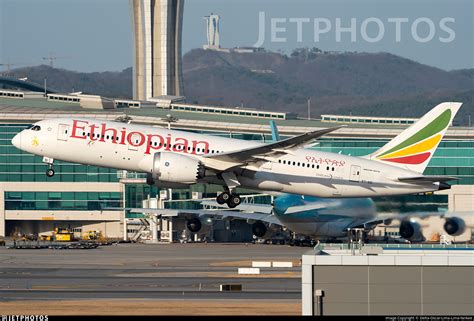
New York emerges as one of Ethiopian Airlines’ most important long-haul markets in 2026. Beyond the existing service through Abidjan, the airline is introducing another JFK operation routed through Lomé.
This flight reaches a maximum block time of 17 hours and 55 minutes, making it the sixth-longest service in the network. Beginning in December and operating four times weekly with the Boeing 787-8, the route effectively doubles Ethiopian’s flexibility in serving New York.
The scheduling adjustment is particularly notable because the Addis Ababa–Lomé–Newark operation will not operate during part of the winter season. Instead, aircraft capacity will shift toward JFK, providing the airport with as many as eight weekly Ethiopian Airlines frequencies through two separate routings.
The move reflects the strength of New York’s demand profile and its role as a key gateway for African diaspora traffic, business travelers, and connecting passengers.
Buenos Aires And South America Remain Strategic Priorities
Among all Ethiopian Airlines long-haul routes, the service linking Addis Ababa and Buenos Aires via São Paulo remains one of the most geographically impressive.
Scheduled daily, this route ranks seventh among the airline’s longest operations. Flights are operated using either the Airbus A350-900 or the Boeing 777-200LR, both of which offer the range and capacity necessary for such an extensive journey.
The São Paulo stop is particularly valuable because it enables fifth-freedom traffic while simultaneously linking South America with destinations across Africa and Asia. Many travelers continue beyond Addis Ababa to major markets including China, India, Israel, Japan, and Thailand, transforming the route into a vital intercontinental corridor.
Completing The Top 10 Longest Ethiopian Airlines Routes
The remaining positions in the top ten showcase the diversity of Ethiopian Airlines’ long-haul network.
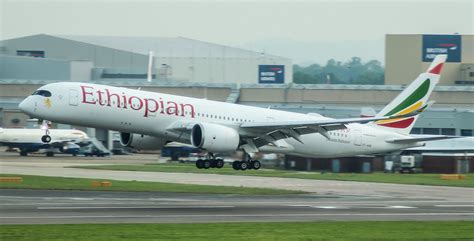
The Addis Ababa–Washington Dulles service via Rome reaches a maximum block time of 17 hours and 10 minutes and is primarily operated using the airline’s modern Airbus A350-1000 fleet. Toronto follows closely with a block time of 17 hours and 5 minutes, generally served by the A350-900 through Rome.
Completing the ranking is the unique route connecting Tokyo Narita and Addis Ababa through Seoul Incheon. Operating four times weekly with the Airbus A350-900, the service reaches approximately 16 hours and 55 minutes of block time and strengthens Ethiopian’s growing presence in East Asia.
These routes collectively illustrate the remarkable scale of Ethiopian Airlines’ international ambitions. Few carriers have developed such an extensive network connecting Africa to every major region of the world. With multiple services approaching the 19-hour mark and future infrastructure improvements on the horizon, Ethiopian Airlines appears poised to push the boundaries of African long-haul aviation even further in the years ahead.