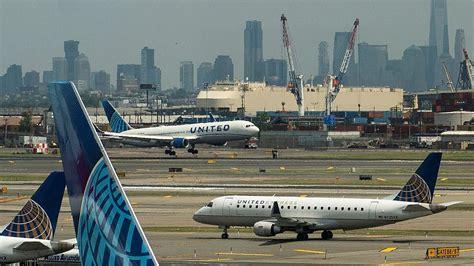
United Airlines continues to strengthen its position as the largest international airline in the United States, and nowhere is that leadership more visible than in its expanding ultra-long-haul network. As global demand for nonstop travel rebounds and travelers increasingly favor direct connections over time-consuming layovers, United has built one of the world’s most extensive portfolios of marathon flights.
From Singapore and Sydney to Johannesburg, Cape Town, Melbourne, and Adelaide, the carrier’s longest services connect major economic centers across enormous distances. These flights represent some of the most technically demanding operations in commercial aviation, requiring careful aircraft scheduling, optimized fuel planning, and strong passenger demand to remain viable.
Based on United Airlines’ published schedules between June 2026 and March 2027, the airline operates several routes approaching the 18-hour threshold. Most are flown by the Boeing 787 Dreamliner family, which has become the backbone of United’s long-haul expansion strategy thanks to its fuel efficiency and range capabilities.
San Francisco to Singapore Remains United’s Longest Nonstop Flight
United’s longest scheduled nonstop route continues to be the connection between San Francisco International Airport (SFO) and Singapore Changi Airport (SIN). The service is scheduled at up to 17 hours and 40 minutes, making it the longest flight in the carrier’s network during the examined period.
The route has become a cornerstone of United’s Pacific operation since its launch in 2016. Operating twice daily with the Boeing 787-9, it links two of the world’s most important technology and financial hubs while also serving as a crucial bridge between Southeast Asia and North America.
Passenger demand remains substantial. During the twelve months ending February 2026, approximately 290,000 round-trip travelers flew on the route. United achieved a seat occupancy rate of 78.4%, demonstrating steady demand despite intense competition from connecting alternatives through East Asia and the Middle East.
A particularly notable aspect of the route is its connectivity value. Roughly 68% of passengers continue beyond San Francisco or Singapore on additional flights, highlighting the importance of both airports as major transfer gateways within United’s global network.
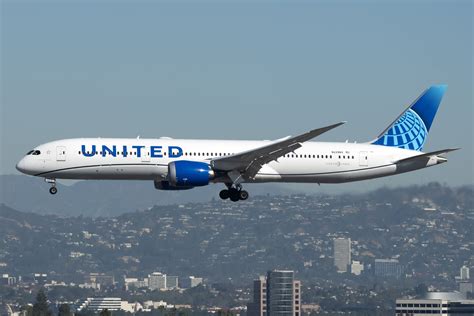
Houston to Sydney Continues as a Strategic Australia Link
The second-longest route in United’s network is the nonstop service between Houston George Bush Intercontinental Airport (IAH) and Sydney Kingsford Smith Airport (SYD). Scheduled for up to 17 hours and 30 minutes, the flight covers one of the longest regularly operated sectors connecting North America and Australia.
Originally introduced to strengthen connectivity between Australia and the southern United States, the route provides direct access to Houston’s extensive domestic network. Energy-sector travel between Texas and Australia has also contributed to demand over the years.
However, operational longevity has not necessarily translated into exceptional performance. During the year ending February 2026, average load factors remained relatively modest at 67%. Even during peak holiday periods, occupancy rates failed to reach the levels seen on many competing transpacific routes.
Despite these challenges, United continues operating the service because of its strategic network value and its ability to connect travelers from numerous North American cities through Houston.
Newark to Delhi Anchors United’s India Network
India remains one of the fastest-growing international aviation markets, and United’s nonstop service from Newark Liberty International Airport (EWR) to Delhi (DEL) plays a central role in that growth.
With block times reaching 17 hours, the route ranks as United’s third-longest nonstop operation. The daily Boeing 787-9 service offers a highly attractive alternative to one-stop itineraries through Europe or the Gulf region.
The route benefits from strong demand across multiple travel segments, including business travelers, students, visiting friends and relatives traffic, and government-related travel. Newark’s position as a major East Coast gateway further enhances the route’s appeal by providing extensive onward connectivity throughout North America.
Johannesburg and Hong Kong Showcase Global Reach
United’s fourth-longest flight is the return sector from Johannesburg (JNB) to Newark, scheduled at up to 16 hours and 25 minutes. The route provides one of the few nonstop links between Southern Africa and the northeastern United States.
The flight significantly reduces travel time compared with traditional European connections and has strengthened commercial, tourism, and diplomatic links between the regions.
Closely following is the Los Angeles (LAX) to Hong Kong (HKG) service, scheduled at up to 16 hours and 15 minutes. Operated twice daily by Boeing 787-9 aircraft, the route remains one of United’s most important Asia-Pacific connections.
The Hong Kong operation has evolved beyond a simple point-to-point service. One flight now continues onward to Bangkok, while another extends to Ho Chi Minh City, allowing United to deepen its presence in Southeast Asia without introducing entirely new long-haul departures from the United States.
Cape Town Emerges as a Standout Success Story
Among United’s ultra-long-haul routes, services to Cape Town International Airport (CPT) have become particularly noteworthy.
The airline’s route from Cape Town to Washington Dulles International Airport (IAD) ranks sixth overall with block times reaching 16 hours and 10 minutes. Operated three times weekly using the Boeing 787-9, the service has performed exceptionally well.
Load factors reached an impressive 86% during the twelve months ending February 2026. The route benefits heavily from connecting traffic, with approximately two-thirds of travelers continuing beyond Washington to destinations throughout the United States.
Popular connecting markets include Newark, Chicago O’Hare, Los Angeles, and Denver, illustrating how United leverages its domestic network to support international growth.
The carrier also operates Cape Town to Newark, which ranks seventh among its longest flights at 16 hours and 5 minutes. Together, these services demonstrate the growing importance of South Africa within United’s long-haul strategy.
Melbourne and Adelaide Expand United’s Pacific Presence
Australia remains a major focus area for United’s international development plans. The airline’s San Francisco to Melbourne (MEL) route ranks eighth, reaching block times of 16 hours.
Meanwhile, Los Angeles to Melbourne follows closely with scheduled durations of up to 15 hours and 55 minutes. These flights provide travelers with multiple gateway options into Australia while strengthening United’s competitive position against both domestic and international rivals.
Perhaps the most intriguing addition is the newly launched San Francisco to Adelaide (ADL) route. Also scheduled at up to 15 hours and 55 minutes, the service marks a significant expansion into a market traditionally underserved by nonstop North American flights.
Adelaide gains direct access to Silicon Valley and the broader United States network, while United benefits from first-mover advantages in a niche but strategically valuable market.
United Airlines’ 10 Longest Nonstop Routes in 2026
- San Francisco – Singapore — 17h 40m
- Houston – Sydney — 17h 30m
- Newark – Delhi — 17h 00m
- Johannesburg – Newark — 16h 25m
- Los Angeles – Hong Kong — 16h 15m
- Cape Town – Washington Dulles — 16h 10m
- Cape Town – Newark — 16h 05m
- San Francisco – Melbourne — 16h 00m
- Los Angeles – Melbourne — 15h 55m
- San Francisco – Adelaide — 15h 55m
The Growing Importance of Ultra-Long-Haul Flying
United Airlines’ longest routes illustrate how modern aviation continues to shrink the globe. Powered primarily by the Boeing 787 Dreamliner, these flights connect continents that once required multiple stops and lengthy travel times.
From Singapore’s financial districts to Australia’s coastal cities, from India’s booming economy to South Africa’s tourism hubs, United’s ultra-long-haul network serves a diverse range of markets while reinforcing the airline’s position as America’s leading international carrier. As aircraft technology continues to improve and passenger demand for nonstop travel remains strong, these marathon routes are likely to become even more important components of United’s global strategy in the years ahead.