Air Canada is entering a new phase of long-haul expansion, strengthening its position as one of North America’s leading international carriers. Between July 2026 and March 2027, the airline’s long-haul network is scheduled to average approximately 57 daily departures, reflecting significant growth across Asia, Oceania, and the Middle East. Compared with the previous operating period, the carrier’s long-haul activity has increased by around 10%, highlighting a strong recovery in demand and a renewed focus on strategically important international markets.
The expansion is particularly visible in Air Canada’s ultra-long-haul network. These routes connect Canada with some of the world’s most distant economic and cultural centers, requiring aircraft to remain airborne for up to 17 hours. Such services represent some of the most operationally complex flights in commercial aviation, demanding careful route planning, fuel management, crew scheduling, and aircraft utilization.
As geopolitical restrictions continue to reshape global air corridors, many flights now operate on longer routings to avoid restricted airspace. Combined with seasonal winds and growing passenger demand, these factors have pushed block times to record levels across several Air Canada services.
Why Block Time Matters on Ultra-Long Flights
When evaluating the world’s longest airline routes, block time provides a more accurate measure than simple geographic distance. Block time includes every minute from gate departure to gate arrival, incorporating taxi operations, airborne flight time, expected delays, and operational buffers.
For airlines, block time directly affects aircraft productivity and scheduling efficiency. A route with strong headwinds or lengthy diversions around restricted airspace may have a considerably longer scheduled duration than its actual distance would suggest. This is particularly evident on Air Canada’s flights connecting Canada and India, where aircraft must avoid Russian, Ukrainian, and Iranian airspace while also battling seasonal atmospheric conditions.
These operational realities have created some of the longest scheduled flights in Air Canada’s history, led by a service that now exceeds 17 hours.
Toronto–Delhi: Air Canada’s Longest Nonstop Flight
The crown for Air Canada’s longest nonstop route belongs to the service from Delhi’s Indira Gandhi International Airport back to Toronto Pearson International Airport. Scheduled block times reach an extraordinary 17 hours and 5 minutes, making it one of the longest flights operated by any North American airline.
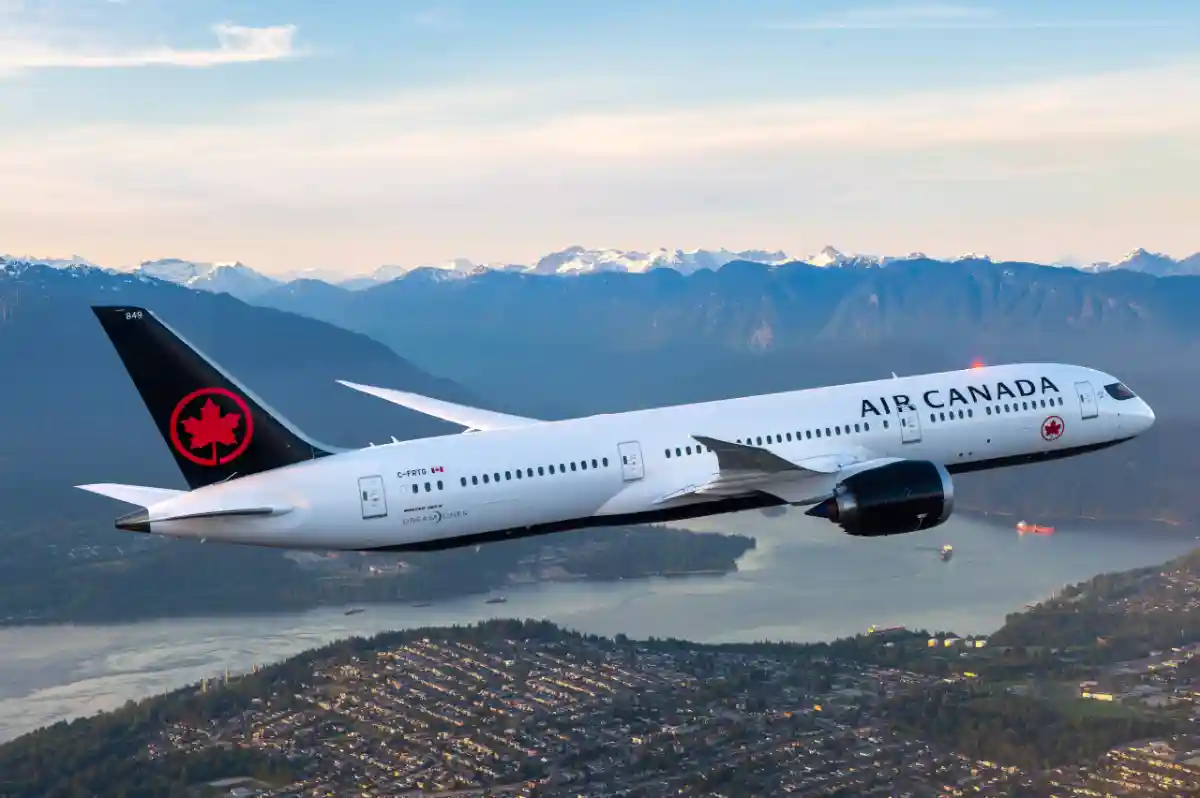
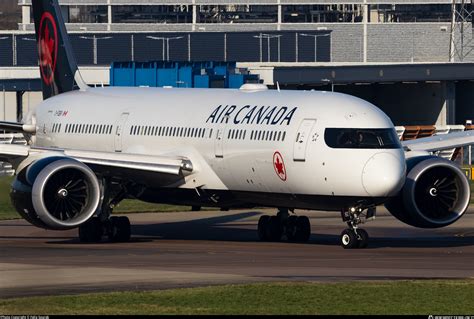
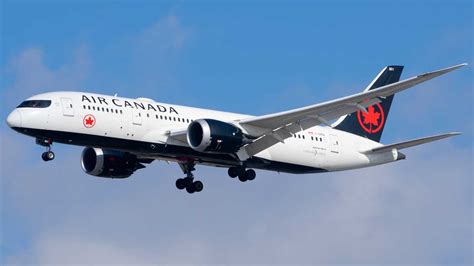
The route is flown using the Boeing 787-9 Dreamliner, configured with 298 seats. Although service is generally daily, certain summer periods see frequencies reduced to six weekly departures.
The importance of this route extends far beyond its duration. Toronto and Delhi represent the largest passenger market between North America and India. Industry booking data indicates that approximately 574,000 round-trip passengers traveled between the two cities during the previous year, regardless of whether they flew nonstop or connected through another hub. That figure significantly exceeds demand seen in competing markets such as New York and Delhi.
The route’s combination of strong diaspora traffic, business travel, and visiting-friends-and-relatives demand makes it one of Air Canada’s most strategically valuable international services.
Vancouver–Singapore and Other Top Five Longest Routes
Vancouver to Singapore ranks second among Air Canada’s longest flights, with scheduled block times reaching 16 hours and 45 minutes. The route marked a notable return to Singapore after a lengthy absence from the carrier’s network. Air Canada resumed service in 2024 after Singapore Airlines withdrew from the market, allowing the Canadian airline to capitalize on existing demand.
The remaining members of the top five demonstrate Air Canada’s growing focus on Asia-Pacific connectivity.
Air Canada’s five longest nonstop routes in 2026:
- Toronto (YYZ) – Delhi (DEL): 17h 05m
- Vancouver (YVR) – Singapore (SIN): 16h 45m
- Delhi (DEL) – Montreal (YUL): 16h 30m
- Vancouver (YVR) – Bangkok (BKK): 16h 25m
- Toronto (YYZ) – Shanghai Pudong (PVG): 16h 00m
The return of Shanghai to Air Canada’s network is particularly significant. Service between Toronto and Shanghai resumed in June 2026 after being absent since the pandemic era. While frequencies remain below pre-2020 levels, the reinstatement reflects renewed confidence in transpacific demand and the gradual rebuilding of Canada-China aviation links.
The Growing Importance of Southeast Asia
One of the most noticeable trends in Air Canada’s network strategy is the increased emphasis on Southeast Asia. Singapore and Bangkok both rank among the airline’s longest routes, highlighting the region’s rising economic importance and growing tourism appeal.
The Vancouver-Bangkok route reaches scheduled durations of 16 hours and 25 minutes, placing it among the longest nonstop flights operated anywhere in North America. Depending on seasonal demand, frequencies range from three weekly departures to daily service.
These routes also leverage Vancouver’s geographic advantages. Positioned closer to Asia than eastern Canadian hubs, Vancouver serves as an efficient gateway for transpacific operations while allowing Air Canada to maximize aircraft utilization across long-distance markets.
Australia Continues to Drive Long-Haul Demand
Australia remains one of Air Canada’s strongest long-haul regions. Vancouver-Sydney ranks sixth overall with scheduled block times reaching 15 hours and 55 minutes.
Most Sydney services are integrated into broader Toronto-Vancouver-Sydney itineraries, creating seamless coast-to-coast connectivity for Canadian travelers. During the peak holiday season, additional standalone Vancouver-Sydney flights are introduced to accommodate increased demand.
Brisbane also appears among Air Canada’s longest routes. The Vancouver-Brisbane service reaches block times of approximately 15 hours, operating between six weekly and daily frequencies depending on the season.
Australia’s combination of tourism, business travel, educational links, and strong diaspora communities continues to support year-round demand for these exceptionally long flights.
Seoul and Dubai Complete the Top Ten
South Korea features prominently in Air Canada’s ultra-long-haul portfolio through services from both Toronto and Montreal to Seoul Incheon International Airport.
Toronto-Seoul reaches scheduled durations of 15 hours and 10 minutes, while Montreal-Seoul operates at up to 14 hours and 55 minutes. Together, these routes strengthen Air Canada’s position within the growing Canada-Korea market and provide valuable connections throughout Northeast Asia via Star Alliance partnerships.
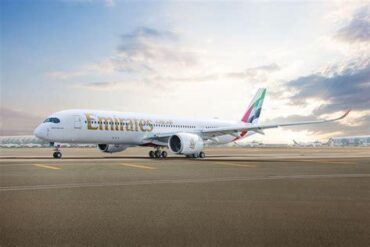
Rounding out the top ten is Dubai to Toronto, scheduled at up to 14 hours and 50 minutes. Operated in partnership with Emirates, the route remains strategically important despite operational disruptions caused by regional security concerns and temporary service suspensions.
Air Canada’s 10 Longest Nonstop Flights in 2026
- Toronto – Delhi: 17h 05m
- Vancouver – Singapore: 16h 45m
- Delhi – Montreal: 16h 30m
- Vancouver – Bangkok: 16h 25m
- Toronto – Shanghai: 16h 00m
- Vancouver – Sydney: 15h 55m
- Toronto – Seoul: 15h 10m
- Vancouver – Brisbane: 15h 00m
- Montreal – Seoul: 14h 55m
- Dubai – Toronto: 14h 50m
A Network Built Around Ultra-Long-Haul Connectivity
Air Canada’s 2026 long-haul schedule demonstrates how modern airlines are increasingly willing to operate flights that were once considered impractical. Powered primarily by the Boeing 787-9 Dreamliner and supported by select Boeing 777-200LR operations, these services connect Canada directly with major population centers across Asia, Oceania, and the Middle East.
From the 17-hour journey linking Delhi and Toronto to the vast Pacific crossings between Vancouver and Australia, Air Canada’s longest routes showcase the airline’s expanding global reach. As international demand continues to recover and evolve, ultra-long-haul flying is becoming a defining feature of the carrier’s strategy, positioning Canada as a major gateway between North America and some of the world’s fastest-growing regions.