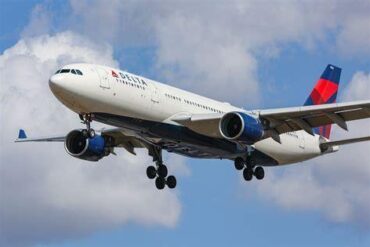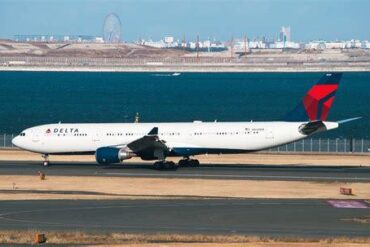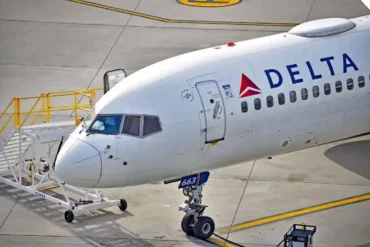
Delta Air Lines did not simply merge with Northwest Airlines in 2008; it inherited one of the most unusual international networks ever operated by a US carrier. Among the assets that came with Northwest was a powerful Tokyo Narita hub, a strategically important gateway that connected the United States with destinations across Asia. Yet barely a decade after the merger, Delta had effectively dismantled that operation. In 2020, it left Narita entirely, replacing the former Northwest stronghold with a very different strategy built around Tokyo Haneda, Seattle, Los Angeles, and an increasingly important partnership with Korean Air.
The decision remains one of the most fascinating examples of how changing aircraft technology, airport geography, international partnerships, and passenger preferences can transform an airline network. Northwest had built Narita around a world in which reaching Asia often required a stop in Japan. Delta inherited that network in an era when Boeing 777s, 747-400s, Airbus A350s, and Boeing 787s could make nonstop flights from the United States to cities that once depended on Narita connections.
The result was a fundamental change in Delta’s approach to the Pacific. Instead of maintaining a giant Japanese hub, the airline gradually shifted toward nonstop US-to-Asia flying and allowed Korean Air’s Seoul Incheon hub to provide much of the connecting network that Narita had once supplied. It was a dramatic piece of network rationalization—and one that permanently changed Delta’s presence in Asia.
The Northwest Airlines Narita Hub Delta Inherited in 2008
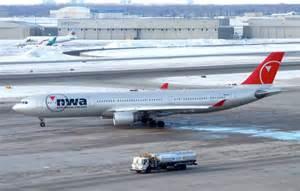
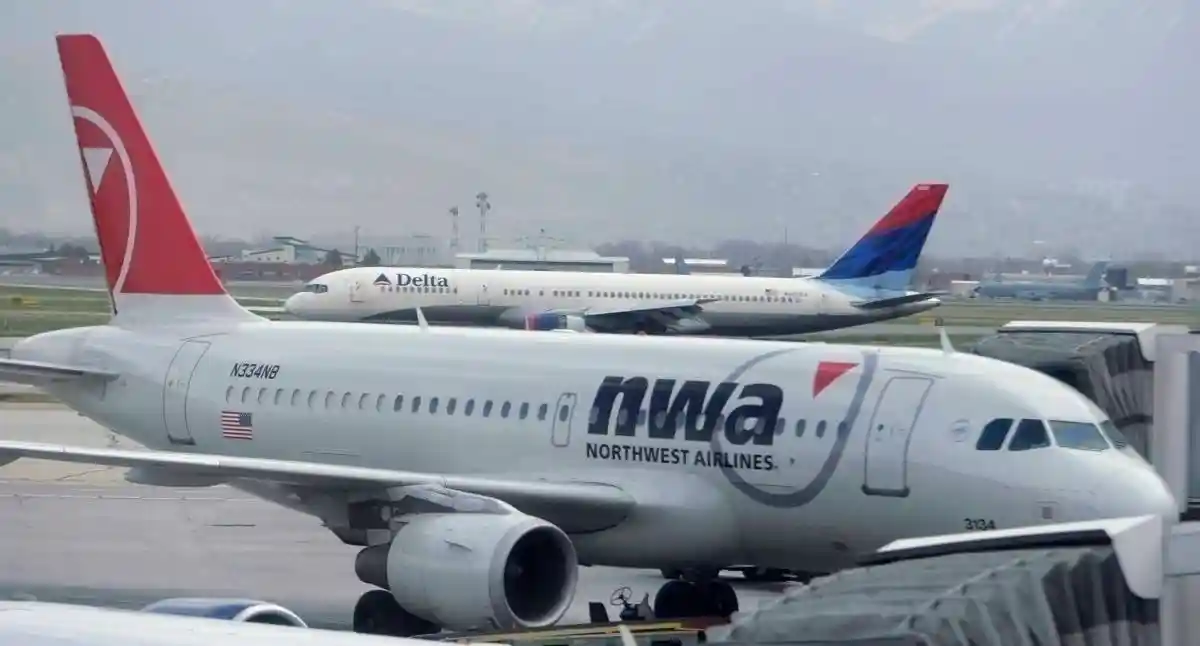
When the Delta-Northwest merger closed in 2008, the combined airline suddenly possessed an enormous and geographically diverse hub structure. Delta already had major operations at Atlanta, New York, Cincinnati, Salt Lake City, and Los Angeles, while Northwest contributed major hubs at Minneapolis-St. Paul, Detroit, Memphis, and Tokyo Narita.
The Narita operation was fundamentally different from Delta’s other inherited hubs. It was not merely a large international gateway where passengers from the United States arrived before continuing into Japan. Northwest had built Narita into a genuine Asia-Pacific connecting hub, with flights linking US cities to Tokyo and then continuing onward to numerous Asian destinations.
At the time of the merger, Northwest served 19 cities from Narita, giving the airport an unusually important role in the carrier’s Pacific network. Passengers could fly from the United States to Narita and connect onward to destinations that would have been difficult or impossible to serve economically with nonstop flights from American cities.
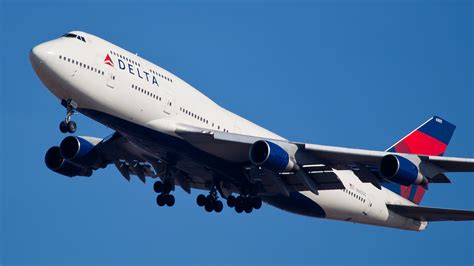
That network had been shaped by the limitations of earlier aircraft. Northwest’s Boeing 747-200s could not offer the same flexibility as today’s long-range widebodies. A passenger traveling from Minneapolis to Bangkok, for example, could fly through Narita, where the Japanese airport served as the bridge between the American and Asian portions of the network.
For decades, this model made enormous strategic sense. Narita was not simply an airport for Northwest; it was part of the machinery that made Northwest’s transpacific network work.
The merger, however, occurred at precisely the moment when that model was becoming less compelling.
Why Delta Started Dismantling the Narita Hub
Delta’s post-merger network restructuring involved several different decisions, and not all were related to the same underlying problem. Memphis was eventually dehubbed, while Cincinnati was gradually reduced as Detroit became the stronger Midwest connecting point. Those changes were largely about eliminating overlapping hubs and concentrating traffic where Delta could achieve greater scale.
Narita was different.
The underlying problem was not simply that Delta had too many hubs. The problem was that the role of a Pacific connecting hub was changing.
Modern long-haul aircraft transformed the economics of international aviation. The Boeing 747-400 and Boeing 777 could fly considerably farther than the older aircraft that had helped establish Northwest’s Narita strategy. Later, the Airbus A350 and Boeing 787 made nonstop services to Asia even more practical.
A US airline no longer needed to funnel passengers through one Asian gateway simply because its aircraft could not reach their final destination.
This technological change had enormous consequences. A nonstop flight from Seattle to Tokyo or Shanghai could be more attractive to passengers than a routing through Narita. More importantly, a US hub offered Delta something Narita could not: a huge population of passengers beginning or ending their journeys in the United States.
A domestic hub such as Seattle could feed international flights with passengers from across the American network. Narita, by contrast, depended heavily on connecting traffic between the United States and Asia. As nonstop flights multiplied, the value of that connecting structure declined.
Delta therefore began to chip away at the Narita operation rather than eliminating it overnight. Throughout the 2010s, routes disappeared, capacity was reduced, and the airport gradually lost its former strategic importance.
By 2020, the process was complete. Delta left Narita entirely.
Seattle Became Delta’s New Pacific Strategy
The most important replacement for the former Northwest model was not another Japanese airport. It was Seattle-Tacoma International Airport.
Delta began building Seattle into a major hub in 2012, deliberately positioning the airport as its principal Pacific gateway. The strategy reflected the realities of modern aircraft and the geography of the Pacific Northwest.
Seattle was particularly attractive because of its local market. The city had strong demand for travel to Asia, while its position on the US West Coast made it an efficient launch point for long-haul flights across the Pacific.
Delta could therefore operate smaller widebody aircraft nonstop from Seattle to Asian destinations while simultaneously building a domestic network that supplied those international flights.
The airline launched and expanded services to destinations including Beijing, Osaka, Shanghai, Tokyo, Seoul, Hong Kong, and eventually Taipei. Not every route survived, but the broader strategy was clear: move the connecting feed from an Asian airport to a US airport.
That was an important distinction.
At Narita, Delta needed passengers arriving from the United States to fill flights continuing into Asia. At Seattle, Delta could collect passengers from across its domestic network, add local Seattle demand, and send them directly toward Asia.
This gave the airline greater control over the entire journey.
Seattle also offered another advantage. Delta could grow European and domestic flying from the same hub, creating a broader network rather than relying primarily on Asia-Pacific connections.
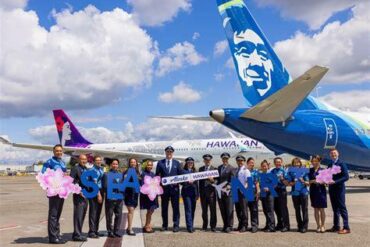
The strategy was not flawless. Delta has faced intense competition in Seattle, particularly from Alaska Airlines and major foreign carriers. Nevertheless, the hub became a central part of Delta’s international network and represented a fundamentally different philosophy from Northwest’s Narita operation.
The Korean Air Partnership Replaced Much of Narita’s Function
The most important piece of Delta’s post-Narita strategy may not have been an airport at all. It was Korean Air.
Delta and Korean Air developed a metal-neutral joint venture that became effective in 2018. The arrangement allowed the two airlines to coordinate schedules, pricing, and codeshares while sharing revenue across their Pacific network.
In practical terms, the partnership transformed Seoul Incheon International Airport into a modern substitute for much of the connecting function that Narita had once performed for Northwest.
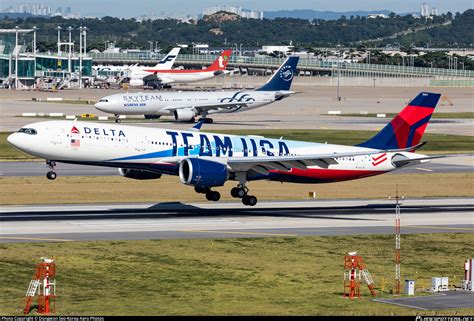
Consider a passenger traveling from the United States to Bangkok or Singapore. Delta does not necessarily need to operate its own aircraft all the way to the final destination. It can sell the itinerary while Korean Air operates the connecting segment through Seoul.
That arrangement is strategically powerful because Korean Air already possesses the Asian network and local market presence necessary to make Seoul a highly effective connecting hub.
For Delta, this can be more economical than rebuilding every former Narita route with its own aircraft.
The partnership also gives Delta access to destinations where the airline itself may not see sufficient demand for a nonstop flight. Instead of dedicating a widebody aircraft, crew, and airport resources to a marginal route, Delta can rely on its partner.
This effectively allowed Delta to retain the commercial reach of the old Narita network without physically operating the old Narita network.
Tokyo Haneda Changed the Equation Again
While Seoul became Delta’s substitute for much of the intra-Asia network, Tokyo presented a different challenge.
Narita had historically served as Tokyo’s principal international airport. Haneda, located considerably closer to central Tokyo, was primarily associated with domestic aviation for decades. That changed when Japan began permitting foreign airlines to return to Haneda on a limited basis in 2010.
For Delta, Haneda was vastly more attractive for passengers whose final destination was Tokyo.
An airline can offer a technically excellent flight to Narita, but if another carrier can deliver passengers much closer to central Tokyo, the airport itself becomes part of the competitive equation.
The problem was capacity.
Haneda is slot controlled, meaning Delta could not simply transfer every Narita flight to the preferred airport. The airline had to wait for additional slots to become available and compete for the rights to operate them.
Delta eventually established Haneda services from Atlanta, Detroit, Honolulu, Los Angeles, Minneapolis, and Seattle. These flights became the core of its Tokyo strategy after Narita was abandoned.
The transition illustrates why Delta’s exit from Narita should not be interpreted as a simple withdrawal from Japan. The airline was not abandoning Tokyo. It was attempting to serve Tokyo through a more valuable airport while simultaneously replacing Narita’s regional connecting role through Seoul.
What Delta Lost When Narita Disappeared
The strategic logic behind Delta’s decision was compelling, but the change also came with real consequences.
The former Northwest network connected Narita to numerous destinations across Asia. Once Delta dismantled that structure, several cities lost Delta-operated service entirely. Among the destinations affected were Beijing, Guangzhou, Busan, Guam, Palau, Saipan, Manila, Singapore, and Bangkok.
Some of these markets were eventually served through different strategies or partner airlines, but the important point is that the Delta network itself became less geographically extensive.
This is one of the hidden costs of network rationalization.
An airline can maintain strong profitability while offering fewer destinations if it concentrates its resources on the markets with the greatest demand. For passengers, however, that can mean fewer nonstop choices and greater reliance on partner airlines.
Delta increasingly adopted precisely this approach in Asia.
Rather than attempting to recreate Northwest’s enormous intra-Asia operation, the airline focused its own aircraft on high-demand nonstop markets and used Korean Air to fill many of the gaps.
That model is particularly logical in an era when passengers increasingly value nonstop flights. A nonstop Seattle-to-Asia service can be more competitive than sending passengers through Narita, while a Korean Air connection through Seoul can handle lower-volume destinations without requiring Delta to dedicate its own aircraft.
Why Delta’s Narita Exit Was Not Simply a Failure
It is tempting to describe the disappearance of Northwest’s Narita hub as something Delta “threw away.” There is certainly truth in that description: the airline inherited a major Pacific hub and eventually abandoned it.
But the deeper story is more complicated.
Delta did not necessarily believe that Narita was a bad airport. Instead, the strategic purpose that made Narita valuable had largely disappeared.
Aircraft had become capable of flying farther. Passengers had become more interested in nonstop travel. Haneda became available for international services. Seattle offered strong local demand. Los Angeles offered another major Asian gateway. And Korean Air provided a powerful partner with an established Seoul hub.
Together, those developments made the old Northwest model increasingly difficult to justify.
Delta’s network planners therefore had to decide whether to preserve an expensive and complicated connecting hub or redeploy aircraft into markets where they could generate stronger returns.
The answer became increasingly obvious.
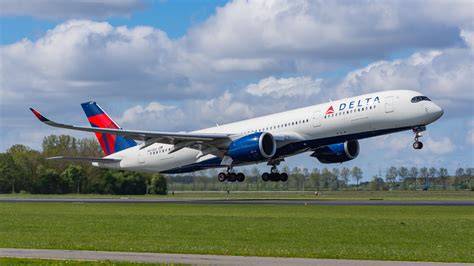
Delta’s Los Angeles Expansion Shows the Strategy Is Still Evolving
The story did not end with Seattle.
Delta has faced significant competitive pressure in Seattle, where Alaska Airlines has an enormous presence and international carriers have strong Pacific networks of their own. As a result, Los Angeles has become increasingly important to Delta’s Asia strategy.
Los Angeles offers a huge local population, extensive international demand, and geographic advantages for Pacific travel. Delta has already restored Hong Kong service from Los Angeles, while Manila is scheduled to return from Los Angeles in 2027. Singapore has also been discussed as a potential future nonstop destination.
This development is revealing because it shows that Delta’s post-Narita strategy is not simply “replace Narita with Seattle.”
Instead, Delta is distributing Pacific flying across several powerful US gateways. Seattle serves as a major Pacific hub, Los Angeles provides enormous local demand, and Atlanta, Detroit, Minneapolis, and other Delta hubs feed long-haul services to Tokyo and other Asian destinations.
At the same time, Seoul provides the connecting structure that Delta no longer wants to build itself.
That is a much more flexible model than the one Northwest operated in the late twentieth century.
United Airlines Offers a Different Lesson at Narita
United Airlines provides an interesting contrast.
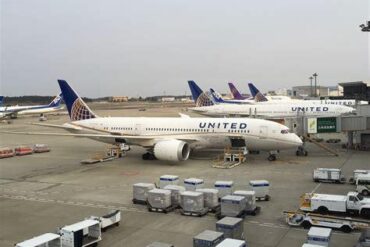
Like Northwest, United once relied heavily on Narita because older aircraft made it difficult to operate nonstop flights from the mainland United States to many Asian destinations. Modern aircraft eventually reduced that requirement, and United shifted much of its long-haul strategy toward nonstop services and Tokyo Haneda.
Yet United never abandoned Narita completely.
Its partnership with All Nippon Airways gives the airline a strong reason to maintain both Tokyo airports. Haneda is particularly valuable for Tokyo-originating and Tokyo-destination traffic, while Narita can still function as a connecting gateway into parts of Asia.
More recently, United has used Boeing 737 aircraft from Narita to serve destinations such as Cebu, Kaohsiung, Koror, Saipan, and Ulaanbaatar.
This is a very different use of Narita from the old Northwest model.
United is not rebuilding a giant 1990s-style Asian hub. Instead, it is using aircraft and resources that can be deployed economically on shorter regional routes. The strategy also reflects weaker demand at United’s Guam hub, allowing some aircraft and crews to be used more productively from Japan.
In that sense, United demonstrates that Narita itself was not the problem. The problem was the old business model built around it.
The Legacy of Northwest’s Abandoned Tokyo Hub
The 2008 Delta-Northwest merger created one of the world’s largest airlines and gave Delta an extraordinary collection of assets. Some survived almost unchanged. Others were consolidated or eliminated as the new airline searched for a more efficient network.
The Narita hub was arguably the most dramatic casualty.
Northwest had spent decades building Tokyo into the center of its Asian operation. Delta inherited that infrastructure just as the aviation industry was entering a period when its underlying logic was being undermined by better aircraft, better airport access, and stronger airline partnerships.
By 2020, the old hub was gone.
Yet its role did not simply vanish. It was redistributed. Tokyo Haneda took over much of the direct Tokyo demand. Seattle became a major US gateway for Pacific flying. Los Angeles gained importance. And Seoul, through Korean Air, assumed much of the connecting role that Narita once played.
That makes the story of Delta and Narita less about an airline abandoning Asia and more about a fundamental transformation in how a modern US carrier reaches Asia.
Northwest built its Pacific network around a hub in Japan because aircraft and geography demanded it. Delta dismantled that structure because the same technology and geography no longer required it.
The most striking lesson is that a hub can remain geographically important while becoming strategically obsolete. Narita did not disappear from the global aviation map when Delta left. Instead, Delta’s business model moved on.
And that is why the former Northwest hub remains such an important chapter in Delta’s history: it shows exactly how the airline evolved from inheriting a sprawling transpacific network to building a leaner system centered on nonstop flights, US gateways, and powerful international partnerships.