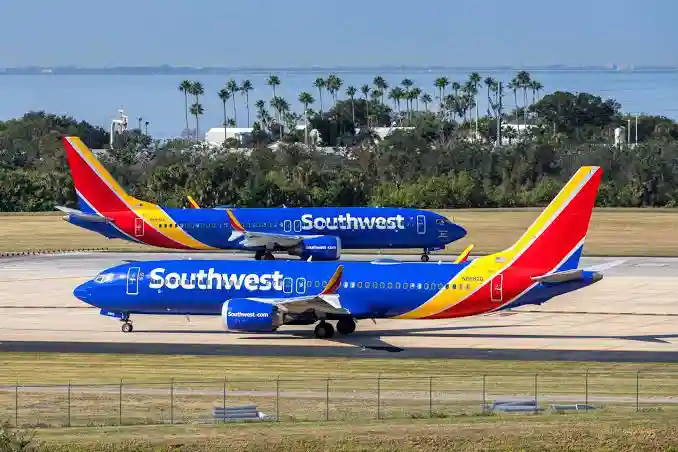
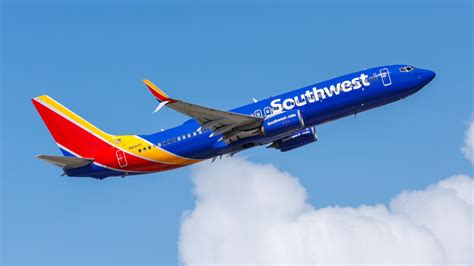
A Southwest Airlines flight bound for Rochester, New York, returned to Orlando International Airport (MCO) on Tuesday after the aircraft struck a bird during its initial departure. The Boeing jet, operating as Southwest Flight 2821, landed safely at Orlando, and airport officials reported that no injuries occurred among passengers or crew.
The incident prompted the flight crew to discontinue the journey and return to the airport rather than continue toward Rochester International Airport (ROC). While a bird strike can appear relatively minor from the ground, pilots must treat an impact seriously because damage may not be immediately visible from inside the cockpit. Engines, flight-control surfaces, the nose structure, and other components can require inspection before an aircraft is cleared to continue flying.
According to a statement from Southwest Airlines, the pilots followed established procedures and landed the aircraft uneventfully. The airline subsequently moved the passengers to another aircraft so they could continue their journey to Rochester. Southwest also praised the pilots and flight attendants for their response, emphasizing that the safety of customers and employees remained its highest priority.
Why Southwest Flight 2821 Returned to Orlando After the Bird Strike
A return to the departure airport after a bird strike does not necessarily mean an aircraft suffered major damage. Instead, it can be the most prudent operational decision when an impact occurs shortly after takeoff. The crew may receive information about the strike but cannot directly inspect the aircraft while airborne, making a ground examination necessary to determine whether the aircraft can safely continue.
The location of the encounter is also important. The Federal Aviation Administration reports that approximately 70% of wildlife strikes occur between ground level and 500 feet, or about 152 meters, above the ground. Aircraft are particularly exposed during takeoff and landing because they are operating close to airport grounds, where birds and other wildlife are concentrated.
For pilots, returning to MCO shortly after departure also provides an important advantage: the aircraft remains close to a major airport with maintenance personnel, emergency services, air traffic control, and established procedures for dealing with abnormal situations. Rather than accepting uncertainty over hundreds of miles of flight, the crew can land, have the aircraft inspected, and arrange an alternative aircraft if necessary.
Bird Size Can Determine the Severity of an Aircraft Strike
Not every bird strike produces the same consequences. A small bird may cause little or no structural damage, while a large bird or flock can create significant problems. The FAA’s wildlife hazard rankings identify species including Canada geese, snow geese, white-tailed deer, and black vultures among animals associated with serious aircraft damage, although the severity of an individual encounter depends on factors such as the animal’s size, the aircraft’s speed, and the location of the impact.
Aircraft engines are a particular concern because they ingest large volumes of air and can encounter birds during takeoff or climb. A bird entering an engine can damage fan blades or other components, potentially reducing thrust. The aircraft’s nose, windshield, wings, leading edges, and flight-control surfaces can also be affected.
That is why the decision made by the Southwest crew should be viewed in the context of standard aviation risk management. A precautionary return allows technicians to inspect the aircraft instead of relying on assumptions about the severity of an impact. In aviation, eliminating uncertainty before continuing a flight is often more important than minimizing a delay.
Southwest Passengers Were Moved to Another Aircraft
After Flight 2821 landed at Orlando, Southwest accommodated the passengers on another aircraft for the remainder of their trip to Rochester. The airline did not indicate that passengers or crew members were injured in the incident.
Southwest also did not publicly disclose whether the aircraft involved in the bird strike sustained damage. Details concerning a maintenance inspection or any subsequent investigation were likewise not immediately available. Those distinctions matter because a reported bird strike does not automatically mean an aircraft was damaged.
The replacement-aircraft decision nevertheless allowed Southwest to separate the affected aircraft from the passenger operation while its condition could be evaluated. This is a common practical response when an aircraft experiences an event that requires inspection before its next flight.
Bird Strikes Continue to Rise Across US Airports
The Orlando incident comes against a backdrop of a substantial increase in reported wildlife strikes involving aircraft in the United States. FAA data show that 24,447 wildlife strikes were reported in 2025, up from 22,371 in 2024, representing an increase of about 9.3%. Birds accounted for roughly 97% of wildlife-strike reports submitted to the agency.
The large number of reports needs to be interpreted carefully. Most wildlife encounters do not result in catastrophic consequences, and many produce no damage at all. Since 1990, however, wildlife strikes involving civil and military aircraft in the United States have resulted in 89 deaths and the destruction of 128 aircraft.
The most widely remembered American bird-strike accident occurred in January 2009, when US Airways Flight 1549 lost thrust from both engines after encountering a flock of birds shortly after departing New York’s LaGuardia Airport. The Airbus A320 subsequently ditched in the Hudson River, with all occupants surviving. Events of that severity remain rare compared with the enormous number of wildlife encounters reported each year.
Orlando International Airport Faces a Significant Wildlife Challenge
Orlando International Airport operates in an environment where wildlife management is particularly important. The airport occupies approximately 21 square miles, including areas containing ponds, wetlands, grass, and other habitats that can attract birds and other animals.
Central Florida’s environment can support species such as cattle egrets and other birds that may move across airport property. Because aircraft are most vulnerable to wildlife encounters during takeoff and landing, managing these animals near runways is an important part of airport operations.
MCO has a dedicated wildlife management operation that works to reduce the number of animals near aircraft movement areas. Wildlife personnel use techniques including pyrotechnics and sound devices to discourage birds from entering areas where aircraft operate. The airport has also relocated fish from some ponds to reduce food sources that could attract wildlife.
The number of reported strikes at an airport does not necessarily provide a direct measure of how dangerous that airport is. A strong reporting program can produce more recorded incidents because pilots, maintenance teams, airport employees, and wildlife specialists document encounters that might otherwise go unreported.
FAA Wildlife Reporting Helps Airports Reduce Future Risks
Bird strikes such as the one involving Southwest Flight 2821 can become part of a much larger aviation-safety database. Pilots, airport personnel, maintenance workers, air traffic controllers, and wildlife biologists can report wildlife encounters through FAA Form 5200-7.
These reports provide valuable information about where strikes occur, which species are involved, whether aircraft are damaged, and what airport conditions may contribute to wildlife activity. Over time, the data can help airports identify recurring hazards and determine where additional wildlife-control measures may be necessary.
For Southwest Flight 2821, the immediate outcome was straightforward: the aircraft returned safely to Orlando, passengers were transferred to another aircraft, and the journey to Rochester continued. The event illustrates why an aircraft can turn around after what may appear to be a relatively simple bird strike. The precautionary return is part of the safety process, allowing trained personnel to determine whether the aircraft is fit to fly rather than leaving that question unresolved in the air.