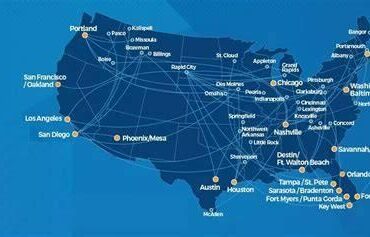
Allegiant Air has quietly dismantled a large slice of its Myrtle Beach network, ending 13 routes that carried the ultra-low-cost carrier into nine states. The airline has flown to the South Carolina resort since 2009, when the beach market became its third destination in the state after Columbia and Greenville/Spartanburg, both launched two decades ago. Flights to Columbia are now gone entirely, and Myrtle Beach is following a similar, if slower, contraction.
The Full List of Cancelled Allegiant Air Routes
Comparing Allegiant’s 2026 schedule with what is planned for 2027 shows that none of these 13 routes remain scheduled, and each was cross-referenced against the airline’s own website, where all have been removed. Three markets disappear after August 2026: Atlantic City, New Jersey; Belleville, Illinois; Clarksburg, West Virginia; Dayton, Ohio; Fort Wayne, Indiana; Grand Rapids, Michigan; Huntington, West Virginia; Lexington, Kentucky; Indianapolis, Indiana; Louisville, Kentucky; and Niagara Falls, New York. Elmira, New York ends in October 2026, while Hagerstown, Maryland closes in November 2026. Several of these markets were long-standing performers: Huntington dates to 2009, Fort Wayne to 2010, Grand Rapids to 2011, Lexington to 2014, Indianapolis to 2015 and Clarksburg to 2015, while Dayton first appeared in 2017-2018 and returned in 2026. Atlantic City and Elmira were 2026-only experiments, and Niagara Falls lasted barely a year after launching in 2025.
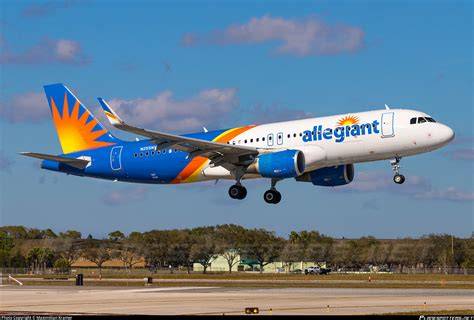
Why Atlantic City Stands Out as the Biggest Casualty
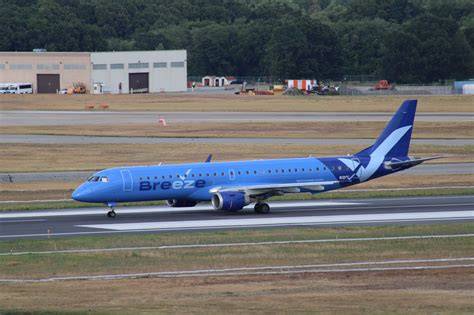
US Department of Transportation data on the Atlantic City route tells the story of a route that never found its footing. Allegiant flew between Myrtle Beach and Atlantic City from March to August 2026, inheriting the service from the now-defunct Spirit Airlines, which had operated it for 29 years until early 2026. Allegiant carried 11,453 passengers and filled just 80.5% of seats during that stretch, and while fare data is unavailable, the extremely short tenure signals a route that performed poorly from the start. Yet Breeze Airways saw enough potential to launch its own flights in October 2026, suggesting the market is not dead but simply mismatched to Allegiant’s model.
What Remains: Nine Routes and a 31% Capacity Reduction
Myrtle Beach is not being abandoned outright. Allegiant’s booking engine now extends to mid-May 2027, and between January and then the airline plans to fly to nine destinations: Akron/Canton, Albany, Allentown, Cincinnati, Columbus Rickenbacker, Harrisburg, Pittsburgh, Stewart and Syracuse. Those nine routes will offer 217 departures through May 2027, a 31% decline from the 326 departures flown between January and May 2026. Seven of the nine markets will see fewer flights, none more sharply than Akron/Canton, which Allegiant partially serves because Cleveland sits only about an hour away; departures there fall from 26 to just eight. The carrier also shifts its Akron/Canton start from March to May, shrinking the season on top of the cut.
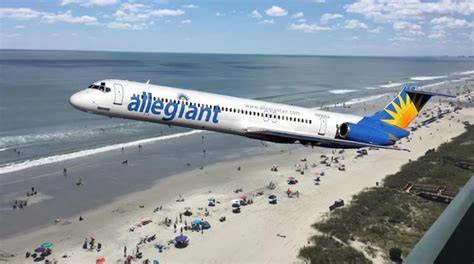
Nine States Keep Myrtle Beach Service Through Other Carriers
Every one of the nine affected states will still have flights to Myrtle Beach, though in most cases not on Allegiant. Illinois keeps service through American to Chicago O’Hare, Southwest to Chicago Midway and United to O’Hare, while Indiana is covered by Southwest from Indianapolis. Kentucky receives Allegiant flights to Cincinnati, whose airport sits across the state line, Maryland links via Southwest from Baltimore, Michigan via Delta from Detroit, and New Jersey through Breeze from Atlantic City and United from Newark. New York is the best-served state, with Allegiant flying from Albany, Stewart and Syracuse, American from LaGuardia, Breeze from Albany, Buffalo, Islip, Rochester, Stewart, Syracuse and Westchester, and Delta from LaGuardia. Ohio retains Allegiant from Akron/Canton and Columbus Rickenbacker, Breeze from Akron/Canton and Columbus John Glenn, and Southwest from Columbus John Glenn. West Virginia holds on through Breeze from Charleston and Contour from Beckley and Parkersburg.
The Strategic Shift: Myrtle Beach as a Breeze Playground
The broader pattern is one of capacity discipline rather than market exit. Allegiant is trimming seasonal flying, concentrating departures on its strongest Myrtle Beach markets and letting Breeze Airways absorb the secondary cities it has deemed marginal. For travelers, that means fewer nonstop options from the Midwest and Appalachia, more connections through hubs and a shorter booking window. For the beach destination itself, the arrivals hall will keep filling from nine states, but the airline mix is changing fast, and those who relied on Allegiant’s low fares from cities like Dayton, Lexington or Huntington will need to plan around a much thinner network.
What This Means for Travelers Booking Myrtle Beach in 2027
Anyone holding or planning a trip on one of the 13 cancelled routes should check their itinerary directly with Allegiant, since the airline typically contacts affected passengers with rebooking options or refunds. Travelers from the dropped markets can shift to Southwest from Indianapolis or Chicago Midway, Delta from Detroit, United from Newark or O’Hare, or Breeze from Atlantic City and a growing roster of New York airports. Booking early matters more than ever, because the reduced schedule means fewer seats from surviving cities such as Akron/Canton, where availability now starts later and ends sooner. Myrtle Beach remains one of the most accessible beach destinations in the eastern United States, but its 2027 map will look materially different from the one Allegiant drew for 2026.