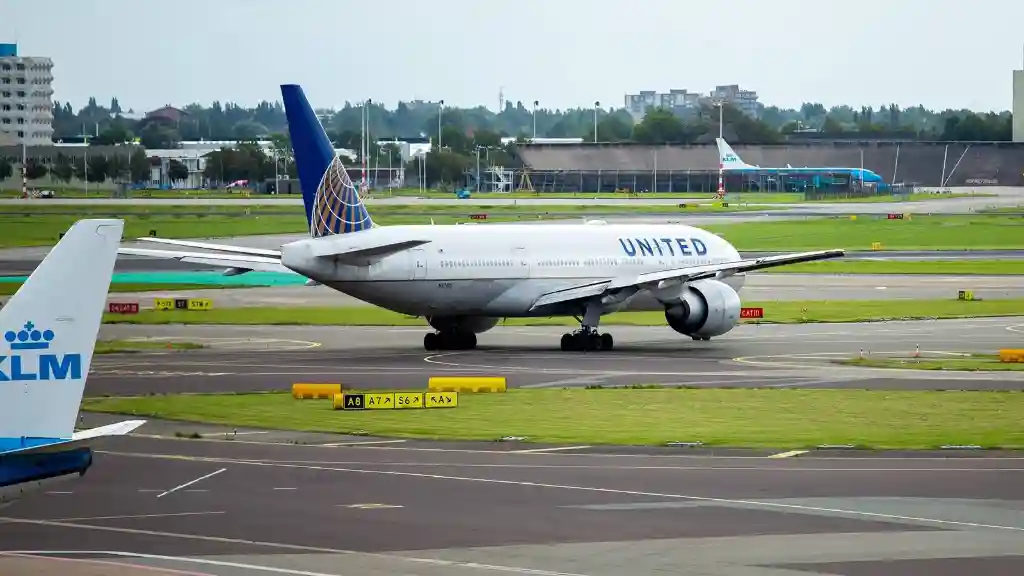
United Airlines has crossed the halfway point in its aggressive push to make satellite Wi-Fi a standard feature of its network, confirming on November 12 that SpaceX Starlink is now installed on more than 50% of its daily departures. The milestone, documented on United’s public installation tracker, marks the fastest large-scale retrofit of next-generation in-flight connectivity by any major U.S. carrier and places the Chicago-based airline well ahead of American Airlines, Southwest Airlines, and especially Delta Air Lines, which has chosen Amazon Leo and will not begin installations until 2028. With 697 aircraft already equipped — 46% of the fleet but 51% of daily flights — United has converted a bold 2024 promise into a visible, checkable product advantage.
How United Reached 51% of Daily Flights With Starlink
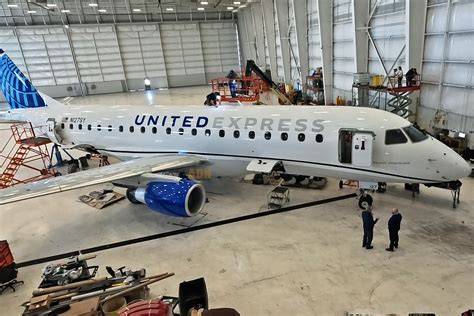
United’s Starlink journey began modestly. The airline’s first passenger flight with the service took off in May 2025 aboard a United Express Embraer E175, a regional jet operated by a partner carrier. Mainline installations followed, and the first Starlink-equipped Boeing 737-800 entered commercial service in October last year. Eighteen months after that regional debut, United’s tracker shows 697 equipped aircraft spread across regional, narrowbody, and a small slice of the long-haul fleet. The gap between 46% of aircraft and 51% of daily flights is explained by the intense utilization of regional aircraft, which operate short, frequent hops and therefore touch far more passengers per airframe than widebodies flying long-haul routes.
Regional Jets and the A321 Lead United’s Starlink Installations
The rollout has moved fastest where the operational mathematics favor it. All 100 CRJ-550 aircraft and all 252 Embraer E175 aircraft tracked by United are now Starlink-equipped, giving the carrier 100% coverage across both regional types. The Airbus A321 fleet stands at 69 of 78 aircraft, or 88% coverage, and is approaching completion. The Boeing 737 family sits at 204 of 328, or 62%, while the newer 737 MAX fleet has reached 62 of 313, or 20%, as installations rotate through the fleet during scheduled maintenance visits. United has been retrofitting approximately 20 aircraft per week, a pace that supports its public timeline.
United’s Widebody Fleet Remains the Biggest Starlink Gap
The picture changes sharply on long-haul aircraft. United has installed Starlink on only 5 of 96 Boeing 777s and 2 of 100 Boeing 787s, while the 61 Boeing 757s, 53 Boeing 767s, 72 Airbus A319s, and 62 Airbus A320s remain entirely untouched. That leaves roughly half the fleet, concentrated in widebodies and older narrowbodies, still operating on legacy connectivity. The asymmetry means international travelers, who often endure the longest flights and have the greatest appetite for streaming and productivity tools, will wait longest for the free, low-latency service that domestic flyers already treat as routine.
The Full Starlink Timeline to Fleetwide Coverage by 2027
United’s internal projections are unusually specific. The carrier expects Starlink to cover nearly 64% of daily flights by the end of 2026, rising to 87% by June 1, 2027, before reaching fleetwide completion by the end of 2027. Hitting those dates depends on sustaining the current installation rhythm through a period when widebody aircraft must be pulled from service for more complex retrofits. The schedule also carries commercial weight: CEO Scott Kirby has framed connectivity as a customer acquisition tool rather than a cost center, saying in the October earnings call that United is “winning new long-term, brand-loyal United customers because they are trying us for Starlink but staying with us for the industry-leading app, great service, on-board product and technology.”
American and Southwest Are Closing the Starlink Gap
United’s lead is real but not permanent. American Airlines intends to equip more than 1,000 mainline aircraft, with installations beginning in early 2027. Southwest Airlines started flying Starlink-equipped jets in June and reported 47 installations by October, targeting fleetwide completion by fall 2027. That deadline could allow Southwest, despite a much later start and a single-family fleet that simplifies retrofits, to finish before United. The competitive map is therefore less about who announced first and more about who completes first at scale.
Hub-by-Hub: Chicago and Denver Lead United’s Starlink Availability
Starlink availability varies widely across United’s seven hubs because fleet mix differs by base and route. Chicago O’Hare leads with 70% of departures offering the service, followed by Denver at 63% and Houston Intercontinental at 51%. Los Angeles sits at 50%, Newark at 48%, Washington Dulles at 44%, and San Francisco trails at 39%. Hubs dominated by regional and A321 flying perform best; those with heavier widebody and older narrowbody exposure lag. United’s tracker lets customers check individual flights up to three days before departure, turning installation progress into a transparent selling point that passengers can verify before booking.
Delta Bets on Amazon Leo and Accepts a Four-Year Delay
Delta has taken a deliberately different path. In March, the Atlanta-based carrier announced a partnership with Amazon Leo, choosing Amazon’s emerging low-Earth-orbit constellation over SpaceX’s established network. The deal builds on Delta’s existing relationship with Amazon Web Services and promises tighter integration between satellite connectivity, Delta Sync, and personalized in-flight entertainment. Both systems advertise high-speed, low-latency performance, but the networks are at vastly different stages: Amazon had launched roughly 400 satellites as of early November, compared with more than 11,100 Starlink satellites in orbit. Delta’s first 500 aircraft will begin receiving installations in 2028, with no fleetwide completion date announced.
United Versus Delta: Free Starlink Now or Amazon Leo Later
United’s advantage is availability today. Delta’s is potential — a deeper digital ecosystem tied to AWS that could eventually deliver more personalized cabin experiences. But potential does not stream live sports at 35,000 feet this winter. United’s ‘Switch to Better’ Wi-Fi campaign, launched in October, targeted eligible Delta SkyMiles and American AAdvantage members with Premier status-match offers, and applications rose 275% versus pre-campaign levels, with especially strong uptake in New York, Los Angeles, and San Francisco. That campaign shows United is already converting its technological head start into loyalty, while Delta’s challenge will be delivering a comparable product before free, fast Wi-Fi becomes an established passenger expectation rather than a differentiator.