The race to dominate low Earth orbit is no longer a distant technological rivalry—it is a high-stakes industrial contest shaping the future of global connectivity. Amazon’s satellite ambitions, once seen as trailing far behind SpaceX’s Starlink, are quietly gaining strategic momentum. At the heart of this shift lies an unexpected advantage: Europe’s rocket ecosystem. As Amazon builds out its satellite constellation, European launch capabilities may prove to be the decisive lever that transforms its ambitions into a credible challenge.
The Launch Bottleneck Holding Amazon Back
Amazon’s satellite program, widely known as Project Kuiper before evolving into its current form, is built on scale. The company aims to deploy a constellation of approximately 7,700 satellites, with an additional 5,000 potentially arriving through future expansions tied to its broader space initiatives. Yet ambition alone does not place hardware into orbit. The defining constraint is launch capacity.
SpaceX has already solved this problem. Its vertically integrated model—combining satellite manufacturing, launch vehicles, and reusable rocket systems—enables a relentless deployment cadence. With over 10,000 satellites already in orbit, it has established a near-unassailable lead. Amazon, by contrast, remains in the early stages, with only a few hundred satellites deployed.
This disparity is not merely numerical; it is structural. Without reliable, scalable launch pipelines, even the most sophisticated satellite architecture remains grounded. Amazon’s realization of this bottleneck has driven a strategic pivot toward diversification—securing launch partnerships across multiple providers to reduce dependency and accelerate deployment.
Why European Rockets Matter More Than Ever
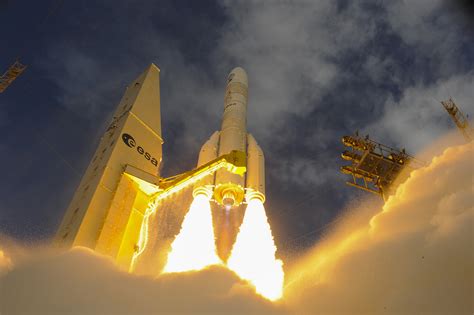
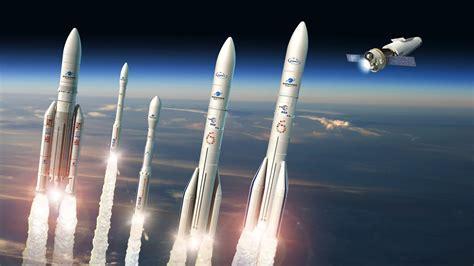
Europe’s Ariane 6 rocket has emerged as a critical piece of Amazon’s solution. Operated by Arianespace and backed by a consortium of European institutions and aerospace firms, Ariane 6 represents a different philosophy of space development—one rooted in collaboration rather than vertical integration.
This distinction is precisely what makes it valuable to Amazon. By leveraging European launch infrastructure, Amazon gains access to:
- Independent launch capacity outside of SpaceX’s ecosystem
- High-reliability heavy-lift capabilities suited for batch satellite deployment
- Geopolitical diversification, reducing reliance on any single nation or provider
Since early 2026, Ariane 6 has already carried dozens of Amazon satellites into orbit. While this represents only a fraction of the total constellation, it signals a crucial shift: Amazon is no longer bottlenecked by a single launch pathway.
A Multi-Partner Strategy to Close the Gap
Amazon’s broader launch strategy reflects a deliberate effort to avoid the pitfalls of dependence. Instead of relying solely on its affiliated space company or a dominant competitor, it has secured agreements for more than 80 launches across a network of providers.
These include:
- European launch services through Arianespace
- Domestic partnerships with United Launch Alliance
- Internal development via Blue Origin
- Even selective use of SpaceX launches when strategically necessary
This approach may appear fragmented, but it is precisely its strength. By distributing risk and increasing redundancy, Amazon can maintain deployment momentum even if one provider faces delays.
The company has also signaled an aggressive acceleration timeline. Over a 12-month horizon, it plans to double its launch frequency and satellite output. Such scaling is essential not only for competitive positioning but also for regulatory compliance, as deployment deadlines loom.
Inside Amazon’s Satellite Vision

Amazon’s satellite network is designed to compete directly with Starlink, targeting both consumer broadband and enterprise connectivity. Its hardware ecosystem reflects this dual focus, offering multiple tiers of user terminals tailored to different performance needs.
The flagship system promises speeds reaching 1 Gbps for downloads and up to 400 Mbps for uploads—figures that position it at the high end of satellite internet performance. This is not merely about connectivity in remote regions; it is about redefining expectations for space-based broadband.
The implications extend beyond individual users. Enterprise-grade connectivity opens doors to:
- Remote industrial operations
- Maritime and aviation communications
- Disaster recovery infrastructure
- Military and governmental applications
In this context, satellite networks are no longer auxiliary—they are foundational to the next generation of global digital infrastructure.
Europe’s Collaborative Space Model as a Competitive Asset
One of the most intriguing aspects of Amazon’s reliance on European rockets is what it reveals about Europe’s role in the modern space economy. Unlike the centralized models of American or Chinese space programs, Europe operates through a distributed framework involving national agencies, intergovernmental organizations, and private industry.
The development of Ariane 6 alone involved hundreds of companies across more than a dozen countries. This collaborative model, often seen as slower or more complex, offers a hidden advantage: resilience. By spreading expertise and manufacturing across borders, Europe creates a robust supply chain capable of supporting large-scale projects.
For Amazon, this translates into stability. In an industry where delays can cascade into billion-dollar setbacks, having access to a diversified and cooperative ecosystem provides a layer of security that purely private systems may lack.
The Economic Stakes of the Orbital Economy

The urgency behind Amazon’s push is rooted in the explosive growth of the space economy. Forecasts suggest that the sector could approach $1.8 trillion within the next decade, driven by advances in satellite communications, space-based data infrastructure, and emerging industries such as orbital computing.
In this landscape, launch capability becomes the ultimate gatekeeper. Whoever controls access to orbit controls the pace of innovation. SpaceX has leveraged this principle to build its dominance, but Amazon’s partnership-driven model represents an alternative path—one that could reshape competitive dynamics.
European rockets, in this sense, are not merely tools; they are strategic enablers. They provide Amazon with the means to participate meaningfully in this economic expansion without being constrained by a single provider’s capacity.
Can Ariane 6 Truly Challenge Starlink’s Lead?
The question remains whether Europe’s launch capabilities can meaningfully narrow the gap between Amazon and SpaceX. The answer depends on scale and consistency. Ariane 6, while powerful, does not yet match the launch frequency of SpaceX’s reusable fleet. However, it does not need to replicate that model entirely to be effective.
Instead, its value lies in complementarity. When combined with other launch providers, it contributes to a cumulative capacity that could rival SpaceX’s output over time. The key is sustained execution—maintaining a steady cadence of launches without significant disruption.
Amazon’s challenge is therefore less about matching Starlink satellite for satellite and more about achieving operational parity. If it can deploy enough satellites to deliver competitive service quality, the market will become a contest of pricing, performance, and ecosystem integration rather than sheer scale.
A Strategic Alliance That Could Redefine the Space Race
Amazon’s partnership with European launch providers represents more than a logistical arrangement—it is a strategic realignment in the global space race. By integrating Europe’s collaborative aerospace capabilities into its deployment strategy, Amazon is effectively building a hybrid model that blends private ambition with international infrastructure.
This approach may lack the elegance of vertical integration, but it offers something arguably more valuable: adaptability. In an industry defined by rapid change and immense capital requirements, flexibility can be the difference between stagnation and breakthrough.
As satellites continue to fill low Earth orbit and the demand for global connectivity intensifies, the role of European rockets will only grow in significance. For Amazon, they may well be the quiet force that transforms its satellite vision from an underdog effort into a formidable challenger—one launch at a time.